
#43Americans
We are injustice impacted Americans.
Nurses, doctors, veterans, engineers, software developers, small business owners, public servants, parents. We did not know each other. We found each other on X, one at a time, each carrying the same discovery: that the Justice Department had turned its machinery on us, and there was no one to tell.
For a long time, each of us thought it was just us.
That is the part nobody writes about. When the Justice Department turns on an ordinary person, the first thing they lose is not their savings or their license. It is the belief that this happens to anyone else.
You assume you must have done something. You assume there was a reason. You read your own file a hundred times looking for what you missed. Your lawyer tells you this is how it works. Your neighbors read the press release. And you go quiet — because the alternative is telling people you were charged with a federal crime and asking them to believe the government got it wrong.
Then one person says it out loud, and someone else recognizes their own case in it.
That is the whole of how this record got built. Ed Rosenberg wrote his down first, publicly, under his own name, in the middle of his own prosecution. He published it on X, where more than 240,000 people read it. One at a time the rest of us found him — a nurse, a cancer surgeon, a software developer, a coal miner, a councilwoman — every one arriving with the same sentence. I thought I was the only one.
We are forty-three because forty-three of us found each other. Not because forty-three is the number.
Nobody counts the rest. There is no federal registry of Americans who were charged and later cleared, or ruined before anything was proven. The Department publishes when it charges. It does not publish when the case falls apart. And the people it happens to stay quiet, for exactly the reason we did.
You cannot measure something that everyone it happens to believes is happening only to them.
What weaponized justice looks like
It is not a slogan. In these files it is a specific thing the Justice Department did to a specific person. Six cases, six different levers, six different offices:
The Department brought charges in a district with no connection to the defendant.
The Department held back evidence that pointed away from guilt, and produced it late enough that no remedy followed.
The Department converted a civil business dispute into a federal criminal case.
The Department announced a prosecution in a press release that named the defendant's elected office — for conduct the indictment alleged had ended more than three years before that election, and five months after she opened an office to campaign for President Trump.
The Department argued for a sentence justified by the message it would send to strangers, rather than by anything about the person being sentenced.
The Department offered a choice between a plea and decades, and got the plea. It never had to prove the case. It only had to make trial cost more than surrender.
Six levers, and every one of them moved the same direction.
There is a villain. There is more than one.
A prosecution does not happen by itself. Somebody decides to open it. Somebody decides what to charge, and what the exposure will be. Somebody writes the press release. Somebody hands over the file, or holds it back. Somebody decides the error was harmless. Somebody signs off, and somebody reviews the signing off — often from the same building.
Every one of those was a choice, and a person made it.
What connects them is not a conspiracy. It is a set of incentives that counts what an office wins and never counts whether it was right, and protects everyone in the chain either way. In some of these files a private party set it in motion. In some, the conviction was worth something to someone. In some, the theory came first and the evidence was sorted afterward.
Different hands, different reasons, one direction.
When a defendant misleads a court, the Department asks for additional years and gets them. When the Department's own error is the one at issue, it argues the error was harmless, and the conviction stands. Nothing in the structure is built to notice. The Department writes the charge, picks the district, controls the evidence, sets the exposure that produces the plea, and reviews its own conduct afterward. A prosecutor cannot be sued. The one statute Congress wrote for repayment requires proving a state of mind no court will reach.
Unchecked. Unaccountable. Uncorrected. And until someone outside it looks — unstoppable.
Some examples
Injustice to one person is not somebody else’s problem to ignore. A Department that can do this to any one of us can do it to anyone, and a right it is not made to respect for a stranger is not a right you still hold.
-
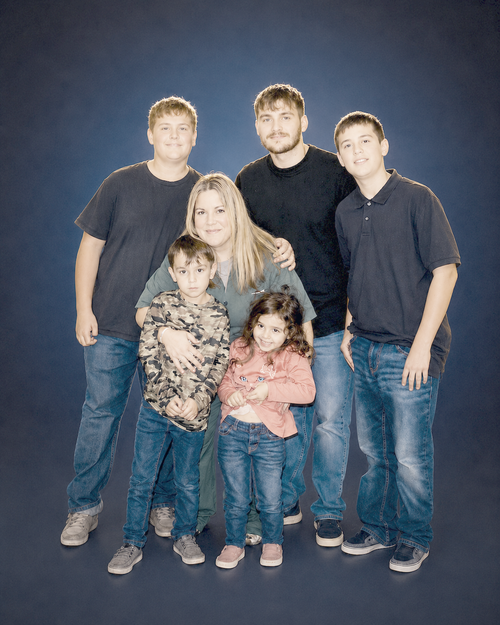 Elizabeth Hernandez
A nurse practitioner with five children, serving twenty years. Her
jury was told that a defendant must prove good faith — the opposite
of the law. The Department defended that instruction on appeal, and a
federal appeals court agreed it was wrong and called the error
harmless.
Elizabeth Hernandez
A nurse practitioner with five children, serving twenty years. Her
jury was told that a defendant must prove good faith — the opposite
of the law. The Department defended that instruction on appeal, and a
federal appeals court agreed it was wrong and called the error
harmless.
-
 Dr. Sanjeev Kumar
A Mayo Clinic-trained cancer surgeon. His own state medical board
reviewed every allegation against him and dismissed all of them. The
Justice Department prosecuted anyway.
Dr. Sanjeev Kumar
A Mayo Clinic-trained cancer surgeon. His own state medical board
reviewed every allegation against him and dismissed all of them. The
Justice Department prosecuted anyway.
-
 Angelica Pacheco
Eight federal counts, $19.1 million alleged. Not one produced a
conviction. The Department took a plea to a single false statement on a
loan forgiveness form — $54,946 — and its case page still
lists the dismissed charges as though they had been proven.
Angelica Pacheco
Eight federal counts, $19.1 million alleged. Not one produced a
conviction. The Department took a plea to a single false statement on a
loan forgiveness form — $54,946 — and its case page still
lists the dismissed charges as though they had been proven.
Real people, real photographs, every case documented and linked.
Part IV — One of UsIn her own words
I am a registered nurse, a mother of five, and a former elected official. My case is on its own page. What belongs here is only what the Department did.
It indicted me on eight federal counts. Every one was dismissed. None produced a conviction.
Three weeks after I moved to dismiss, the Department superseded the indictment, expanding both its theory and its charges. Two weeks before trial it looked at bank records it had held for years and found a second loan it had never noticed. When we declined an extension and subpoenaed my witnesses, it offered to drop the indictment in its entirety and proceed by information on a single charge that had never been in it — the forgiveness form for that second loan — and to seek no prison. The charge that replaced them is one no grand jury ever saw.
When we moved to dismiss for selective prosecution, the Department wrote in its official response that it may select a defendant for prosecution based in part on the deterrent effect on others. Not a leaked memo, not an anonymous quote. It filed that in open court and signed it.
It alleged the funds were misused. We pushed back, and it did not defend the allegation. What was left was how the money had been described: the ratio of payroll to other business expenses on a form. I was not the owner. I was not a corporate officer. I did not sign the application. I was there to translate. The Department has never stated on the record why its case came to rest on me.
The choice it gave me was probation, or a trial with my young son’s future as the stake. That is how most federal cases end, and it is what the Department buys every time it charges more than it can prove.
It abandoned the theory it could not defend and still required a felony. Getting it right was available to the Department. It chose the conviction.
I am standing. I am fighting.
The Supreme Court has said that the government’s interest in a criminal prosecution is “not that it shall win a case, but that justice shall be done.”
Berger v. United States, 295 U.S. 78, 88 (1935)The plain version
A country does not get
to be great and do this
at the same time.
Forty-three documented federal cases. In every one of them the Justice Department stayed inside the letter of the law and outside the spirit of it, and no one has been required to explain why. This names no individual prosecutor, agent or judge, and accuses nobody of a crime.
What we are asking
Not mercy. Mercy assumes the process was right.
We are asking for review — that someone outside this system read what the Justice Department did to us, and grant whatever relief the record warrants. A pardon, a commutation, or whatever the White House deems appropriate.
We are not asking to be believed. We are asking for the record to be read. We are done accepting that nobody has to.
When the courts are part of what went wrong, one office is left that can look at the whole picture rather than one narrow legal question at a time.
We are patriots. We support the President’s use of the constitutional pardon power to correct injustice and restore trust in the legal system. Every one of us filed through the channels available to any citizen. No lobbyists. No connections. No one paid anybody anything.
Read one case
We are not asking you to take our word for it. Read one case. Follow the links. Then look at what the Department gave the co-defendants.
Read the cases →This site was built and is paid for by the people asking. There is no outside funding, no consultants, and no one has been retained to advocate for us. Each of us has our own attorney for our own case. None of us has hired anyone to get access.
These pages are advocacy, and they say so. Convictions are stated, not hidden. Government figures are the government’s characterization, not findings by this site. If a passage does not match the record, we correct it.