
Dr. Sanjeev Kumar
Mayo Clinic–trained gynecologic oncologist, Memphis. Married, two children, no prior record. The Justice Department sent him to prison for twenty years under an FDA policy that says in writing — and has said for twenty-five years — that it does not apply to a doctor’s office. It named no injured patient. It sent no warning letter. It convicted him with a jury that had been tainted from the outside.

- Case
- No. 2:25-cr-20032-SHL (W.D. Tenn.)
- Charges
- Adulteration and misbranding of medical devices; health care fraud
- Indictments
- Three · 17 counts dismissed Oct 17, 2025 · 27 new counts returned 13 days later
- Trial
- 3.5 weeks · 5 days of deliberation
- Verdict
- Jan 7, 2026 · guilty on 40 of 46 · acquitted on 6
- The jury
- Tainted — jurors testified under oath at a Remmer hearing
- Allen charge
- None from the court · one delivered by the foreperson
- The interval
- Verdict 3 hours after a juror told the room it could be held indefinitely
- Sentence
- 240 months, imposed July 8, 2026, plus 2 years supervised release
- Patient harm
- None alleged in any count of conviction
- Warning letter
- None · required by 21 U.S.C. § 335 since 1938
- Judge
- Chief Judge Sheryl H. Lipman
- Pending
- Motion to set aside the verdict, ECF 411 (June 30, 2026) — no ruling
Not an accusation. A record. After the verdict, a juror went to the defense. The court convened a hearing under Remmer v. United States, put jurors under oath, and made them answer for what had gone on behind that door.
They described a jury that had been reached from outside the courtroom, researched the case on its phones, took medical testimony from its own members, and was told by its foreperson that it could be held there indefinitely unless it convicted. Five days without a verdict. Three hours after that warning, forty guilty counts.
A judge does not hold a Remmer hearing on a hunch. The defense has to satisfy the court first that there is real reason to believe the jury heard something it never should have. Most requests are denied. The court granted this one.
Transcript of post-trial evidentiary hearing, ECF 377 (filed 28 April 2026). Read what the jurors said ↓
Written and published by 250pardons.com. Dr. Kumar provided documents, photographs and written answers. He did not write this page and did not review it before publication. The arguments, characterizations and conclusions are ours, not his and not his lawyers’.
That is what this is about. Not a botched operation. Not a misdiagnosis. Not one patient the government says was hurt.
A federal policy on how instruments are cleaned between patients — in a building the policy says on its face it does not cover.
And here is what the Justice Department told the court, in writing, before trial, about what it had:
The FDA laboratory results “do not demonstrate that any of the confiscated devices were ever used on a person.”It knew that. It went to trial anyway. It asked for twenty years and it got them.
Nobody at that table ever had to prove a device touched a patient.
The whole case, in seven facts — every one checkable
The tainted jury
Five days of deliberation and no verdict. Then the foreperson told the room they could be held there indefinitely unless they decided.
After the verdict a juror — not the foreperson — contacted the defense. The court convened the hearing and put jurors under oath. What came out was not one lapse. It was six.
- Material the court had banned came in from outside. A juror announced in the room that a friend had told her about the counts the court dismissed in October 2025 — the ones the court had ruled, before trial, were too prejudicial to be spoken in the courtroom at all. Where that came from is set out below. Asked at the hearing whether it had in fact been said, the juror who came forward answered that it was “100% said.”
- The foreperson delivered an instruction only a judge may give. After five days without a verdict, the foreperson told the jury they could be held there indefinitely unless they decided. A judge must pair that instruction with a warning that no juror should surrender an honest conviction merely to agree. The court never gave one in this case. The only Allen-type instruction this jury ever received came from inside the room, and it carried the pressure and none of the warning.
- She had learned it from television. Asked why she raised it when she did, the foreperson said people were frustrated at how long they had been there and did not want to stay forever, and that she knew from television that this was a thing and knew what it was called. Asked directly by the court whether she had heard of an Allen charge before serving, she answered yes — from Law & Order.
- Jurors testified they believed they could be detained. Other jurors told the court they understood they might be held indefinitely if they did not reach a verdict. One testified that she felt badgered. Another described keeping eight notebooks of notes and being unable to match them against the evidence before the others pressed her to move on.
- Phones were used during deliberations. Testimony described jurors using cell phones while deliberating, which the local rules prohibit, and researching the case while it was still being tried.
- Jurors testified as experts to one another. Female jurors instructed the male jurors on gynecologic procedures out of personal experience — unsworn testimony, from witnesses no one could cross-examine, on the medical questions at the center of the case.
What the court said before it heard any of it
The hearing was transcribed in more than one volume. In the first, before a single juror had testified, the court stated that it did not think there was going to be a new trial.
ECF 354, PageID 10143.
Everything above was taken after that. The court then denied the new trial.
Where the poison came from
This is the part the Justice Department does not want in the same paragraph as its press release, so here it is. In February 2025 the Department announced this case with a release headlined for Sexually Abusing Patients and told the public the allegations indicated a predator in a white coat. It withdrew that phrase later, at Dr. Kumar’s request, after it had done its work. On 17 October 2025 the court dismissed all four of those counts. No jury ever heard them; nothing of the kind was ever put to any jury or proven against him. The Department issued no correction, and the FBI left a page up soliciting accusers for months after the counts were dead. That publicity ran for eight months in the city where the jury would be drawn. Dr. Kumar asked to move the trial — denied. He asked to question prospective jurors one at a time, the only way to find out what a person has already read — denied. Prospective jurors were then excused during selection because of distress connected to those very allegations, which is the court’s own record that the pool had been contaminated before a word of evidence was heard. And when the jury retired, the allegation walked into the deliberation room with it — not as a rumor, not as a distortion, but as the exact thing the court had ruled too prejudicial to say out loud, delivered by a friend of a juror who had read what the Department put out.
The instruction the foreperson was not entitled to give
An Allen charge is a supplemental instruction a judge may give a deadlocked jury, asking them to keep trying. It is lawful — and the modern federal version expressly tells jurors not to give up an honest conviction just to reach a verdict. That warning is the whole protection. It is what the foreperson’s version did not have.Set beside that, a rule worth knowing: under Brasfield v. United States, a federal judge who merely asks a deadlocked jury how it is split has committed reversible error automatically, with no showing of harm required, because knowing the numbers is itself pressure. That is how carefully the law guards this moment when a judge is the one speaking.
The court never gave an Allen charge in this case. The only instruction of that kind this jury ever received came from the foreperson, who testified to having learned of it from a television drama.
Follow what that costs him. Had the judge given a coercive Allen charge, Dr. Kumar would have an appeal: the instruction would be in the transcript, the reviewing court would read it, and Lowenfield v. Phelps supplies the standard for measuring whether it crossed the line. Judicial error is the kind of error appellate courts exist to correct.
Because a juror gave it instead, there is nothing to appeal. The pressure arrived without the protection the real instruction is required to carry, and it arrived from a source no appellate court is permitted to examine.
Why no court will ever weigh most of this
Federal Rule of Evidence 606(b) bars jurors from testifying about what happened during deliberations in order to challenge a verdict. The exceptions are narrow: extraneous prejudicial information, an improper outside influence, and a mistake on the verdict form — plus racial bias, added by the Supreme Court in 2017. In Tanner v. United States, the rule was applied to bar review of allegations that jurors were drunk and on drugs during the trial.Two of the six fall inside those exceptions: the banned allegations brought in from outside, and the phone research. The other four fall outside all of them — the Allen charge from the foreperson, the belief that they could be held indefinitely, the badgering, and the jurors giving one another medical testimony. Those four are internal to deliberations, and no appellate court will be permitted to weigh any of them, however serious.
When defense counsel tried, at the hearing, to find out what specifically had been said in the room, the government objected that the question had been asked and answered and was irrelevant. The court sustained the objection. It was the first time in the hearing that the question had been put.
Notice what the foreperson’s statement actually did. It did not tell the holdouts that the evidence was sufficient. It told them what continuing to hold a doubt would cost them personally. That converts proof beyond a reasonable doubt from a threshold into a price — and it was paid within three hours.
Transcript of post-trial evidentiary hearing, ECF 377 (filed 28 April 2026), PageID 10889, 10886–87, 10858; earlier volume, ECF 354, PageID 10143.
The rule he was convicted of breaking excludes his own clinic
The charges rest on the reprocessing of single-use medical devices. The FDA wrote the enforcement policy for that in August 2000 and has never withdrawn it. The policy names four categories it does not reach. One of them is health care facilities that are not hospitals. Another is devices that were opened but never used.
Adulterated, in food-and-drug law, does not mean poisoned. It is a technical status a device acquires if it is held in insanitary conditions or fails to meet regulatory requirements. Misbranded means its labeling does not meet those requirements. Reprocessing is cleaning and disinfecting an instrument for reuse. A Compliance Policy Guide is the FDA’s published statement of what it will and will not enforce — the document a regulated professional is expected to read, and the document the prosecutors were expected to read too.Here is the facility.
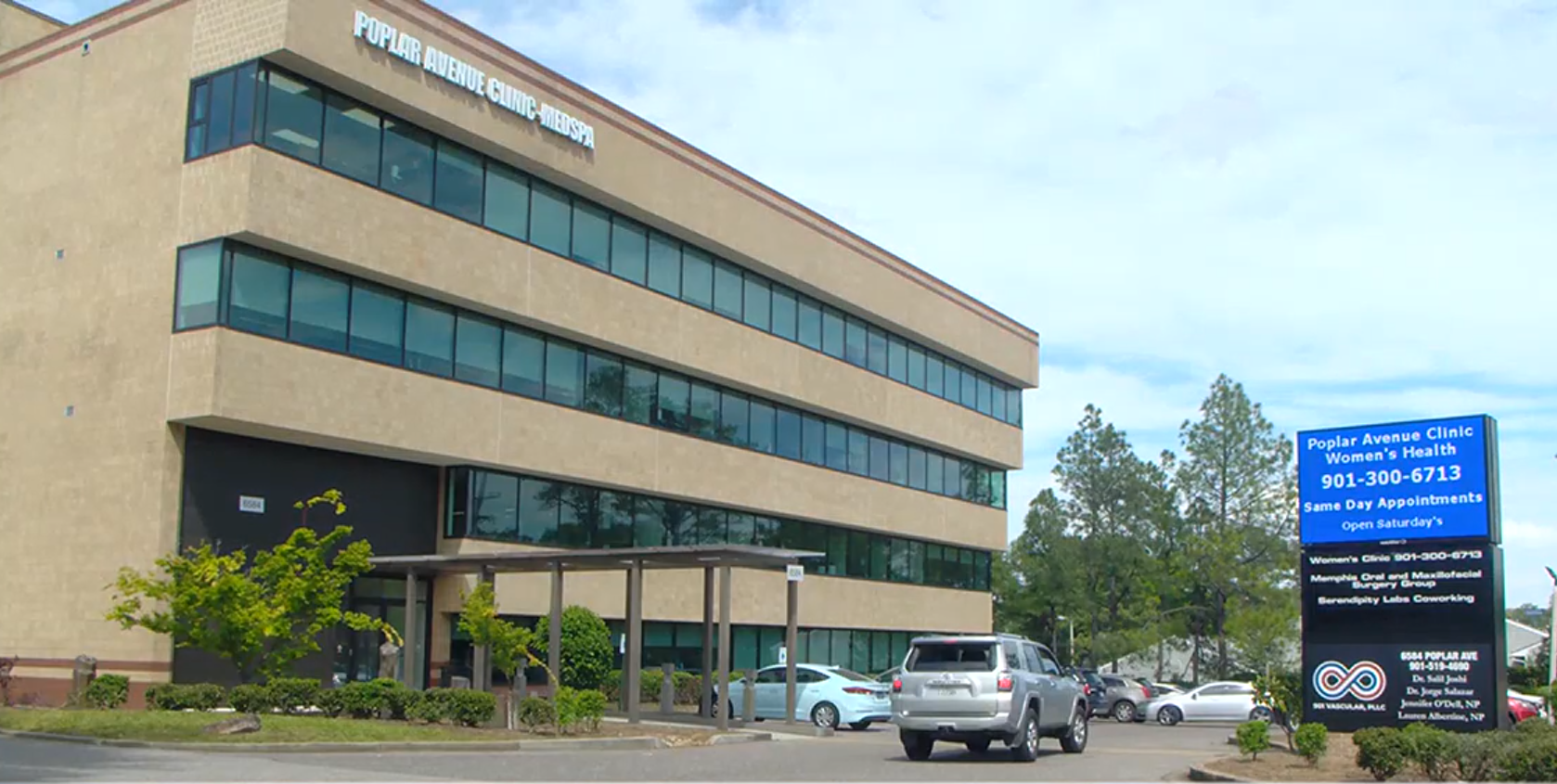
A three-story suburban office building off a parking lot. No emergency room. No inpatient ward. No operating theatre. No overnight bed. Inside: a leased suite on the fourth floor, and an exam room with a table, a stool and a chair.
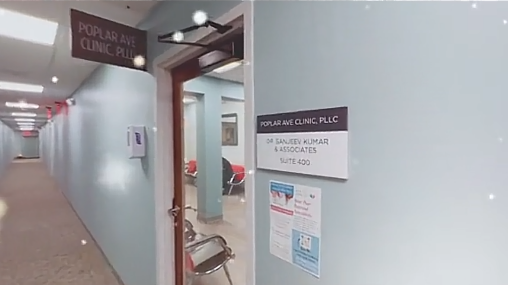
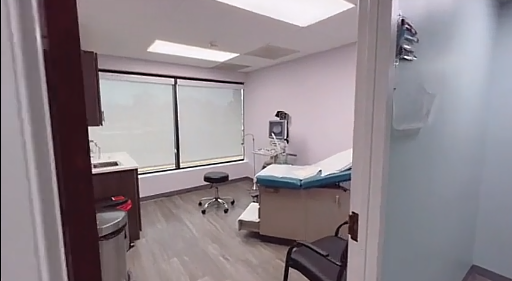
The clinic sits inside the exclusion by the policy’s plain terms, and the FDA’s current Compliance Policy Guide — still linked from the agency’s own web page — still says the policy does not apply to health care facilities other than hospitals. The CDC guidance the FDA links to says the same thing, in the same words, and adds the same carve-out for opened-but-unused devices.
The trade association that represents the regulated reprocessing industry put this in a signed declaration: it is aware of no FDA enforcement action, ever, against any facility that is not a hospital or a commercial reprocessor.
A separate FDA regulation, 21 C.F.R. § 884.1690, classifies hysteroscope accessories — the graspers, forceps and cannulas named in the indictment — as Class I devices exempt from the premarket requirements the charges were built on. Two device-regulation experts say so under oath.
Entrapment by estoppel applies when a citizen does what the government told him in writing he was permitted to do, and is then prosecuted for it. The rule of lenity requires that genuine ambiguity in a criminal statute be resolved in favor of the defendant, because people are entitled to know what is a crime before they are charged with it.FDA Compliance Policy Guides Manual, Sec. 300.500; FDA, Enforcement Priorities for Single-Use Devices Reprocessed by Third Parties and Hospitals (14 August 2000); CDC, Guideline for Disinfection and Sterilization in Healthcare Facilities (2008, updated June 2024), p. 81; declarations of Daniel J. Vukelich, Bernard Grisoni PhD and Stephen D. Terman, ECF 411-3, 411-7, 411-1.
Part 3The law required a warning first. They skipped it.
Before the FDA reports a violation for criminal prosecution, 21 U.S.C. § 335 requires that the person be given notice and an opportunity to present his views. The provision is titled Hearing before report of criminal violation. It has been on the books since 1938. The FDA’s own Regulatory Procedures Manual describes how to issue it, and states that warning letters exist because the agency expects most people to comply once told.
Nobody ever gave him the chance to comply, because compliance was never the point. This matters most against the two cases the government relied on to convict him. In one, FDA investigators sat down with the physician, told him their concerns, and he kept going anyway — and admitted it. In the other, the defendant admitted reuse and had also submitted forged affidavits and committed identity theft.
Those are the precedents. Dr. Kumar admitted nothing, was warned about nothing, and had already been investigated and closed out by his state medical board.
Part 4The government’s own FDA witness told the jury something the FDA’s paperwork contradicts
The government’s FDA reviewer testified that the agency had never cleared a hysteroscope for anything other than sterilization. The prosecution repeated it in closing.
The manufacturer’s FDA-cleared Instructions for Use for the Olympus hysteroscope in this case permit either sterilization or high-level disinfection, and leave the choice to the physician. FDA and CDC guidance both classify these instruments as semi-critical — the category for which high-level disinfection is the accepted standard. The reviewer who gave that testimony has since left the agency.
Sterilization kills everything, including bacterial spores. High-level disinfection kills everything except large numbers of spores. Which one an instrument needs depends on where it goes in the body. Instruments that touch mucous membranes but do not enter sterile tissue are called semi-critical, and high-level disinfection is the recognized standard for them — which is why your dentist’s and your gastroenterologist’s instruments are disinfected, not autoclaved, between patients.The clinic owned more than thirty reusable hysteroscopes, an automatic endoscope reprocessor built for exactly this purpose, a drying and storage cabinet, and a service contract with the manufacturer that included staff training. A physician who has bought that equipment has already paid for the compliant method.
He was also not quiet about it. In April 2022 — two years before anyone knocked on the door — the clinic’s own Instagram account posted that at least two medical assistants cleaned every room thoroughly after every patient, with the clinic’s phone number attached and hashtags for Memphis and Germantown.
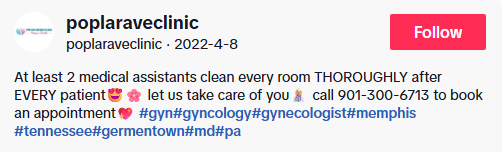
People concealing something do not post it with hashtags.
His own emails instructing staff to use multi-use devices and to run them through high-level disinfection were excluded from evidence. So was the CDC guideline itself. The jury that convicted him was never allowed to read the document that says the rule does not apply to him.
Nobody ever had to prove a device was used on a patient
This is the part that is hardest to explain to anyone who has not read the filings. The Justice Department told the court it did not need to prove that a single-use device was ever actually used on a patient — only that devices were held in unsanitary conditions. So use was never an element the jury was instructed on, and never something it was required to find.
But federal law defines a reprocessed single-use device as one that has previously been used on a patient, and the FDA expressly excludes devices that were opened but never used. Under the agency’s own definitions, use is not a detail. It is the thing that makes the device regulated at all.
The Department’s own filing conceded the point.
“The FDA laboratory results: (i) Do not demonstrate if any of the devices are functional; (ii) Do not demonstrate the identity or source of any of the substances observed on the devices; (iii) Do not demonstrate that any of the confiscated devices were ever used on a person; or (iv) Do not demonstrate that any of the confiscated devices were used on more than one person.”
ECF 128, filed 17 October 2025, PageID 1099–1100
Read it again. Not functional. Not identified. Never shown to have touched a person. Never shown to have touched more than one. That is the Justice Department, in its own words, on its own letterhead, describing the evidence it took to trial and asked for twenty years on.
Testimony at trial confirmed the devices tested negative for blood. No patient is named as having been infected. In more than twenty-five years of FDA adverse-event data for this device category, a search filed with the court found no reported infections and no reported patient harm at all.
That is not a recent conclusion, and it is not the defense’s. In January 2000 — the year the FDA wrote the enforcement policy this case was built on — the Western Journal of Medicine reported the controversy over reprocessing single-use devices. One company alone had by then reprocessed more than two and a half million of them.
“There are no products where we have significant evidence that there is immediate harm to the public health.”
Larry Kessler, FDA. The article reports that William Jarvis, head of the infections and prevention branch of the CDC’s hospital infection program, shared that view. Fred Charatan, “Controversy erupts over reuse of ‘single use’ medical devices,” West J Med 2000;172(1):58.
What the procedure actually is
The word biopsy does a lot of unearned work in a headline, and the Department knew exactly what work it was doing. The endometrial sampling at the center of this case is done with a pipelle: a thin, flexible, sterile plastic straw. Nothing is cut. Nothing is scraped. The device uses gentle suction to collect cells the body has already shed into the uterine cavity — closer to a cheek swab than to surgery.
The clinic bought more than 40,000 of them. New and sterile. One per patient.
He beat seventeen counts. Thirteen days later they charged him with twenty-seven more.
17 October 2025
−17The court grants Dr. Kumar’s motions and dismisses seventeen counts.
30 October 2025
+27Thirteen days later, one month before trial, the Department returns a second superseding indictment adding twenty-seven new counts.
The new counts rested on no new evidence. They covered the same devices, seized on the same day, that the Department had held for a year and a half and had already tested at two federal laboratories. Nothing had been discovered. Nothing had changed except one thing: he had won.
What the new counts did change was the arithmetic. From a maximum of thirty-nine years to a maximum of eighty-one.
Vindictive prosecution is the constitutional doctrine barring the government from adding charges to punish a defendant for exercising a right — here, the right to challenge a defective indictment and win. Where the timing is close enough, courts may presume vindictiveness and require the government to explain itself.Motion to dismiss the second superseding indictment for vindictive prosecution, ECF 144 (3 November 2025), citing United States v. Goodwin, 457 U.S. 368 (1982); United States v. Ladeau, 734 F.3d 561 (6th Cir. 2013); United States v. Zakhari, 85 F.4th 367 (6th Cir. 2023).
Part 7The fraud counts
Six of the forty counts are health care fraud. The charged period runs five years, 2019 to 2024. The government put a single calendar year to the jury — 2021, the height of the pandemic — and twelve documented procedures out of roughly 9,000. Eleven were called unnecessary. The other four years were never examined at all.
The clinical indication for every disputed procedure was documented in the patient’s chart. The government’s chart reviewer — the witness who told the jury the procedures were unnecessary — does not perform office hysteroscopy in his own practice.
And the lead investigating agent testified under oath that the billing records matched the procedures actually performed.
That is the whole fraud case. Billing for procedures that did not happen is what health care fraud means. The government’s own case agent told the jury the billing was accurate. What was left was a disagreement about medical judgment, prosecuted as a felony.
Part 8What the state medical board found, and when
The Tennessee Board of Medical Examiners investigated these allegations and closed the matter without a finding of wrongdoing. That letter is dated 17 September 2024. It predates the trial, and the board did not have the evidence the jury later heard. It is not a substitute for the verdict.
It is, however, the answer to a question a clemency reviewer should ask: did anyone with medical expertise look at this practice before the Justice Department did?
Someone did, and reached the opposite conclusion. No other clinician who performed procedures at the clinic was charged — and more than a thousand procedures at Poplar Avenue Clinic were performed by other clinicians.
One of the most egregious cases of weaponized lawfare in the United States
Memphis gynecologist sentenced to 20 years despite following CDC and FDA guidelines.
What follows is this page’s summary of the case as the court file shows it.
Recent court documents reveal widespread misinformation surrounding the case of Dr. Sanjeev Kumar, MD, a Mayo Clinic–trained robotic cancer surgeon and prominent Memphis gynecologic oncologist. Media reports claiming Dr. Kumar performed more than 15,000 biopsy procedures with “adulterated devices” on Medicare and Medicaid patients are not supported by accurate data.
Government data under scrutiny
Court records show the government released opaque datasets containing no patient names and lacking accountability. One exhibit attributes numerous procedures to patients who never existed at Poplar Avenue Clinic. Prosecutors also counted denied claims, crossover claims, rejected claims, and simple clerical insurance errors as “procedures,” inflating the numbers used in dramatic headlines.
Sterile single-use devices used for biopsies
Endometrial biopsies at Poplar Avenue Clinic were performed with single-use sterile endometrial pipelles. Clinic records document the purchase of more than 40,000 of these sterile, disposable devices. Multiple witnesses testified that a new sterile pipelle was used for every biopsy. The jury was never asked to evaluate the actual use of any specific device on any specific patient.
Hysteroscopes reused according to FDA and CDC guidance
Dr. Kumar and Poplar Avenue Clinic purchased more than 30 multi-use hysteroscopes and accessories cleared by the FDA. Defense evidence showed these instruments were reprocessed according to CDC and FDA regulatory guidance for high-level disinfection — a standard practice in office-based hysteroscopy worldwide. High-level disinfection is explicitly permitted under the devices’ Instructions for Use.
Problematic expert testimony
- Government expert Dr. Matt McDonald, paid $750 per hour, did not perform in-office hysteroscopy yet was admitted as an expert.
- Dr. Jona Bandyopadhyay, Deputy Chief Medical Officer for TennCare, had not seen patients in a clinic for over five years and had been recommended by the Tennessee State Medical Board for a re-entry pathway or administrative license.
- Government witness Dr. Ben Abdu testified that insurance companies were “the real criminals,” admitted reusing single-use devices himself, and stated he did not believe his own device use constituted a crime. He received immunity and later joined a competing Memphis clinic.
FDA testimony and evidence issues
Court documents indicate that FDA lead reviewer Poulomi Nandy provided testimony implying the agency had never cleared a hysteroscope for high-level disinfection — a claim contradicted by existing clearances. An FDA agent on the case destroyed evidence from his phone, and a lead reviewer later left the agency.
Clinic devices kept under FBI custody under filthy conditions
Devices shown to the jury had been held in FBI custody for more than a year under filthy conditions; many were broken, non-functional, or not hysteroscopes but cystoscopes. Several contained built-in kill switches that prevent reuse.
Independent review found no wrongdoing
A comprehensive investigation by the Tennessee State Medical Board found no wrongdoing. No other clinicians who performed more than 1,000 procedures at Poplar Avenue Clinic were charged.
Context and impact
Dr. Kumar, elected a Top Doctor in 2024 according to court documents, operated a multi-specialty clinic that expanded access to in-office hysteroscopy with sampling — a procedure capable of detecting endometrial cancer early. The 20-year sentence in United States v. Sanjeev Kumar is cited by supporters as an example of overzealous prosecution that punishes physicians serving patients in underserved communities under contested interpretations of medical device regulations.
Who is making these arguments
Not a publicist. The declarations filed on 30 June 2026 come from:
| Declarant | Who they are |
|---|---|
| Stephen D. Terman | Eleven years in FDA’s Office of Chief Counsel; the agency’s Associate Chief Counsel for Enforcement |
| Edward R. Teitel, MD, JD | Surgeon and FDA regulatory attorney |
| Amy Garcia, MD | Board-certified OB-GYN; teaches hysteroscopy for ACOG and the AAGL; president of the AAGL Foundation |
| Bernard Grisoni, PhD | Has personally obtained FDA clearances; teaches regulatory affairs at the University of Memphis |
| Daniel J. Vukelich | President, Association of Medical Device Reprocessors |
Four of them are telling a federal court that the agency they used to work for, advise, or represent does not regulate what the Justice Department sent a physician to prison for twenty years for doing.
What happens to everybody else
The FDA’s reprocessing policy applies to hospitals. It says so. It is the outpatient clinic that sits outside it.
So here is what has happened, in public, at hospitals and surgery centers where inspectors found instrument contamination far worse than anything alleged in this case. Every one of these was reported by a news organization and rests on a state inspection report.
Prison time imposed
What each inspection found
| Facility | What inspectors found | Outcome |
|---|---|---|
| Porter Adventist Hospital Denver, 2018 |
76 documented instances of contaminated instruments and trays over 15 months. Contaminants included bone, blood, cement, black residue, hair and a dead insect. Inspectors found a documented rise in surgical site infections with no evidence any action was taken. 5,800 patients notified. | Plan of correction. No criminal charge. |
| HealthPlus Surgery Center Saddle Brook, NJ, 2018 an outpatient surgery center |
Operating rooms not properly cleaned or disinfected between procedures. An inspector saw a blood-stained sheet on a stretcher left undisinfected even after he pointed it out. Sterilized instruments with rust-like stains. 3,778 patients urged to be tested for HIV and hepatitis. | Closed three weeks. Two employees dismissed. No criminal charge. |
| HCA Florida North Florida Hospital Gainesville, 2024 |
An employee complaint of “blood and tissues still on scalpels and other surgical instruments,” and that management was telling staff to use them. Operating rooms closed to all but emergencies for nearly two months. Around 40 percent of the instrument inventory discarded. | Regulators spent eight hours on site. A supervisor approved the finding in thirty minutes. Posted result: “No deficiencies.” No criminal charge. |
| UCHealth University of Colorado Hospital Aurora, 2025 |
Thirty or more trays of instruments left uncovered and “grossly soiled with dried blood and tissue.” Staff failed to follow manufacturers’ cleaning instructions in every observation inspectors made. Over 500 contaminated sets unprocessed in a single day. A surgery abandoned mid-procedure over defective instruments. | Daily audits, restricted scheduling, staff retraining. “Sustained compliance” within eight weeks. No criminal charge. |
| Dr. Sanjeev Kumar Poplar Avenue Clinic, Memphis an outpatient clinic the policy excludes |
Devices tested negative for blood. No patient named as infected. No complication or injury alleged in any count of conviction. No reported adverse event in twenty-five years of national data for this device category. | 240 months in federal prison. |
These are not Dr. Kumar’s cases and they do not concern him. They are set out so the comparison can be checked rather than taken on trust. This page takes no position on whether any of those resolutions was correct and does not suggest any was too lenient — a plan of correction is what the system is built to produce, and it is what it produced in each of them.
And this is how often it happens in outpatient clinics
Those four are individual facilities. Here is the same question asked systematically. In 2017 The Joint Commission — the body that accredits American health care facilities — surveyed 845 ambulatory and office-based surgery organizations and published the findings in a peer-reviewed journal.
| The Joint Commission, ambulatory and office-based surgery programs, 2017 |
|---|
| 39 organizations had infection control breaches serious enough to be referred to state health departments, across 356 documented breaches. |
| The most common breach domains were sterilization of reusable devices, device reprocessing, and disinfection of reusable devices — the exact subject matter of this prosecution. |
| Eight of the thirty-nine were cited for findings that included reusing single-use devices. |
| Every one was handled by referral to a public health authority. The paper’s conclusion is that the findings identify opportunities for improved staff training, leadership oversight, and investment in resources. |
Barbara I. Braun, Salome O. Chitavi, Kiran M. Perkins et al., “Referrals of Infection Control Breaches to Public Health Authorities: Ambulatory Care Settings Experience, 2017,” The Joint Commission Journal on Quality and Patient Safety, vol. 46, no. 9 (September 2020), 531–541. The paper does not concern Dr. Kumar and none of the facilities in it is identified.
Sources: CBS Colorado on the Porter Adventist CDPHE report · CBS New York on the HealthPlus Surgery Center · Mainstreet Daily News on the HCA North Florida inspection records · 9NEWS Denver on the UCHealth CDPHE investigation.
Why this is wrong
Strip this case to what it is.
A federal agency guideline about how to clean an instrument. In a building the guideline says on its face it does not cover. With no patient named as harmed, no infection reported in twenty-five years of national adverse-event data, and no warning letter of the kind the statute has required since 1938.
That is a regulatory dispute. There is an entire apparatus for regulatory disputes: warning letters, untitled letters, inspections, consent decrees, civil penalties, license proceedings. The Tennessee medical board used part of it and closed the matter.
This has a name, and it is not unique to him
What happened here is the fifth of seven documented forms of weaponized justice: regulatory weaponization — conduct a licensing board or a regulator used to handle, charged instead as a federal felony, often under a statute written for something else, and often without the government having to prove the defendant knew he was breaking any law.
Read that definition against this case. A state medical board did handle it, and closed it without a finding. The statute was written for commercial reprocessors and hospitals. And the jury was never required to find that Dr. Kumar knew any rule applied to him — because the FDA’s own published guidance says it does not.
The pattern is documented independently of anyone on this site. In 2010 the Heritage Foundation and the National Association of Criminal Defense Lawyers jointly published Without Intent, finding that a majority of the non-violent federal offenses proposed in a single Congress lacked an adequate guilty-mind requirement. In April 2025 the Deputy Attorney General issued a memorandum directing prosecutors to stop bringing exactly this kind of case, titled Ending Regulation by Prosecution.
A person decided which way to point every single one of these
The law did not require the Department to prosecute a cleaning guideline as a felony at all. The FDA’s own manual says warning letters exist because most people comply once told. Nobody told him.
The law did not require it to headline a press release the way it did, or to leave that release standing uncorrected after the counts behind it were dismissed, in the city where the jury would be drawn.
The law did not require it to return twenty-seven new counts thirteen days after losing seventeen, on evidence it had held for a year and a half, doubling his exposure from thirty-nine years to eighty-one.
The law did not require it to tell the court it need not prove any device was ever used on a patient.
The law did not require it to seek twenty years for a physician with no record, in a case where its own indictment alleges not one infection, not one complication, not one injured patient.
Every one of those was a choice. A person made it. And every one of them pointed the same way.
Here is what nobody can defend
Not one ruling. The sum.
Twelve people were asked to decide whether a cancer surgeon was a criminal. They were told nothing about the FDA guidance that says the rule does not reach an outpatient clinic, because it was excluded. Nothing about the CDC guideline that says the same thing, because it was excluded. Nothing about his own emails instructing staff on disinfection, because they were excluded. They were never required to find that a single device had been used on a single patient, because the government said it did not have to prove it.
They deliberated five days and could not agree. Then a juror told them they could be held there indefinitely, having learned the device from a television drama. Three hours later it was over. And a rule of evidence means most of what those jurors later said under oath can never be weighed by any court, ever.
And the conduct they convicted him of — measured against hospitals where inspectors photographed dried blood and tissue on uncovered instrument trays — produced, everywhere else in this country, a plan of correction.
That is not a trial anyone would defend if it were their own.
It is only defensible one ruling at a time — which is exactly how it was built, and exactly why it cannot be undone one ruling at a time either.
That is what clemency is for. Not mercy. Not forgiveness. Somebody with the authority to look at the whole of it at once, instead of one piece at a time.
And this is the door now
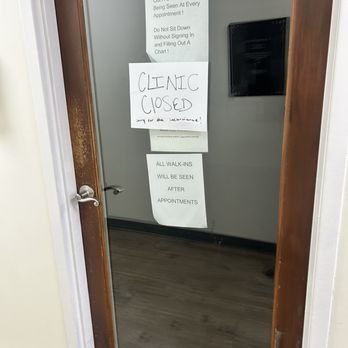
The women who were 400 pounds and had been turned away everywhere else do not have that surgeon now. Neither does the state whose Medicaid patients filled his waiting room. Neither do the residents he was teaching.
Endometrial cancer is the most common gynecologic cancer in the United States and the fastest-rising cancer in American women. The instrument that catches it early is the one at the center of this case.
And every gynecologist in America who read the coverage learned something from it. Dr. Kumar’s own conclusion, said out loud, is that his single greatest mistake was accepting Medicare and Medicaid at all.
The marquee still says same-day appointments.
This is a request for executive clemency. It is not a plea for mercy and it is not an argument that twenty years is too long for what he did. It is an argument that he did not commit a crime, and that this prosecution should never have existed.
It rests on things that are checkable:
- The FDA has published for twenty-five years that its single-use reprocessing policy does not apply to health care facilities other than hospitals. The Poplar Avenue clinic is a leased suite in an office building shared with a coworking company.
- 21 U.S.C. § 335 has required notice and an opportunity to be heard before criminal referral since 1938. He received no warning letter, no untitled letter and no meeting.
- The Department told the court it need not prove any device was ever used on a patient — and its own filing says the laboratory results do not demonstrate that any device ever was.
- Twenty-seven counts were added thirteen days after seventeen were dismissed, on evidence the government had held for a year and a half.
- The jury was tainted, and the record proves it. Banned material came in from outside, phones were used, jurors testified to one another as medical experts, and the foreperson delivered an Allen charge she learned from a television drama. The verdict came three hours later. Rule 606(b) bars any court from ever weighing most of it.
- No patient is named as harmed in any count of conviction, and no infection appears in twenty-five years of national adverse-event data for this device category.
- Hospitals where inspectors found instruments soiled with blood, bone and tissue — and thousands of patients told to be tested for HIV and hepatitis — received plans of correction. Not one produced a criminal charge.
The ask is clemency. Not leniency, and not a favor. This prosecution should never have been brought, and it should be undone. Dr. Kumar maintains that he is innocent, and the record above is why: the rule does not reach his clinic, the warning the law required never came, and no device was ever shown to have touched a patient.
Separately and immediately: his motion to set aside the verdict, filed 30 June 2026, has not been ruled on.
The record
Filings in this case
United States v. Kumar, No. 2:25-cr-20032-SHL, Western District of Tennessee.
The FDA safe-harbour argument, the notice argument under 21 U.S.C. § 335, and the five expert declarations — Terman (ECF 411-1), Teitel (411-2), Vukelich (411-3), Garcia (411-4), Grisoni (411-7).
Juror testimony at PageID 10889 (whether the material was said), 10886–87 (contact with defense counsel; objection sustained), 10858 (the foreperson on the Allen charge).
The court’s statement, before any juror had testified, that it did not think there was going to be a new trial.
The seventeen-dismissed / twenty-seven-added sequence and the penalty arithmetic at p. 5.
The prosecution’s own statement of what the FDA laboratory results do and do not demonstrate, including that they do not demonstrate any device was ever used on a person.
Dismissing seventeen counts.
Testimony that swabs were negative for blood.
Government and regulatory sources
The agency’s own page, which links the Compliance Policy Guide and the CDC guideline. Both state the policy does not apply to health care facilities other than hospitals.
The federal adverse-event database searched for this device category. Product code HIH, May 2000 to May 2026.
Independent research cited on this page
The Joint Commission Journal on Quality and Patient Safety 46(9), September 2020, 531–541.
Western Journal of Medicine 172(1), January 2000, 58–59.
Heritage Foundation and the National Association of Criminal Defense Lawyers, May 2010.
Others who have looked at the case
These are commentary, not news reporting, and their authors are sympathetic to Dr. Kumar.
Long-form interview with Dr. Kumar.
Government websites change. Guidance is amended, press releases are moved, pages are taken down. Every external page cited here should be checked against the live source, and where a link no longer shows what this page says it showed, tell us and we will publish the capture.
What you can do
This page has no budget behind it. There is no firm, no consultant and no press operation. It was built by people who are themselves defendants in these cases, and it reaches people only when someone decides to pass it on.
If you are a physician
This is the most useful thing anyone reading can do. If you perform office hysteroscopy, or run a practice that reprocesses instruments, you already know whether what this clinic did is what everyone does. Say so, under your name, in writing, and we will publish it in full. The single question that matters is whether a rule enforced here would convict the profession. Get in touch.
If you are a lawyer
Not representation — an opinion. If you practice food-and-drug law, federal criminal law, or sentencing, read the filings and put your name to an assessment of what happened here. Get in touch.
If you know a reporter
Every document on this page is public and every claim is cited. A journalist can verify all of it from the docket in an afternoon — the FDA’s own published exclusion, the warning that never came, the filing that says no device was shown to have been used on anyone, and what the jurors said under oath. Reporters can reach us here.
If you found something wrong
Tell us. If any passage here does not match the record, we will correct it. That promise is the only thing that makes the rest of it worth reading. Send us the correction.
If you can only do one thing
Post it. Send it to someone. Bring it up at dinner. Nothing on this site travels unless a person decides to hand it to another person.
No warning letter. A tainted jury. Twenty years.
Send this to one person who would not believe it.
This page was written and published by 250pardons.com. Dr. Sanjeev Kumar did not write it, did not review it before publication, and is not its author. His lawyers did not write it, did not review it, and do not endorse it. Nothing on this page is a statement by Dr. Kumar or by his counsel, and nothing here should be attributed to either.
This page is not a legal filing and does not state his legal position. His post-conviction motion is pending in the United States District Court for the Western District of Tennessee, and the arguments made there are made by his lawyers, in their own words, in documents filed with that court. Where anything on this page differs from what his counsel has argued or will argue, his counsel’s filings govern and this page does not.
He was convicted by a federal jury on forty counts and acquitted on six. This page does not hide that and does not dispute that the verdict was returned. It argues that the verdict was wrong: that the jury was tainted, that the rule does not reach his clinic, that the warning the law required never came, and that Dr. Kumar is innocent of what he was convicted of.
Nothing here is legal advice, and nothing here is a prediction of any outcome.
A note on quotation and images. Passages marked verbatim are exact text from a named filing, transcript or published guidance, with the source identified. Statements about trial testimony are drawn from the record and can be checked against the transcript.
If any passage on this page does not match the record, tell us and we will correct it.
Court filing
Emergency motion to set aside the verdict — 30 June 2026 United States v. Kumar, No. 2:25-cr-20032-SHL (W.D. Tenn.), ECF 411. Eighteen pages, plus sworn declarations from a former FDA Associate Chief Counsel for Enforcement, the president of the Association of Medical Device Reprocessors, and three device and hysteroscopy experts. Read it before anything else on this page.In his own words
Published commentary
The two items above are independently published opinion, not court records, and are offered as commentary rather than evidence. The filing is the record.