
Case 43 · #43Americans
Angelica Pacheco
Registered nurse, twenty years. Mother of five. Elected to the Hialeah City Council on her fourth try, and suspended from that seat seven days after an indictment, with no trial and nothing decided. The Justice Department charged her with eight counts and $19.1 million. Not one of them produced a conviction.

- Case
- S.D. Fla. · before Judge Jacqueline Becerra
- Charged
- 8 counts, $19.1M alleged — none produced a conviction
- Convicted of
- One false statement, 18 U.S.C. § 1001 · $54,946
- Charged by
- Superseding information — no grand jury reviews an information
- Guideline range
- 0–6 months
- Both parties asked for
- 1 year probation
- Sentence
- 3 years probation, no prison · April 16, 2026
- Represented by
- Federal Public Defender — found indigent by the Court
- Office
- Suspended 7 days after indictment, before any trial
- Clemency
- Pardon petition filed
What this case is
A case the Justice Department had already decided not to bring.It investigated Florida Life for years and did not charge it. It charged the comparable clinics — 2019, 2020, 2021, 2022 — and left this one alone. Asked in open court why, the government agreed the case was not as strong as the ones it had brought.
Then it brought it. Here is the order things happened in.
The sequence
2018 – 2022
The investigation runs. The bulk of the evidence is collected by 2020. More than forty people are interviewed. Her home and business are under physical surveillance for four years. She is interviewed three times.
2019 – 2022
Comparable substance abuse clinics in the same district are charged, each with multiple defendants. Florida Life is not charged.
2020
The clinic closes. The government alleges no fraudulent conduct after August 2020.
Nov 2023
She wins a seat on the Hialeah City Council, on her fourth attempt, from outside the political establishment.
Jan 2024
As vice president of a chartered Republican club, she opens an office to campaign for Donald Trump in the presidential primaries.
Jun 18, 2024
She is indicted. Six years after the investigation opened. Four years after the clinic closed. Five months after the campaign office.
Jun 25, 2024
The Governor of Florida suspends her from office. Seven days after the indictment. No trial. Nothing decided.
The indictment was returned in June 2024, under the Department of Justice then led by Attorney General Merrick Garland. Every date above is taken from the docket, the indictment, or the government’s own filings, and each is cited in full further down this page.
This page does not tell you what that means. It sets the dates beside one another, cites every one of them, and lets you read them in order — which is exactly the reasoning a federal jury is told to use against a defendant.
That was the offer. Eight counts and $19.1 million would disappear. In exchange Angelica Pacheco would take one felony conviction, and the government would not ask for prison.
The government proposed wire fraud. Then it agreed her defense could substitute something else. Her own public defender went through the code looking for whichever felony would do her the least damage for the rest of her life.
“If this had been about what I did, there would have been one charge that fit. Instead there was a space to be filled.”Under the Florida Constitution, a felony conviction disqualifies you from holding public office.
What the Justice Department says about her today
Search her name. The first result is a Justice Department case page. It states that she owned and operated an addiction treatment company and was charged in a scheme involving $19 million billed to private insurers. Not alleged. Stated.
Every one of those charges was dismissed. The word dismissed does not appear anywhere on the page. The only document offered for download is the indictment that was thrown out. The charge she actually pleaded to is not there.
The page still solicits victim impact statements, with a form. It is still filed under Pending Criminal Division Cases, and still says hearings will be held before Judge Becerra, in a case that ended in April.
Last updated June 30, 2026 — two and a half months after she was sentenced.
That is what an employer sees. A school. A neighbor. No court has ordered it changed, and nothing requires the Department to. The President can.
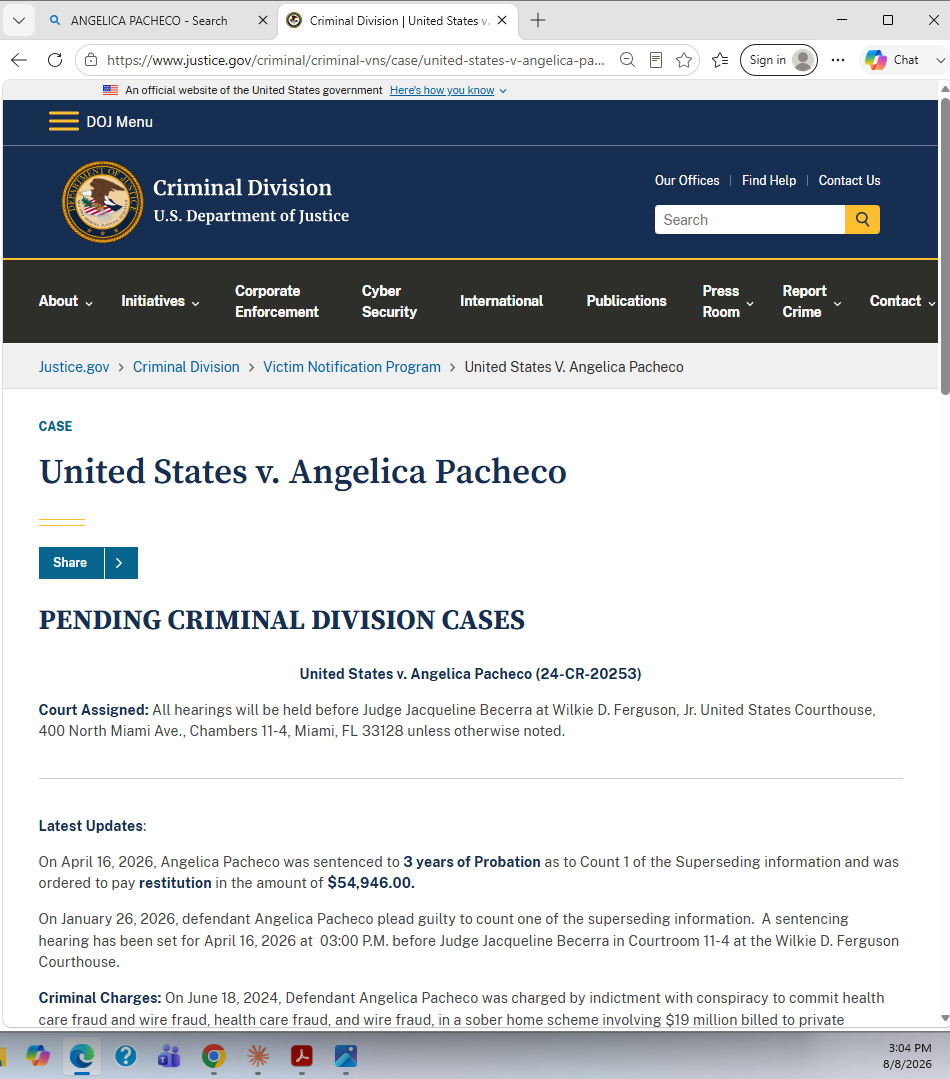

U.S. Department of Justice, Criminal Division case page, United States v. Angelica Pacheco. Captured August 8, 2026. See it for yourself
Hialeah
In 2002 she was seventeen, a mother of two, and pregnant. There was violence in the house where she lived. She had a GED and no car.
Loyda Sánchez was her case manager — thirty-six years in that work, for the State of Florida, for Miami-Dade County, and eleven years for the City of Hialeah. She was assigned to Angelica in 2002 and they have stayed in touch for twenty-four years.
What she remembers is the nursing school. She passed the entrance exam with a high score and was rejected, competing against hundreds of applicants who were older, who had health care backgrounds, who had resources. Her office issued her bus passes. She rode multiple buses across Miami, every day, to go back and ask again. Eventually somebody cancelled and the seat was hers.
Then class at Mercy Hospital, seven in the morning to two. A cafeteria job from four until midnight, twenty dollars a day. Pregnant the whole time.
Loyda writes that she does not say this because it sounds good. She says it because she watched it happen — the appointments, the schedule, the exhaustion, and the follow-through. Her counsel read from her letter at sentencing, and the Miami Herald quoted it.
Read it yourself: Letter of Loyda Sánchez, filed with the Court and published here with her consent.
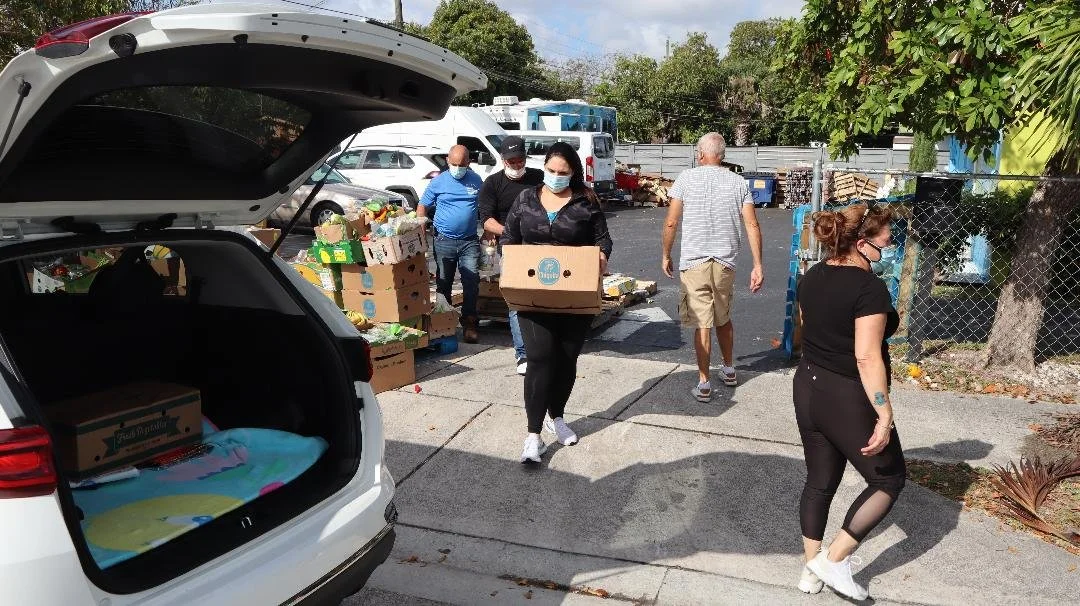
She became a licensed practical nurse in 2004 and a registered nurse in 2016. The Florida Department of Health shows no disciplinary record against her license, ever. From 2020 she ran food distribution out of the Florida Life office with a Hialeah non-profit — weekly drive-throughs serving more than a thousand families a month through the pandemic. Their volunteer system logs 2,099.5 hours since 2020. She cleaned refrigerators. She picked up donated bread from Publix in her own car, on her own gas, between five and six in the morning, three days a week.
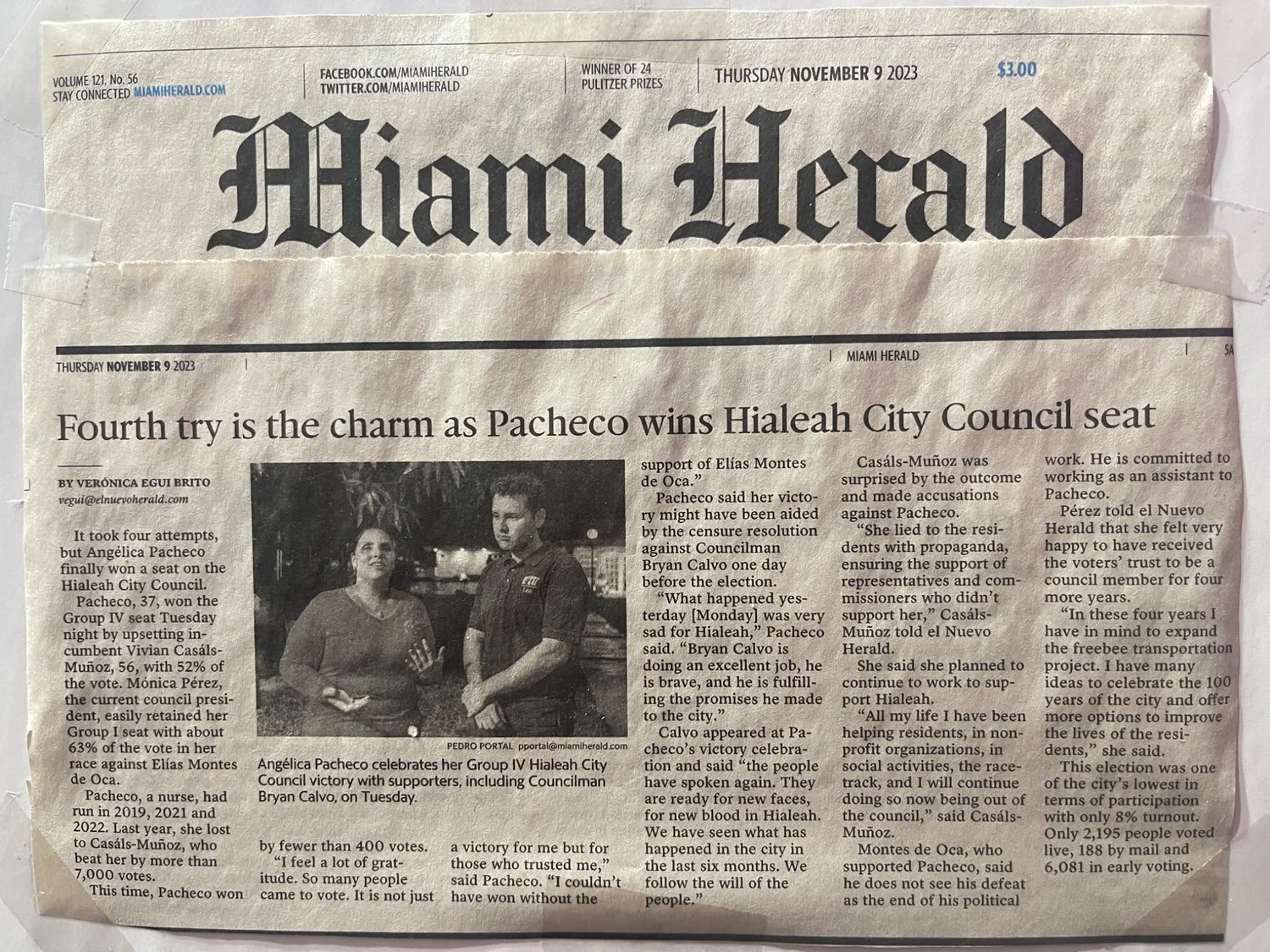
She ran for the Hialeah City Council four times. The fourth time, in November 2023, she won — raising about $15,000 against an opponent backed by the city's incumbent leadership, with PAC money and endorsements at every level of government. Col. Matías Farías, USAF (Ret.), who taught military intelligence and has known her seven years, writes that she won by knocking on thousands of doors. In January 2024, as vice president of a chartered Republican club, she opened an office to campaign for Donald Trump in the presidential primaries.
She held the seat for seven months.
Seven days
The indictment came on June 18, 2024. Conspiracy to commit health care fraud and wire fraud, five counts of health care fraud, two counts of wire fraud on an EIDL and a PPP loan from May 2020. Roughly $19.1 million in alleged fraudulent billing at an addiction treatment center in Hialeah.
That figure is what was billed. The same indictment says what was collected: about $3.8 million over three years, and $520,462 to the laboratories. The larger number is the one that travelled. It is still on the Department's case page today.
She surrendered voluntarily two days later and posted no money; the government asked for none. On June 25 the Governor of Florida signed an order suspending her from office. Seven days after the indictment. No trial. Nothing decided.
Thousands of people had voted for her. None of them got to vote on that.
Two months later, after months of coverage, her community elected her Republican committeewoman anyway.
Miami-Dade County Department of Elections confirmation and Certificate of Election, August 2024, are linked in the record below.
The victims who never came
The indictment made allegations about patient care. That therapy notes recorded sessions that did not happen. That testing was ordered regardless of medical necessity. That services were so substandard they served no treatment purpose.
Every count carrying those allegations was dismissed before trial. The Department has never explained why.
In the six years between the opening of the investigation and the end of the case, no patient of Florida Life was identified as harmed. No overdose. No death. No adverse outcome anywhere in the record. No emergency call. No first responder response at the facility.
The Department solicited victim impact statements for more than a year. None appears in the record. None was presented at sentencing. When the Court asked whether anyone wished to be heard, nobody came forward.
Patient One
Early in the case her lawyers asked for a bill of particulars. That is a defendant asking a simple question: who, exactly, and when? You cannot defend a charge that a service was not provided to somebody on some day unless you are told which somebody and which day.
The Court did not grant the bill of particulars. It gave her something else instead. It ordered the government to produce its witness list by a deadline, so that she would know who was coming. That order sat on the docket for the better part of a year.
At the November hearing the government asked the Court to move the exhibit list deadline. The Court moved it from sixty days before trial to forty-five.
Transcript, November 18, 2025, at 63–64.
Then the deadline came. By that point the government had been investigating for more than five years and interviewing former Florida Life patients since 2018.
Not names. Placeholders.
"Unless someone has a birth certificate that says Patient One, no."
"This isn't, like, some phantom clinic, right. Part of the defense is these people were really being treated. So how can you be giving her an exhibit list that just says Patient One?"
Judge Jacqueline Becerra · Transcript, January 8, 2026
The government told the Court it had not expected to know which patients it would call until early January. In the end one was named. It said it intended to call two.
The witness the government never had
The allegation was that therapy notes recorded sessions that never happened. Proving that requires one particular kind of witness: a therapist who was there, who would say the sessions did not occur.
In six years, the government never produced one.
Her witness list did. Among the thirteen were the clinicians who ran the therapy at Florida Life — the counselor who led individual and group sessions, the nurse practitioner who was there full time, the retired Air Force captain with a master’s in clinical mental health. They were willing to testify, and four of them had already written to the Court.
Her lawyers said so on the record at sentencing. Preparing for trial they had interviewed people who had worked at Florida Life and knew what happened inside it, and they asked each of them the same question directly.
“We asked these people directly, many people, I can think of eight or nine, directly, have they ever seen any wrongdoing on Ms. Pacheco’s part at the clinic. And every single person we spoke to said ‘no.’”
“The one thing we heard a couple times was that if there’s any criticism of Ms. Pacheco, it was that she mothered the patients too much, that she cared about them a little too much, she gave them too many chances.”
Transcript, April 16, 2026, at 11–12
Who was willing to say it
The government wanted someone from inside the clinic, and it went after the same man twice.
Dr. Jose Santeiro had been the medical director at Florida Life. He was never charged for anything to do with Florida Life. He was prosecuted for his work at a different facility — indicted in 2021, tried and convicted in 2022 — and by the time the government came back to him he was serving that sentence.
In January 2021 it approached his lawyers about cooperating against the clinics he had worked at, Florida Life among them. He declined; he was going to trial. Three years later, after he had been tried, convicted and sentenced, the government went to his new lawyer and asked whether he would cooperate specifically against Angelica Pacheco. It offered him help on his own sentence. No answer came. It asked again.
He never accepted.
It never got him. The government did not dispute any of this. Its answer was that it had not been waiting for anything — it simply had not got to the case.
Meanwhile thirteen people who had worked inside Florida Life or been treated there were on her witness list. Four of them had already written to the Court. They are identified here by role, not name, because all four are still practicing and asked that their names not appear on a public website: a licensed mental health counselor who ran therapy from 2018 to 2019; a registered nurse and nurse practitioner there full time from 2018 to 2020; a retired Air Force captain with a master's in clinical mental health; and a behavioral health technician who worked the residence on evenings.
The nurse describes a patient whose insurance had stopped paying and whom billing recommended discharging. We told staff to continue the doctor's treatment regardless of payment. He stayed more than a month while the team worked to reunite him with his family. The counselor describes that as routine. The captain describes a group in 2020 made up entirely of uninsured patients treated free of charge. The technician, who was in the house at night, wrote that he never saw a patient paid, or offered anything, to come to the program or bring in another.
None of them was ever heard.
Neither was a former patient the defense had wanted to call. He is not dead. He cannot be found. His family, who are in contact with the defense, believe he is homeless somewhere in Texas.
In March 2022 he reached out to Angelica on Facebook, and what he wrote is attached to the motion as an exhibit.
The government had subpoenaed him because “they want me to speak against you guys and your treatment center.” They had, he wrote, “offered to drop my charges in Florida if I was able to say something about Flor[ida] Life” — and “they wanted me to lie against the doctor.”
“I’m not sure if I could be telling you this I just thought because you looked out for us[,] I’m looking out for you.”
Quoted at D.E. 51, August 13, 2025, at 8; messages attached as Exhibit C. The patient is identified in the filing by initials to protect his confidentiality. This is his account, in his own words, of what he was told.
Two years earlier he had written her something else. It is quoted in the same motion.
“You and your husband are great people... you took care of people that need your help like me... we’re done with rehab we’re making it out here... you guys have such a beautiful heart.”
Quoted at D.E. 51 at 9
He could not be found in time to say either of those things to a jury.
What she actually did there
The record on this is not complicated, and it matters, because the indictment was written to make her sound like something else.
She was not the owner. She was not a corporate officer. She did not sign the loan applications. She helped her husband with administrative work at the business he had founded, and when she was there she was in the building with the patients. The criticism her own lawyers heard, over and over, from the people who worked alongside her, was that she cared about them too much.
The patients said it themselves, in public, years before anyone was charged. One left a review of the clinic in March 2019; he is one of the dead.
“I’ve been from Huntington Beach, California an[d] all around this country doing this and I could never seem to find a place that could meet my need[s]... From the clinical team doctors and staff that would go above an[d] beyond to help you in this process... this will be the place that will give you back your life plus more.”
Quoted at D.E. 51, August 13, 2025, at 14, Exhibit O. He died December 6, 2021.
The things they said she did
Here is what the indictment accused her of, in its own words. Read it, because none of it was ever tried, and because it is what a stranger searching her name still finds.
- Paying kickbacks and bribes — money, gift cards, free interstate flights, letting one patient “piggyback” on another’s insurance, and “scholarships” in exchange for referring people with insurance.
- Prescribing controlled substances “in quantities and combinations that at times grossly diverged from legitimate medical practice.”
- Billing for therapy that “frequently” was not provided, or was so substandard it served no purpose. Creating false therapy notes.
- Ordering urine testing that was medically unnecessary.
- Using the money for personal benefit.
Indictment, D.E. 3, at 12–14, as summarized in D.E. 51 at 2.
The government investigated from late 2018, and it was not a small investigation. It conducted dozens of interviews — patients and employees — across five years, including more than a dozen former Florida Life patients between 2018 and 2021, and three further witnesses in 2023. It interviewed her three separate times: 2018, 2020, 2022. It collected the bank records, the billing records, the electronic medical records, the emails, the phone records. It ran physical surveillance on her home and her business for four years.
Investigative timeline as set out in the Motion to Dismiss for Preindictment Delay, D.E. 51, August 13, 2025, at 3. The phrase “more than a dozen” is the filing’s own, and describes patient interviews only.
Not one More than forty people were interviewed over six years. Not one of them said they had received money to bring in a patient. Not one said they had seen anyone else receive it.
Count drawn from the defense’s review of the government’s own investigative reports produced in discovery.
It did not withdraw the allegation. It did not say it could not substantiate it. It stopped saying it.
Part 6The theory that made her the owner
No corporate filing names her as an owner. The filings name her husband, who founded the company and put in the startup money.
The government's position was that she was the beneficial owner, and it explained why in writing, in a brief filed August 27, 2025. Her husband speaks Spanish. She speaks Spanish and English. Therefore, it wrote, she was responsible for running the show. Its conclusion: the strength of the evidence supported charging her, but not him.
Hialeah is a city of about 220,000 outside Miami where, by census figures, more than nine in ten residents speak Spanish at home. It has the highest concentration of Spanish speakers of any city its size in the country.
"Where are these places?"
"Not in Hialeah."
"The operation and the people that are running it — the language thing, I mean I'm just not buying, to be honest with you."
Judge Jacqueline Becerra · Transcript, November 18, 2025
Two federal agencies had already reached the opposite conclusion in writing. On March 22, 2021 an SBA representative noted on the company's loan file that the owner did not speak English and had a family member translate; the SBA's correspondence that day was with the owner, who signed the loan agreement himself. Two years earlier, a Florida licensing coordinator reported to the FBI that she had come to the clinic unannounced and met the owner, and named him.
What the grand jury heard
The testimony ran forty-four pages. The witness was an FBI special agent who, asked how long he had been an agent, answered: a little over a year. The attorney presenting had joined the case nine months earlier, after a six-year investigation.
Q. “So stepping back to Ms. Pacheco’s role here, does the evidence collected in this case... show that she was the one who completed and signed off on licensure applications that were required under Florida State law for Florida Life?”
A. “Yes.”
Grand Jury Transcript at 12, Exhibit A to D.E. 94; quoted at D.E. 99, January 2, 2026, at 4
She did not complete or sign the licensure applications. Her husband did. He was the owner. The agent was also asked whether she applied for the PPP and EIDL loans on behalf of the company, whether she certified on both applications that the company was not engaged in anything illegal, and whether she signed off on the state filings. He said yes to all of it.
They already had the papers
The government did not need to investigate any of that. It had collected the bank records, the loan files and the corporate filings years before it walked into the grand jury room. Those documents show whose name and whose signature is on each one.
Two federal agencies had written it down independently. On March 22, 2021 an SBA representative noted on the company’s loan file that the owner did not speak English and had a family member translate; the SBA’s correspondence that day was with the owner, who signed the loan agreement himself. Two years earlier, a Florida licensing coordinator reported to the FBI that she had come to the clinic unannounced and met the owner, and named him.
What the government said about it
Not that the testimony was accurate.
Its opposition argued there was no false testimony because she had called herself the owner in voluntary FBI interviews, and that in any event she was instrumental in the submission of the loan applications and “at the very least, caused such applications to be submitted.” Then the argument that decides these motions: that even if everything she said were true, it would not have mattered.
On the first point: she did say it. She has said my husband and I about that business for as long as she has talked about it, the same way she says it about the house. It was a family company and she worked in it. A wife telling an FBI agent “we own a clinic” is not a corporate filing — and the government had the corporate filings, and the loan documents, and the signatures, in a drawer, for years.
That argument usually wins, and here is why. To dismiss an indictment over what a grand jury was told, a defendant must show the prosecutor knowingly used false testimony, or failed to correct it once he learned it was false, and that it substantially influenced the decision to indict. An indictment valid on its face cannot be challenged on the evidence behind it. And there is no obligation to show a grand jury anything that cuts the other way.
United States v. McNair, 605 F.3d 1152 (11th Cir. 2010) · Bank of Nova Scotia v. United States, 487 U.S. 250 (1988) · Costello v. United States, 350 U.S. 359 (1956) · United States v. Williams, 504 U.S. 36 (1992) · Kaley v. United States, 571 U.S. 320 (2014) — all cited in the government’s opposition, D.E. 98, December 31, 2025.
Five weeks later the government changed its theory outright, writing that it did so in the face of her argument that because she had not herself signed these loan documents, she could not be criminally responsible.
The listed owner, the medical director and the director of operations were not charged. This page takes no position on whether any of them should have been. The question is how the government chose among them — and the reason it gave in writing is the one the Court said it wasn't buying.
No court ever ruled on any of it. she moved to dismiss. On January 8, 2026 the Court said it wasn't prepared to rule and wasn't inclined to grant it. Then the case resolved.
One name on the indictment
Here is the thing that does not happen in these cases.
The Southern District of Florida has prosecuted substance abuse treatment centers for years. Every one of those cases charged a group: the owner, the executives, the medical director, the people who ran the billing, sometimes the low-level employees. That is what a clinic fraud indictment looks like.
| Case | Clinic | Defendants charged |
|---|---|---|
| United States v. Markowitz No. 21-60020-CR-WPD (S.D. Fla. Jan. 19, 2021), D.E. 110 | Compass Detox, WAR | Eight — owners, executives, medical directors, low-level employees |
| United States v. Port No. 19-20583-CR-AHS (S.D. Fla. Jan. 11, 2021), D.E. 126 | Safe Haven Recovery | Four — owners, executives, medical director, an employee |
| United States v. Chatman No. 17-80013-CR-DMM (S.D. Fla. Jan. 24, 2017), D.E. 66 | — | Seven — owner, part-owner, medical director, other doctors, nominee owners, employees |
| United States v. Snyder No. 18-80111-CR-RLR (S.D. Fla. June 7, 2018), D.E. 46 | — | Four — owner, CEO, lower-level employees |
| United States v. Ahmed No. 19-60200-CR-DMM (S.D. Fla. July 11, 2019), D.E. 1 | — | Four — co-owners, CEO, clinical directors |
| United States v. Pacheco No. 24-CR-20253 (S.D. Fla. June 18, 2024), D.E. 3 | Florida Life | One. |
Comparison drawn in the Motion to Dismiss and to Compel Discovery for Selective and Vindictive Prosecution, D.E. 52, August 13, 2025, at 16.
Not the man whose name is on the corporate filings. Not the medical director. Not the director of operations. One registered nurse.
His name appears on this page because the government’s own theory required somebody else to be the owner, and he was. It is not an accusation. It is the opposite of one.
If the Justice Department believed a $19 million fraud had been committed at Florida Life, the person who founded the company, funded it, signed the loan documents and held the license would have been charged with it. In every comparable case in this district, that person was. Here nobody was — not him, not the medical director, not the director of operations.
That is not evidence about him. It is evidence about the decision.
And the medical director is the sharpest part of it. Dr. Jose Santeiro was the medical director at Compass, at WAR, and at Florida Life. He was charged for Compass and WAR. He was never charged for anything to do with Florida Life.
This page takes no position on whether anyone else should have been charged. The question is how the government chose among them, and the reason it put in writing was the one the Court said it was not buying.
Part 8Six years, and then seven months
The investigation opened around November 2018. Comparable clinics were charged in 2019, 2020, 2021, 2022. Mine wasn't.
"Was this case not as strong as the other cases that were indicted back then?"
— “Yes, of course. I don’t think that has to be said or it would have been indicted.”
“No, I think it has to be said. That’s the whole point.”
Transcript, November 18, 2025
It appeared to the Court, she said, that the government never answered the question at all. A government that passes on a case and later returns to it is in a different position from one that simply never got to it. Something about the opposition made her pause on what was really going on, because the government hadn't answered it in either filing.
Separately, in writing, the government argued it may select a defendant for prosecution based in part on the potential deterrent effect on others.
The Government "is permitted to select a defendant for prosecution based in part upon the potential deterrent effect on others."
Government's opposition to motion to dismiss for selective and vindictive prosecution · August 27, 2025
From the bench the Court said that argument concerned her, and spelled out what it implies: an investigation looking at five possible defendants, deciding the cases aren't that interesting, and indicting the one who is a public official — because the message is different.
The timing, read the way they read it against her
Seventeen months
Nov 2023
She is elected to the Hialeah City Council on her fourth attempt, from outside the political establishment.
Jan 2024
As vice president of a chartered Republican club, she opens an office to campaign for Donald Trump in the presidential primaries.
Jun 18, 2024
The indictment. Five months later.
Jun 25, 2024
Suspended from office. Seven days after that.
Nothing in that sequence proves anything, and this page does not say it does.
But hold it next to the reasoning that convicts people in federal court every week. Nobody has to hand you a confession. Look at the timing. Look at what they did and what they chose not to do. Look at what anyone in that position would have known. A jury is told that reasoning carries the same weight as a document.
When the Department announced the charges, its press release noted that she had been elected to the Hialeah City Council. That election took place years after the conduct alleged in the indictment. Her status was in the press release. Deterrence was in the brief.
Pressed on why the government would make that argument unless it had been a consideration, the prosecutor said the brief was poorly worded, that her elected status did not influence the decision, and that if it had, deterrence would have been permissible anyway. Then he told the Court the government became aware she had won her election as it was gearing up to indict — and that it checked with another office to ask whether it had to do anything about that.
He denied the rest categorically. He offered other reasons: caseload, five trials in ten months, a cooperator, a related conviction. The government also notes the investigation began a year before her first campaign and five years before her election, that it charged operators of two comparable clinics who never ran for office, and that Florida law lets the governor suspend any indicted municipal official — three others were suspended between 2019 and 2024.
The motion nobody could answer
Her lawyers moved to dismiss for preindictment delay — Docket Entry 51, argued before the Court on November 18, 2025. The clinic had closed in 2020. The indictment came in June 2024, seven months after she was elected.
The Court laid out what an answer to that motion normally looks like.
“It seems like the bulk of everything you have was in 2020. You wait, you know, four years to bring the case. Typically the government responds and says: Hey, wait a minute. We were really done in 2020, but in 2021 the lead prosecutor had five cases and ten trials, or whatever it is. In 2022 we focused our efforts on something else and we had some subpoenas out. In 2023 we got a new case agent... I mean there is some reason for it.”
“Your motion — or your opposition rather basically just says: There really was no delay because we sent some subpoenas out in 2023.”
Judge Jacqueline Becerra · Transcript, November 18, 2025, at 41
Then the government said it out loud.
“We got to it when we got to it, and we don’t think that there has been any prejudice.”
“I do think legally it is correct to say we don’t have to provide a reason. We’re providing one now.”
Transcript, November 18, 2025, at 42 and 48
The Court then set out the only two ways the silence could be read, and asked the government to pick.
“I was underwhelmed by the government’s response to both motions because I still don’t know why you waited. And so when the defense files these motions and I still don’t have an answer to fill in the gap, then, you know, one possible way of filling it in is to say: Well, then the defense must be right. Another way to fill it in, which is what I think your papers suggest is: It doesn’t have to be filled in. We’re the government. As long as we file, you know, before the statute of limitations, we filed. You’ve got nothing.”
— “I think the latter is true, Your Honor.”
Judge Jacqueline Becerra and counsel for the government · Transcript, November 18, 2025, at 47
What the waiting cost
The defense identified at least thirty patients who had died, and at least five more non-patient witnesses. Thirty-five people, before counting the ones simply gone.
None of these deaths happened at Florida Life or during treatment. They happened in the years afterward. The motion describes the population plainly: people with serious substance use disorders, many of them homeless, for whom overdose is common and sometimes fatal, and who become difficult to locate over time. That is what the government was waiting through.
Her defense rested on people who had been through a substance abuse program; the government’s case rested on the medical records, which do not die.
The government did not have to guess what waiting would cost. One of its own witnesses in a related clinic prosecution went into cardiac arrest from substance use in a hotel room two nights before he was due to testify in September 2021, and died of an overdose in the same hotel the night before he was due to testify at the second trial, in February 2022.
D.E. 51 at 21, citing United States v. Markovich, 21-cr-60020-WPD (S.D. Fla.), D.E. 911, 915.
One of the dead was the patient named in Counts 5 and 6 of the indictment.
“He passed away, you know, between this case and the indictment. It appears the government didn’t even know he had passed away because he was on the no contact list when she was indicted in 2024.”
Transcript, November 18, 2025, at 57
The government charged two counts around that patient and handed the Federal Public Defender a list telling her not to contact him. He had been dead for years. The defense attached death certificates to the motion as an exhibit, filed under seal because they concern patients.
The government never answered that point. Not in its opposition, not at the hearing, not since.
The one witness who could have explained the delay
Among the dead was FBI Special Agent Alberto Bhoge. He had been the lead agent on this case, and the lead agent on several of the related clinic cases — the ones charged in 2019, 2020, 2021 and 2022 while hers was not.
He died on January 17, 2023. Seventeen months before she was indicted.
“He is now no longer available to testify regarding the investigative and prosecutorial decisions made as to why Ms. Pacheco was not indicted at the same time as the related clinics.”
D.E. 51, August 13, 2025, at 16
Asked about the thirty-five, the government answered that many of them would have died anyway, even on the defense’s own timetable — so, it said, the problem is a nullity; it just doesn’t exist.
“On the delay motion [it] didn’t really answer my question. The question that I had, which is, you know: Why was this delayed?... I just assumed that I’d be reading the litany of the reasons of why it was delayed; the prosecutor was on trial, didn’t the agent pass?... All the different reasons that cases get delayed, the absence of that.”
“And again, maybe that’s the absence they’re going to stand on because they are confident that the law doesn’t require them to do anything else.”
Judge Jacqueline Becerra · Transcript, November 18, 2025, at 62
Preindictment delay is one more rule that permits rather than requires. In the Eleventh Circuit a defendant must prove both actual prejudice and that the delay was the product of a deliberate act by the government to gain a tactical advantage — United States v. Foxman, 87 F.3d 1220, 1222–23 (11th Cir. 1996), applying United States v. Marion, 404 U.S. 307 (1971), and United States v. Lovasco, 431 U.S. 783 (1977).
Read the second prong again. To win, she had to prove what the government was thinking. Other circuits do not require that — several ask only for recklessness or negligence, and her motion says so, and says the Eleventh Circuit is on the wrong side of the split.
The Court made no finding. She said the facts could have a million permutations, that she didn't know what happened, and that the government had filed nothing suggesting one thing or the other.
Any felony would do
This is the part she has never written down before.
Two weeks before trial the government looked at bank records it had held for years and found a second PPP loan it had never noticed. Its own prosecutor also conceded the original indictment had listed the wrong bank account.
Understand what that loan is, because it is the hinge of this whole case.
The loan in the indictment
A PPP loan from May 2020, and an EIDL loan. Two of the eight counts were built on them.
Every one of those counts was dismissed.
The loan she was convicted over
A different, second-draw PPP loan — February 10, 2021 — and a forgiveness application filed May 23, 2022.
It appears nowhere in the indictment. It was never presented to any grand jury.
Superseding Information, D.E. 134, at 3; Indictment, D.E. 3. The government’s own filing confirms the point: because the information charged only the second-draw loan, it asked that the first loan be excluded from the loss calculation and that the reference to it be struck from the presentence report. D.E. 142, March 23, 2026.
So the thing that took her seat, her business, her career and her name — the $19.1 million health care fraud case — produced no conviction. The conviction came from a loan the grand jury never heard of, found two weeks before trial, in records the government had held for years.
Then came the offer. Not a plea to a particular crime. A plea to a felony.
Eight counts. $19.1 million. Every allegation about patient care.
One felony conviction.
Wire fraud, proposed — then open to substitution. Her own public defender went looking for a less damaging one.
No prison sought.
This account of the negotiation is hers. Plea discussions are not on the public docket. What the docket does show is the outcome: a charge by information, on a loan that appears nowhere in the indictment, filed the day after she asked the Court for subpoenas.
Read that middle row again. The government named a crime — wire fraud — and then agreed it did not have to be that one. Her defense attorney, a federal public defender appointed because the Court found she could not afford a lawyer, spent her time searching the United States Code for whichever felony would ruin the least of her client’s life.
That is not how a prosecution about conduct ends. When a case is about what somebody did, one charge fits and the others do not. They are not interchangeable.
What a felony does in Florida
"No person convicted of a felony... shall be qualified to vote or hold public office until restoration of civil rights."
Fla. Const. art. VI, § 4
A misdemeanor would not have done it. A civil settlement — the way this Department resolves this exact conduct, every week, all over the country — would not have done it either.
Only a felony does it.
She is not going to tell you what was in anyone's mind. She has spent two years refusing to be told what was in hers, and she is not going to do it to somebody else. So here is only what is on the record, and you can put it in whatever order you like:
What the record shows
The press release named her council seat.
The brief said the government may charge based partly on the deterrent effect on others.
The Governor suspended her in seven days.
And how it ended
Every count dismissed.
One felony, on a loan discovered two weeks before trial.
Which felony: open.
At most this was a civil matter. What is left of the case is a payroll figure stated wrong against other business expenses on a forgiveness form. The Department resolves exactly this, civilly, by the hundreds, every year.
Four filings, eight days
January 2026
Jan 16 · D.E. 124
Her defense files its witness list. Fifteen names: two experts, and thirteen people who had worked inside Florida Life or been treated there.
Jan 22 · D.E. 131
Four days before trial, her lawyers ask the Court to issue subpoenas at government expense. She has been found indigent and cannot pay witness fees, and two of the people she needs are out of state.
Jan 23 · D.E. 134
The next day, the government files a superseding information charging a single false statement. Filing it drops every count of the indictment.
Jan 26
Trial was set to begin. It never did. None of the thirteen was ever heard.
Thirty-seven days separated her motion to dismiss for grand jury misconduct from the disappearance of every count in the indictment. That motion was never ruled on.
The government has never accounted for those counts — not in a filing, not from the bench. The Miami Herald reported at the time that the Justice Department did an about-face and dropped major healthcare-fraud charges without explanation. None has been given since.
What she signed
She signed a factual basis admitting she aided in a false certification that the company had paid $54,946 in payroll from the second loan when it had not, and that she knew it.
What she signed says nothing about personal use. The government’s own charging document had said otherwise: the superseding information alleged the loan proceeds went to unauthorized personal expenses.
So the Federal Public Defender put an accounting of the records in front of the Court. The government put in its own. They did not agree, and neither was ever tested.
“much of the funds were spent on unauthorized personal expenditures” — Superseding Information, D.E. 134
Approximately $31,315 of the $86,326 went to payroll and over $58,000 to non-payroll business expenses. All of it into the business.
At least approximately $51,755 went to non-business expenses. It had given that figure to Probation, which is why the allegation appeared in the report.
Never. The government told the Court there was “simply no need to argue this point at sentencing.”
Government’s Response to Defendant’s Objections to the PSR, D.E. 144, April 2, 2026, at 2 n.1.
Then the government did something worth recording. It asked the Court to strike its own allegation from the presentence report.
“PACHECO has not admitted that she ‘knew much of the funds [of the second-draw PPP loan] were spent on unauthorized personal expenses’ as stated in Paragraph 25. For this reason, the Government recommends removing or at least modifying this language.”
D.E. 144, April 2, 2026
The presentence report carried the same allegation, that she knew much of the money went to personal expenditures. Her counsel objected. The government did not defend it: it said it took a slightly different view of how much went to payroll, that restitution was already agreed, and that it saw no need to go back and forth. The Court sustained the objection and ordered the report amended. A second passage, describing unlawful activity as to the first loan, was removed the same way.
Later, discussing restitution, the Court said what was left: there was clearly some issue with some of this money being spent on business expenses, not on a lavish lifestyle or anything like that.
The allegation of personal use was never withdrawn and never proven. It was set aside because the money had already been agreed. What remains, and what she pleaded to, is the ratio between two columns on a form.
Both parties recommended one year of probation. The Court imposed three, citing the financial and restitution issues in the report and its own concern about disparity — noting that in almost all loan cases it imposes incarceration. It said counsel could move for early termination after a year without issues, and that it would welcome the motion.
Among the conditions: full-time employment, no self-employment, financial disclosure, permissible searches of her home, and a bar on working in the substance abuse treatment industry — the field she had worked in — for the length of the probation.
How the Department resolves this
There are two tracks for false certifications on federal money. The Department prosecutes, and the Department settles.
In fiscal year 2025 it obtained more than two hundred False Claims Act settlements and judgments over pandemic-related fraud, exceeding $230 million. Its own fact sheet describes the conduct: borrowers giving false information about employee rosters and payrolls when seeking a PPP loan. To date it has collected more than $820 million civilly on pandemic relief programs.
Which track a case goes down is a choice. Here are five the Department chose to resolve without a conviction — every figure from its own press releases and filed agreements.
| Matter | What was alleged | Paid | Outcome |
|---|---|---|---|
| Pan African Interchange LLC and its owner S.D. Fla. · No. 9:20-cv-81717 |
Falsely certified it would not take a second PPP loan, then took one | $21,583 | Civil settlement No conviction |
| Sextant Marine Consulting LLC S.D. Fla. · duct cleaning company |
Improperly obtained more than one PPP loan | $30,000 | Civil settlement No conviction |
| Owner of All in Jets LLC (JetReady) S.D. Fla. · No. 20-cv-61410 |
Diverted $98,929 of PPP funds to personal, non-company expenses within a day of receiving them | $287,055 | Civil settlement No conviction |
| Mobile Programming LLC and A-1 Technology, Inc. D. Del. · No. 25-cv-367-GBW · August 2026 |
False Second Draw certification, then obtained forgiveness of the loans | $2,353,391 | Civil settlement No conviction |
| DAXC, LLC — affiliate of Pinnacle Housing Group S.D. Fla. · March 2017 · charged by criminal information |
Inflated concrete contracts on four low-income housing developments by $200,000 to $1.5 million each; did no work. $4.2 million in excess federal funds. $2.5 million paid out to five principals. | $5,200,000 | Deferred prosecution No conviction |
| Angelica Pacheco S.D. Fla. · No. 24-CR-20253 · charged by criminal information |
Aided a false Second Draw certification — the payroll figure on a forgiveness form | $54,946 | Criminal prosecution Felony conviction |
Every figure and description above is from the Justice Department’s own announcements, linked. One further matter cited in her filings, Aquatherm, L.P. (D. Del., June 2026), is not linked here because we have not located the Department’s published release for it.
Two of these deserve a second look.
The owner of the jet charter company moved $98,929 of federal loan money into his own pocket within a day of receiving it, by the government’s own account. He paid, and walked away without a conviction. In her case the government could not establish that a dollar left the business, and declined to argue the point at sentencing.
And then DAXC. Same district. Same charging instrument — a criminal information, exactly as in her case. Contracts inflated by up to $1.5 million apiece on housing built for poor families, by a company that had no equipment and did no work. $4.2 million in excess federal money out the door, and $2.5 million of it into the pockets of five individuals.
That office deferred the prosecution. And the same release notes it had previously charged the principals behind a $25 million contract inflation scheme and a $10 million one.
DAXC, LLC
$4.2M
in excess federal funds · $2.5M to five principals
Deferred prosecution. No conviction.
Angelica Pacheco
$54,946
a payroll figure on a forgiveness form
Felony conviction.
These are compared to what she was convicted of, not what she was charged with — because what she was charged with produced no conviction at all.
A civil settlement takes the money and closes the file. It does not disqualify anyone from anything.
What the case became
The judge who took her plea had presided over the whole of it.
"This case is very unusual because, of course, it came to my docket not as a PPE loan, $50,000 PPE loan, right, fraud. It came to my docket after a very public arrest."
"The case that began was a much more sophisticated, complex health care fraud case that was quite actively litigated. And we were getting ready to go to trial and all of a sudden it's a plea to this information."
"I say that because I'm duty-bound to put that aside."
Judge Jacqueline Becerra · Transcript, April 16, 2026
She went on: someone involved in the kind of health care fraud she was accused of would weigh heavily on her, and the full amount once alleged would make it a very different case. But that is not what she was sentencing.
The Court could put it aside. It was required to. The Justice Department was not, and did not.
Every rule held
Not one rule in this case was broken. That is the part she needs you to sit with.
A prosecutor may weigh the deterrent effect on others in choosing whom to charge — Wayte v. United States, 470 U.S. 598 (1985). A prosecutor may bring new charges after a defendant exercises procedural rights — Bordenkircher v. Hayes, 434 U.S. 357 (1978). An indictment valid on its face cannot be challenged on the accuracy of what the grand jury was told — Costello, 350 U.S. 359 (1956); Williams, 504 U.S. 36 (1992). And to get discovery on a selective prosecution claim, you must first produce the evidence that only discovery would give you — United States v. Armstrong, 517 U.S. 456 (1996).
Every one of those is a rule somebody can defend in public and win. Not one of them required anything. Each one only permitted it.
Every mistake in this case was paid for by her. The seat. The store. The license work. The job. Not one was paid for by the Department — no correction, no explanation, not even a webpage edit.
What it cost
The seat, in seven days.
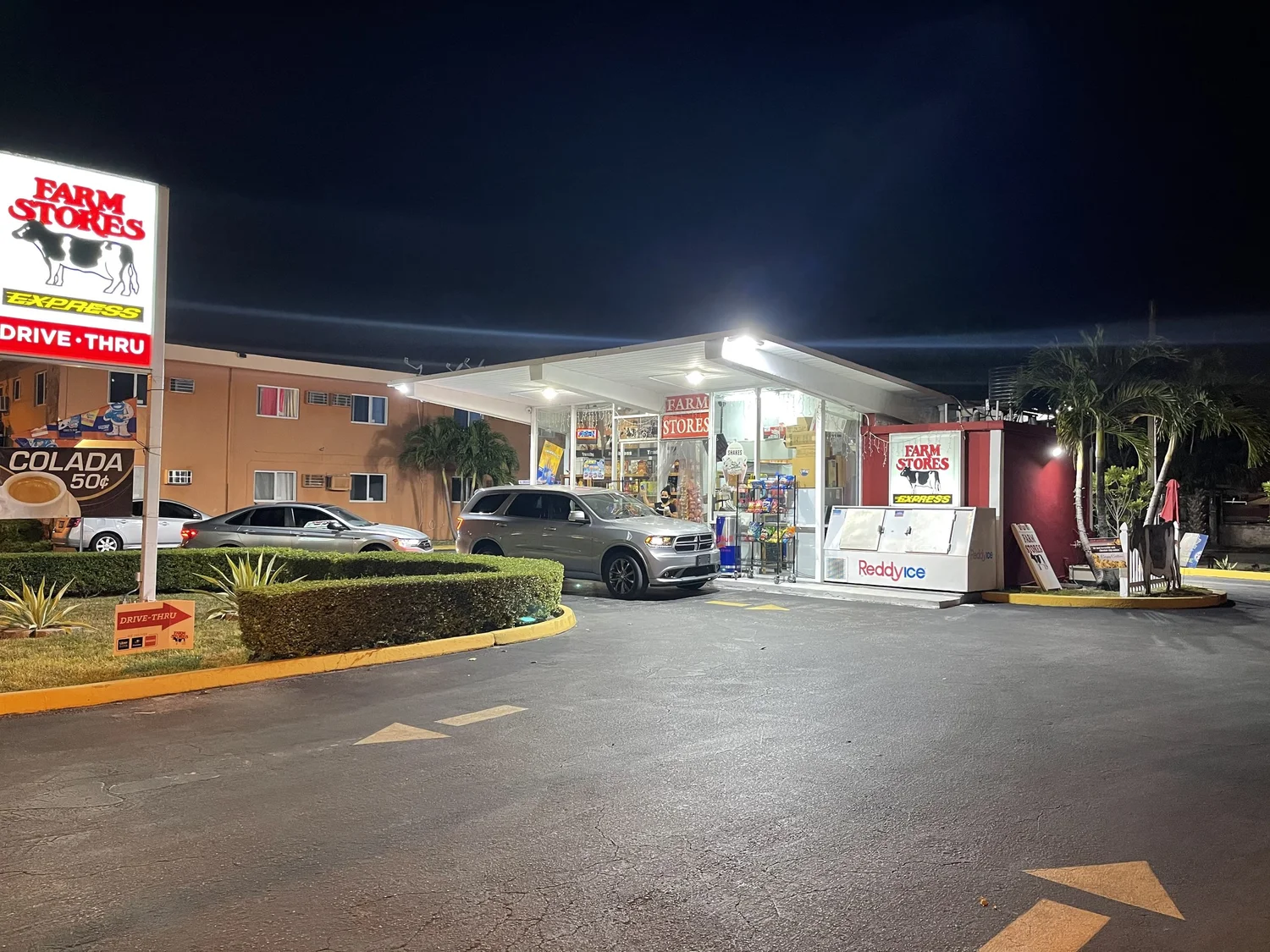
Then the job. She had been working full time as a remote compliance nurse for a health insurer. She was terminated for the conviction.
Twenty years to build a license, a career, a family, and a record of service her neighbors elected her for on the fourth try.
Her daughter created a public fundraiser to hire her a defense attorney. The Miami Herald reported that after seven days it had raised $505 toward a $100,000 goal. She told the paper she felt ashamed asking for money. She had always wanted to be the one who helps, not the one who asks. The Court found her indigent and appointed the Federal Public Defender.
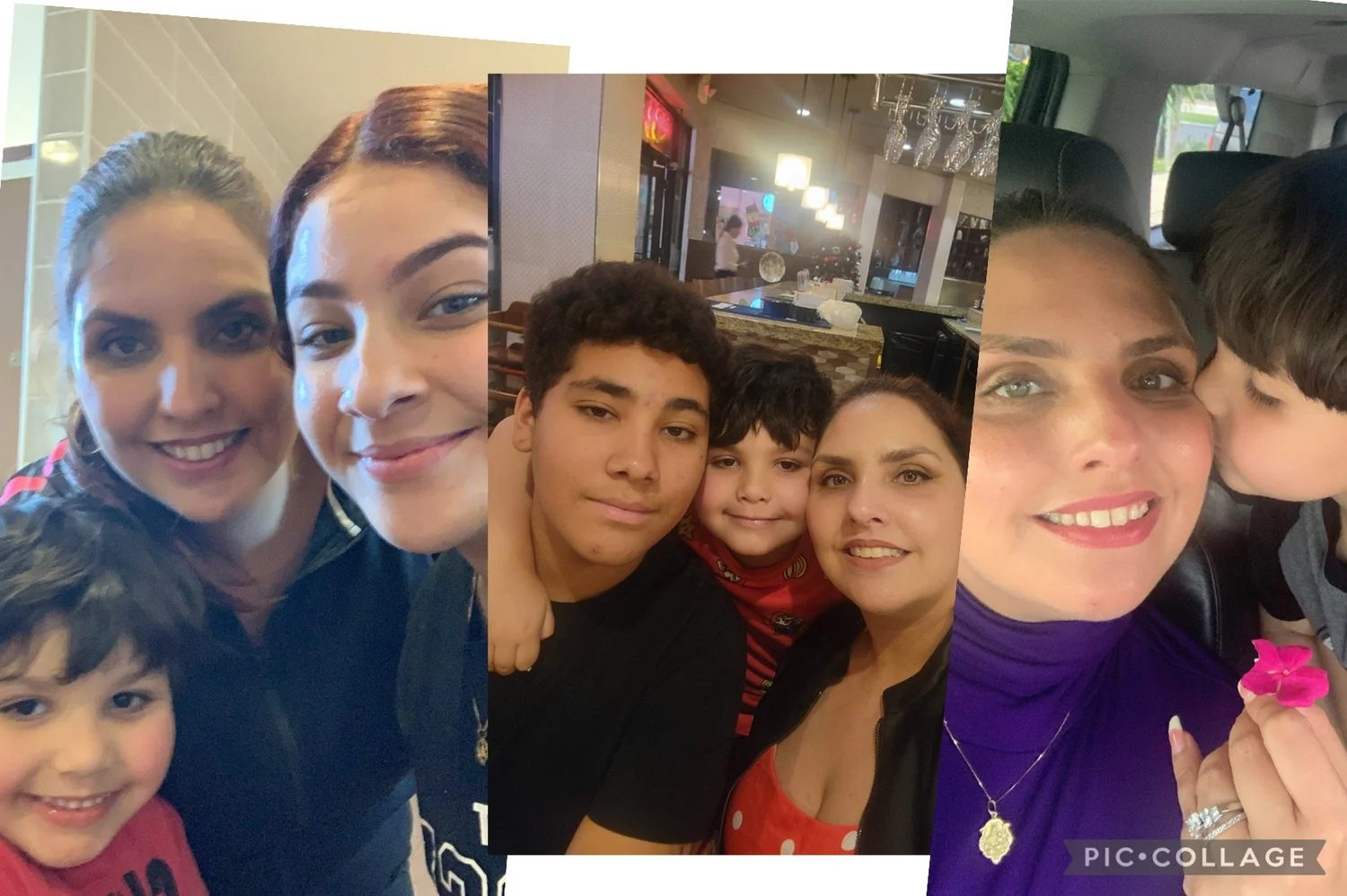
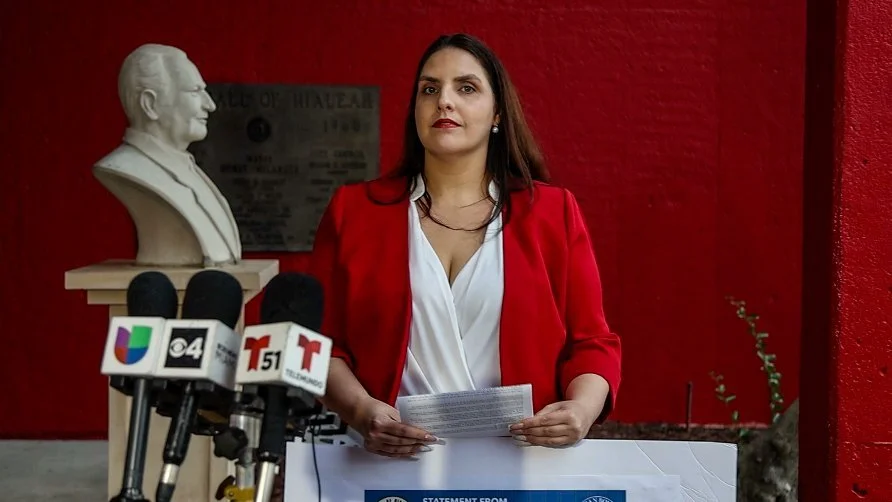
In 2002 she rode buses across Miami to ask a nursing school for a seat. Twenty-four years later, with the career that seat built taken from her, she enrolled again. On August 26, 2026 she finish a Bachelor of Science in Nursing. She is applying to law school, because of this.
What she believes happened
What follows is Angelica Pacheco’s own conclusion, in her own words. It is stated as belief, not as a finding of any court, and it is hers.
“I do not believe this prosecution was brought in good faith. I am not guessing at that. I have read every filing in my own case. I watched a federal judge ask the government the same question four different ways and never get an answer. I know what they held in their hands, and how long they held it, and what they told a grand jury anyway.
“And I do not believe mine was unusual. I believe there is a culture inside the Justice Department that produces this — that counts what a prosecutor wins and never counts whether he was right, and protects him either way.
It is corruption.
“They took my seat, my business, my career and my name. And they took almost two years I did not live — two years of not knowing, of dread before every filing, of being so far inside the dark that I could not find the edge of it. At the end of all that, what they needed was not a crime. It was a felony. Any felony. Nobody has ever had to explain that to me, and under the rules as they are written, nobody ever will.
“I am one of forty-three people who can prove this happened, because we kept the paper. There are thousands who cannot — not because it did not happen to them, but because nobody wrote it down and nobody made anyone explain it.
“That is what this website is for. Write it down. Put your name on it. Make them explain.”
we go louder.
In my own words
I was given a choice that was not a real choice. It was like handing over your wallet at gunpoint. You reach into your pocket, you place it in their hand. Technically, you gave it to them.
Only one thing could have moved me to make a decision that betrayed my values, and that is being a mother. My son is ten. He tells me I have the most beautiful pickle eyes, because they are green. I thought about the grief I would cause him if I chose to fight and lost. That was the only thing that mattered.
Then came two years I did not truly live — discovery from seven in the morning until past midnight, eighteen months under pretrial restrictions, three summers I could not take my little boy anywhere. He knew what was happening. I kept telling him I would never leave him, and I did not know if I could keep that promise.
I was heartbroken that my own government would say those things about me. My heart shattered into millions of pieces. The public shaming is something I will carry for the rest of my life.
I am saddened. I am angry. I am hurt. I feel betrayed. Pleading guilty went against everything I have believed this country stands for. I let the system fold me.
I keep asking what the government accomplished. How is society better? How does this deter anyone? Two months after I was indicted, my community elected me again. Whatever message this was meant to send, that is not the one they received.
I am not asking anyone to say I did nothing wrong. I am asking someone to look at what happened. I think I deserve to know why my life was upended.
The people who stood with her
My public defenders were a lifeline. Ms. Kate Mollison, Mr. Christian Dunham, Mr. Evan Kuhl and their team did not treat me like a case number. They saw me as a person, as a mother, as someone who was scared. When I felt completely engulfed in darkness, they brought hope and light. They gave me a voice, and I will never forget that.
Addressing the Court at sentencing, April 16, 2026.
The petition asks for a pardon. The record it rests on is checkable, all of it:
- Eight counts. $19.1 million. Not one produced a conviction, and the Department has never accounted for a single one.
- No patient was ever identified as harmed, in six years. The Department asked for victims on its own website for more than a year and not one person came forward. When the Court asked at sentencing whether anyone wished to be heard, nobody stood up.
- The government wrote that it may charge a defendant based partly on the deterrent effect on others — and its press release named her council seat.
- What it required at the end was a felony. It proposed wire fraud, then agreed her own public defender could substitute a different charge — because which crime it was did not matter. Only that there was one.
- The same Department resolves this exact conduct civilly, by the hundreds, without a conviction.
“I am asking for a pardon. Not because I want to be told I did nothing wrong. Because the felony is the punishment that does not end. Probation runs three years. The conviction runs the rest of my life. Remove it and I can work again. I am not asking anyone to take my word. I am asking someone to read the record and decide on the facts.” Angelica Pacheco
Not mercy. Review.
What you can do
This page has no budget behind it. No firm, no consultant, no press operation. It reaches anyone only because somebody decides to pass it on.
Ask the Justice Department to correct its own page
Two sentences. Five minutes.
"Your Criminal Division case page for United States v. Angelica Pacheco still lists charges that were dismissed and offers the original indictment for download. Please update it to reflect the actual outcome of the case."
If you know a reporter, a podcast host, or anyone with a platform
Send them this page. Every document is public and every claim is cited. A journalist can verify all of it from the docket in an afternoon. That is the single thing most likely to change this.
Angelica will speak to anyone
Any outlet, any format. She will answer any question about her own case — every document is public and nothing is off limits. press@250pardons.com
If you found something wrong
Tell us. If any passage here does not match the record, we will correct it. That promise is the only thing that makes the rest of it worth reading.
The record
United States v. Angelica Pacheco, S.D. Fla. Every quotation and figure above comes from one of these.
Her case manager from 2002. Filed with the Court, published with her consent.
Filed with the Court, published with his consent.
Confirming election as Republican committeewoman, August 2024 — two months after the indictment. Certificate of Election.
The page still describing the dismissed charges. Captured August 8, 2026.
Comparator matters, all U.S. Department of Justice: U.S. ex rel. Hablitzel v. All in Jets, LLC, No. 20-cv-61410 (S.D. Fla.) · Sextant Marine Consulting LLC (S.D. Fla., Oct. 2021) · U.S. ex rel. Quesenberry v. Pan African Interchange, LLC, No. 9:20-cv-81717 (S.D. Fla.) · DAXC, LLC (affiliate of Pinnacle Housing Group), deferred prosecution agreement (S.D. Fla., March 20, 2017) · Mobile Programming LLC and A-1 Technology, Inc., No. 25-cv-367-GBW (D. Del., Aug. 2026) · Aquatherm, L.P. (D. Del., June 2026)
A note on quotation. Passages marked verbatim are exact text from the transcript, filing or authority named, with nothing altered. Everywhere else, statements attributed to the Court or to counsel are summaries in our own words of what the record shows — accurate, but not quotation. Figures drawn from the government's filings are allegations, not findings. The account of the plea negotiation in Part 6 is hers; plea discussions are not on the public docket, and it is marked where it appears.
If any passage on this page does not match the record, tell us and we will correct it.