
Case 7 · #43Americans
Michael Castillero
Reports to federal custody 10 September 2026

- Status
- Reports 10 September 2026
- Convicted
- Jury verdict, 4 November 2025, S.D.N.Y. — six counts
- Sentence
- 11 years · co-defendant, same trial, same counts, identical guideline calculation: 10
- Assets frozen
- 13 May 2022 — ex parte, 41 months before trial
- Forfeiture
- $24.2 million · the government has also noticed the family home
- Represented by
- Court-appointed counsel — certified unable to pay a fine
- Sentenced by
- Judge Jesse M. Furman, 20 May 2026
- Appeal
- Pending, Second Circuit
- Clemency
- Petition filed
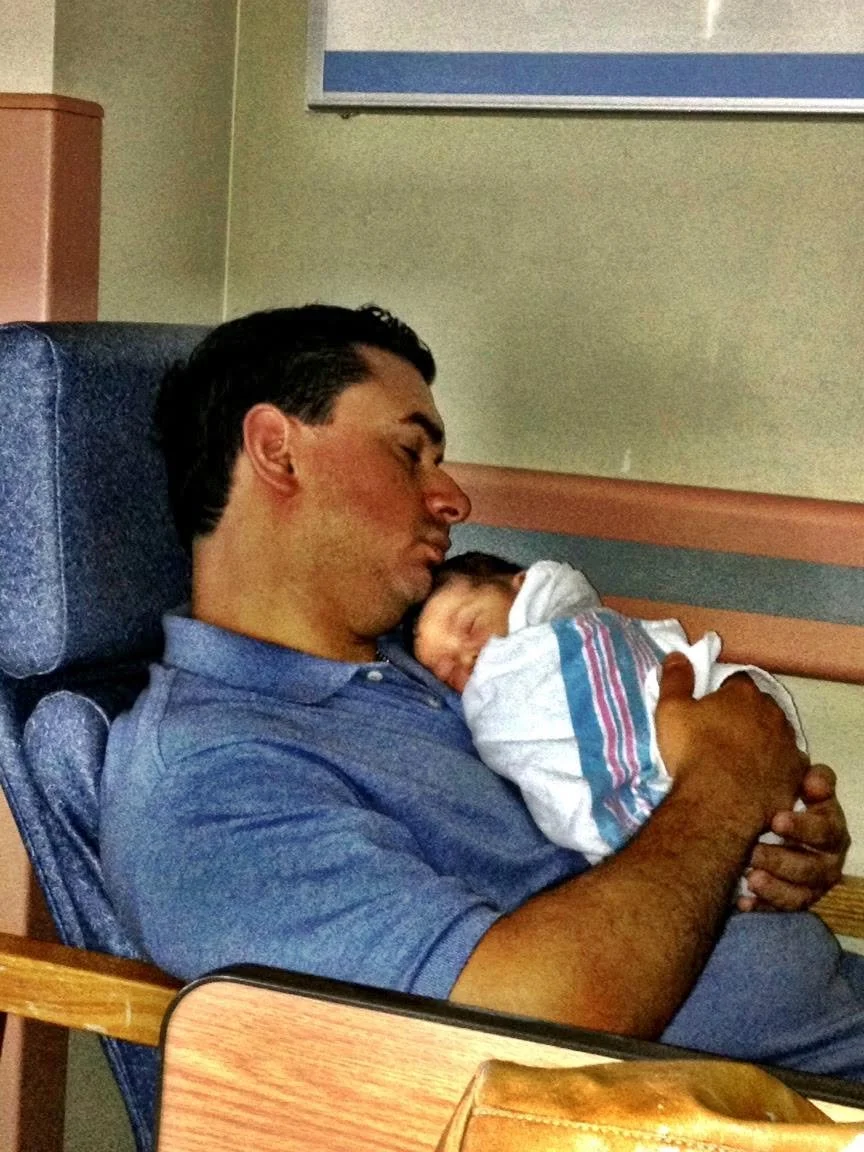
Every school morning
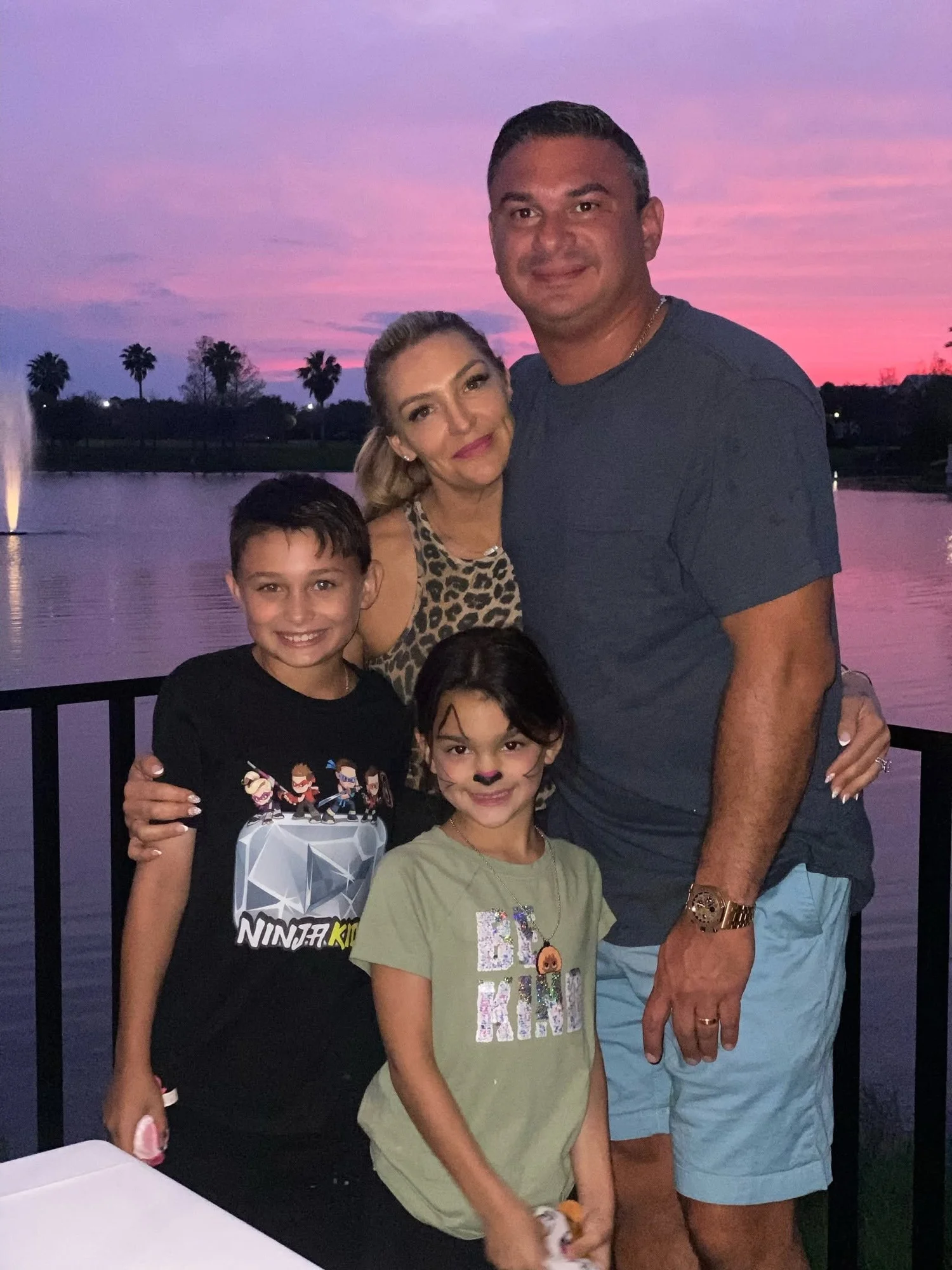
Michael Castillero takes his children to the bus stop. Chase is fifteen. Reese is eleven.
On 10 September that stops.
Chase will be twenty-five when his father comes home. Reese will be twenty-two.
What this page shows
- A jury convicted him on six counts. He has appealed. This page does not ask you to decide that.
- Every account he and his wife held was frozen on an ex parte application in May 2022. Trial was forty-one months later.
- The accountant whose declaration supported that freeze conceded under oath that he never reviewed the brokerage records, never analysed profit or loss, never read the offering documents, and could not define carried interest.
- He received twelve months more than his co-defendant. Identical guidelines. The difference was what he said in public afterward.
- The government has filed to take the house. Three of the four people living in it have never been charged with anything, and no lawyer has ever contacted his wife.
Every claim below is sourced to a court document or a government publication. The record is listed at the end.
What a jury decided
On 4 November 2025, after a two-week trial in the Southern District of New York, a federal jury convicted Michael Castillero on all six counts: conspiracy, securities fraud, wire fraud, investment adviser fraud, conspiracy to obstruct justice, and obstruction of justice.
Investors lost money. A court-appointed receiver is administering what remains. Every filing in that case is public.
He maintains he did not commit these offenses and has appealed.
This page does not ask you to decide that. It asks what the government knew on the day it took everything — and what it has never had to answer for since.
The accountant
On 13 May 2022, the Securities and Exchange Commission went into federal court without notice and froze every account belonging to StraightPath, to Michael Castillero, and to his wife Nikki, who has never been charged with anything.
The declaration supporting that emergency application was written by Douglas J. Smith, a staff accountant in the SEC's Division of Enforcement.
Eleven days later, under oath, defense counsel deposed him. The transcript is public in SEC v. StraightPath Venture Partners LLC, No. 22 Civ. 3897 (LAK) (S.D.N.Y.).
This is what the government's own witness conceded he had not done.
He never reviewed the brokerage records. Asked why: “I didn't have enough time, there were about 15,000 rows of bank records and only one person, me, doing them so it was a lot of work.”
He did no profit-and-loss analysis for the funds. He did no profit-and-loss analysis for the investors. He was not aware of anyone at the SEC who had.
He never read the private placement memorandum. He never read the operating agreements. He never read the subscription documents — the papers that define what the firm was permitted to charge.
He could not define carried interest. He could not define placement agent. He could not define waterfall.
He never compared what StraightPath charged investors to what the same shares cost elsewhere at the same time. Asked whether the prices were market, he had no idea.
He conceded the firm held roughly $200 million in stock.
He calculated a deficit of about $14 million against $411 million raised — three and four-tenths of one per cent. He agreed ten of the offerings had no deficit at all. The SEC's declaration listed only the ones that did.
He knew that a co-defendant had used his own money to cover part of the Rubrik shortfall, and had lined up further shares to cover the rest, when the SEC filed.
“Ponzi-like”
That is the phrase the SEC put in its national press release. It is the phrase the coverage used. It is still online.
Asked under oath to define it, Smith said it meant paying an investor back with money from a new investor.
Asked whether it would still be Ponzi-like if the money came from StraightPath's own inventory:
Verbatim — Deposition of Douglas J. Smith, 24 May 2022
“I guess.”SEC v. StraightPath Venture Partners, 22 Civ. 3897 (S.D.N.Y.)
Asked whether the firm had the right to sell stock it owned and use the proceeds: “I don't know.”
Forty-one months
The freeze took effect on 13 May 2022. The trial began in November 2025.
For forty-one months, before a jury heard a single witness, the family had no access to their own money.
To pay for a defense and keep the lights on, they sold the cars. They sold a property in Stuart. They sold the jewelry, down to Nikki's engagement ring.
Selling Nikki's engagement ring just to keep the lights on — that kills me inside every single day.Michael Castillero
By sentencing, the United States Probation Office certified that he had no ability to pay a fine.
The government called two university professors as expert witnesses on fiduciary duty and market pricing. The court granted the government's motion to preclude the defense from presenting expert testimony on custom and practice in exempt private funds.
The jury heard one side's experts on what is standard in that industry.
Nobody has to believe he is innocent to think that is not how it should work.
What the government says
Between 2017 and 2022, StraightPath raised roughly $386 million from hundreds of retail investors seeking pre-IPO shares. The government's case was that the funds were marketed as fee-free access while affiliated entities bought shares and resold them into the investor funds at higher prices — undisclosed markups — that capital was commingled, and that operators with prior regulatory bars were concealed from investors.
On obstruction: that in May 2021, after the SEC served investigative subpoenas, internal email accounts were deleted and the SEC was told those threads never existed.
Two facts a reporter finds in an afternoon, so they belong here.
In 2019 he entered a FINRA consent agreement resulting in a bar from associating with member broker-dealers. Prosecutors argued the failure to disclose it to investors was a material omission.
The government also alleged that his use of “Michael Alejandro” on administrative documents was an attempt to evade background checks. Alejandro is his legal middle name.
His account of the deletions: the accounts belonged to two outside referral agents who had been representing themselves as internal managers of the firm. He says access was stripped as a compliance action in the first days of May, and that the SEC's request came weeks later. He also points to the firm's relocation from New York to Florida and the server migration that came with it.
The jury heard both accounts and convicted.
The proffers
Between 30 January and 3 March 2025, he sat for six proffer sessions with prosecutors, SEC attorneys and postal inspectors. Counsel was present.
He has said publicly, since before his sentencing, that he did not want to proffer and did so under duress. He describes being told through his attorney that if he did not cooperate, the government would move to denaturalize him. He came to the United States from Panama at ten years old and is a citizen. He says he was told he could keep his assets and avoid court, that this proved untrue, and that he then chose trial. He says recording was stopped while he was told what to say. He filed a grievance against the attorney who was present and replaced her.
The government denies it. In a filing dated 13 May 2026, prosecutors stated that no Assistant U.S. Attorney threatened to denaturalize or deport him, and that any reference came from standard language in a cooperation agreement — language applicable to any person, stating that denaturalization can follow if naturalization was procured by concealment. The prosecutors stated they were not aware of his immigration status when the agreement was extended.
At sentencing, the Court found he had proffered repeatedly and admitted the conduct before deciding at the eleventh hour to go to trial, and treated his later public denials as evidence of a lack of remorse.
No court has held a hearing on what was said in that room. Nobody has been placed under oath about it.
The proffer agreement he signed permitted the government to use his statements to rebut arguments made on his behalf at any stage. That is how they came to be quoted at his sentencing.
Thirteen pages
On 13 May 2026, one week before sentencing, the government filed a thirteen-page letter with the Court.
It was not about the fraud. It was a catalogue of every podcast, interview and social media post Michael Castillero had given since his conviction — with links, timestamps and transcribed quotations.
He had said a great deal, and much of it was intemperate. He said there were no victims. He said the judge was “basically a fourth lawyer for the prosecution.” He said the jury had been told how to deliberate. He said he was targeted for his politics.
We are not going to pretend he didn't say those things. They are quoted in a public filing and anyone can read them.
At sentencing, the Court addressed them directly. It said his right to speak publicly and to petition for a pardon was not in question. It called the pardon campaign “craven and distasteful.” It said his statements showed a complete denial of reality, that it doubted he believed them, and that they indicated a high likelihood he would reoffend. It stated plainly that his political views had no bearing on the sentence.
He received twelve months more than his co-defendant, who said nothing publicly.
Both men had the same guideline calculation. Total offense level 43. Criminal history category I. The same enhancements. The same range.
A defendant who goes to trial has already forfeited the sentencing credit that acceptance of responsibility provides. The additional year was imposed for what he said afterward, in public, about a case under appeal. He was not accused of contacting jurors, threatening witnesses, or interfering with any proceeding.
The government spent thirteen pages on what he said into a microphone. It has never had to answer, under oath, for what it said to him in a room with no recording.
Two children will be twelve months older when their father comes home.
How the same conduct has been resolved
The pardon power has reached these offenses before. Every figure below is from the Justice Department's own published record of clemency grants.
| Recipient | District | Offenses | Sentence | Restitution | Outcome |
|---|---|---|---|---|---|
| Jason Galanis | S.D.N.Y. | Conspiracy to commit securities fraud (2 counts); securities fraud; investment adviser fraud — and, in a second case, conspiracy to commit securities fraud; securities fraud; conspiracy to commit investment adviser fraud | 135 months, plus 173 months with 60 consecutive | $37,032,337 and $47,785,176 | Commuted 28 Mar 2025 |
| Carlos Roy Watson | E.D.N.Y. | Conspiracy to commit securities fraud; conspiracy to commit wire fraud; aggravated identity theft | 116 months | $36,769,153 | Commuted 28 Mar 2025 |
| David Gentile | E.D.N.Y. | Conspiracy to commit securities fraud; conspiracy to commit wire fraud; securities fraud; wire fraud | 7 years | — | Commuted 26 Nov 2025 |
| Devon Archer | S.D.N.Y. | Conspiracy to commit securities fraud; securities fraud | 1 year and 1 day | $43,427,436 | Pardoned 25 Mar 2025 |
| Trevor Milton | S.D.N.Y. | Securities fraud; wire fraud | 48 months | — | Pardoned 27 Mar 2025 |
| Terren Scott Peizer | C.D. Cal. | Securities fraud; insider trading | 42 months | $5,250,000 fine | Pardoned 16 Jan 2026 |
| Stephen E. Buyer | S.D.N.Y. | Securities fraud (4 counts) | 22 months | $765,912 | Pardoned 4 Jun 2026 |
| Michael Castillero | S.D.N.Y. | Securities fraud; wire fraud; investment adviser fraud; conspiracy; obstruction | 11 years | $24.2 million forfeiture | Reports 10 Sep 2026 |
Jason Galanis is the closest match on the list. Same district. The same three core offense categories, including investment adviser fraud — the only other grant here carrying that charge. Roughly twenty-six years of sentence exposure against eleven. Approximately $84.8 million in restitution against $24.2 million. He received a commutation in March 2025.
And on obstruction, the count that most complicates this case — clemency has reached that too.
| Recipient | Offenses including obstruction | Sentence | Outcome |
|---|---|---|---|
| Imaad Shah Zuberi | FARA violations; tax evasion; illegal campaign contributions; tampering with a witness, victim or informant | 144 months; $15,705,080 restitution | Commuted 28 May 2025 |
| Julie Chrisley | Conspiracy to commit bank fraud; bank fraud; wire fraud; tax evasion; obstruction of justice | 84 months; $4,740,645 restitution | Pardoned 28 May 2025 |
| Thomas Edward Caldwell | Tampering with documents or proceedings | Time served | Pardoned 20 Mar 2025 |
Every figure in both tables comes from the Department of Justice's own published record: Clemency Grants by President Donald J. Trump (2025–Present), Office of the Pardon Attorney. This page takes no position on whether any of these grants was correct. The point is the range of conduct the power has already reached — and that this file was assembled, sourced, and filed through the ordinary channel.
Freedom Avenue
The street was called Freedom Avenue. The house was twelve hundred square feet.
His bedroom was a corner of it, and not entirely his — when relatives came he was moved out of his own bed. His parents were both college-educated and both worked at banks, though he never learned what either of them did there. What he knew was the schedule. His father out the door before six, back at six or seven. His mother home carrying whatever the day had done to her.
On the walls were pictures from a home goods store. Sunday did not smell like breakfast. Sunday smelled like cleaning products.
The arrangement was stated plainly and often: we provide for you, so you do whatever we tell you. He was reminded that he was an expense. There were stretches when he wore the same socks several days running, because that was what he owned.
His sister was six years younger. Her summers were camps. His were cleaning, cooking, and getting her where she needed to go — three buses, three hours each way, because his parents would not adjust their schedules. He became a competitive swimmer because she was one. Three more buses to practice.
He was an average student. He thinks now the grades were deliberate in a way he couldn't have named: the only time his parents reliably noticed him was when a bad one came home.
By twelve he had no friends and no idea what he wanted to be, because nobody had asked. He knew two things. He was good at math, and his parents worked in banks.
Wall Street was the only exit he could see.
The room
His first job was at the local pool, unpaid — taken so he could swim and keep an eye on his sister. When he finally earned a real paycheck, he handed it to his parents.
The financial industry, when he reached it, was one room. Twenty men desk to desk, a wall of overlapping noise. Three to five hundred calls a day. No script — whatever stock one of the senior guys liked that week. People hung up mid-sentence, sometimes right after what had felt like a good conversation. You dialed the next number.
His first closed deal was ten thousand dollars. Walking out of the building that day he remembers thinking: my hard work is finally paying off.
His parents' position had been get a job, don't try to be your own boss. When money started arriving, it shifted. They told him he owed them for raising him.
For years he barely got by. Into the second year of the firm, every month was a fight. Then boutique firms started calling. He looked around the floor one day and understood he had made it.
Nikki
They met on Match.com. First date 6 January 2011, at Angelina's. She came in wearing jeans and a leather jacket. They sat at the bar until the staff cleared the tables around them.

By December she was pregnant with Chase. There was no textbook proposal — life moved. They married 28 June 2014 with their two-year-old son watching, a hundred and fifty people there.
She is better than he is at everything, he says, as a statement of fact. She calls him Mike, or just babe. Before the freeze, a normal Tuesday meant one of them saying let's just go to dinner, the two of us.
The floor gave out on 6 May 2022. They had just walked in from the Kentucky Derby. He stood in the doorway unable to process what he was reading and said: call Amanda. She'll explain it, and then we'll digest it together, because I am completely taken back.
He does not soften what came after.
This ordeal hasn't just strained us — it has broken our marriage. The desperation of trying to find a way out led me to make some dumb, desperate judgments. The pressure has truly broken her.Michael Castillero
Tickle me Dad
Chase turned fifteen this month. Video games, wants to play football, admittedly bad at focusing on anything that doesn't revolve around him. What he is certain about is beating his father at Madden, which he does.
Reese is eleven. In the morning you get one of two versions of her. On the hard school days her father brings the dogs into her room until it turns into a joke. She walks up to him out of nowhere and says tickle me Dad.
Asked what he'll miss most, he named that. Not the house. Not the work.
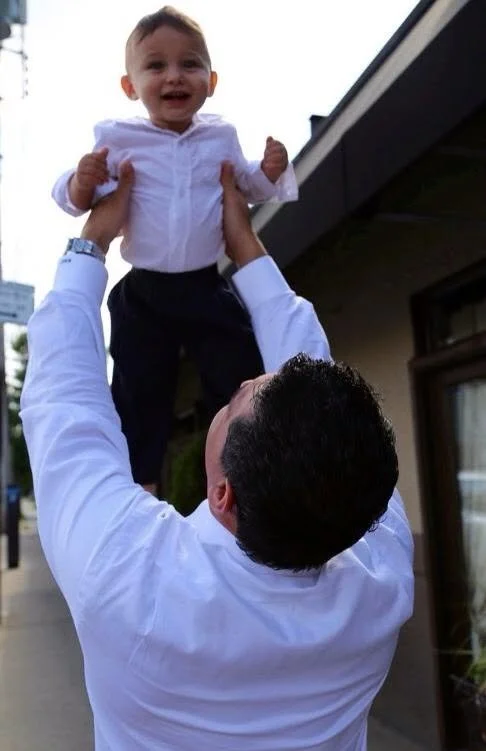
Both children know. Chase has been posting publicly, on his own account, asking the President to look at his father's pardon application. Underneath it he is frightened. He has asked his father directly where they are going to live.
It breaks my heart into pieces knowing that Chase has been told multiple times by the outside world that his dad is a thief.Michael Castillero
The anxiety has become something worse than fear. Chase doesn't like his father to travel alone.
A fifteen-year-old has decided he needs to guard his own parent.
Palm City
They drove I-95 in January 2021 — Nikki, Michael, Chase at nine, Reese at six, and the dog in the back. Everything they owned in the car.
The heart of the house is the family room off the kitchen: a big television and a white couch everyone piles onto, two Cavapoos glued to whoever sits down. Hudson barks at strangers and leans on family. Chanel snaps at the air when you blow in her face. On the worst days neither will leave him.
A pool in the yard and a trampoline Reese loves. Cooking is split — he handles the grill, and fried rice for Reese, her favorite. As the case wore on he started baking bread. Kneading dough by hand became the one physical thing he could control.
Sunday is church at Holy Redeemer, then home to feed the chickens. If it's a month with a little extra, pizza for the kids. Then the white couch, the dogs, and Big Brother.
Three in the morning
He used to lift. That's gone. He describes himself now as a shell, waiting for the next thing.
The phone is never out of reach. When three a.m. comes and sleep doesn't, he gets up and walks the floors. He prays. He reads five pages of the Bible a day, without exception.
He has learned he can do more with his hands than sit at a desk. The last project he finished was replanting the yard — papaya, lemon, tomato.
When he needs his mind elsewhere, it's old New York hip-hop. The last song he put on was Method Man and Mary J. Blige, “You're All I Need.”
They have attended Holy Redeemer since 2023. Nobody in the parish has offered support.
The house
Four people live in the house in Palm City. Nikki, Chase, Reese, and Michael. One of them has been convicted of a crime.
The government has noticed the property for forfeiture. It was bought in 2021 with recorded mortgage financing.
Federal law provides a procedure for exactly this. Under 21 U.S.C. § 853(n), a person who is not the defendant — a spouse, a co-owner — may file a petition asserting their own interest in property the government intends to take. There is a hearing. A court decides.
Nikki has not filed one.
Not because she chose not to. Because no one told her the procedure existed. His lawyers are court-appointed; they represent him, and they cannot represent her — her interest is adverse to the forfeiture against him. She has no lawyer of her own and has never been contacted by one.
The clock on that petition runs from the date notice is given, whether or not anyone explains what it is for.
There was a procedure. It was followed. Nobody was required to tell her.
Status note: counsel is being consulted this week. This section will be updated.
To the investors
I wouldn't hide behind legal jargon or compliance definitions. I would look them in the eye and say: I am deeply, truly sorry. Whatever the government alleged or mischaracterized about our corporate structure, the reality is you trusted our firm with your hard-earned security, and the business collapsed under my watch. Whether the receivership returns your funds or not, I carry the weight of that failure every day, and I never intended for your trust to result in loss.Michael Castillero
In his own words
The verdict. When the word came out of the foreperson's mouth my body went completely numb. The room felt like it lost all its oxygen. I could hear the buzzing of the fluorescent lights, but everything else went into slow motion. I couldn't look back at Nikki right away because I knew the second I saw her face, the reality would crush me. I just stared at the defense table, watching my own hands shake.
That night. The house was dead silent. I didn't eat. I couldn't. I just paced the floor of the family room for hours, looking at Chase and Reese without knowing how to even look them in the eye. I spent the rest of the night on my knees in the dark.
Eleven years. It felt like a physical blow to the stomach. It wasn't a number of months; it was a decade of my children's lives. I did the math instantly: Chase will be 25, a grown man. Reese will be 22. The first thing I felt wasn't anger — it was a suffocating panic that I was being erased from their lives while the world kept moving.
The deepest shame. I brought this storm to our front door. Selling Nikki's engagement ring just to keep the lights on — that kills me inside every single day. Seeing the fear in Chase's eyes and knowing he feels the burden to protect me instead of just being a kid. I was supposed to be the shield for this house, and instead I became the reason the shield failed.
What I would do differently. I would have stopped trying to handle the weight of everything entirely on my own. I let my pride and my desperation lead me to make dumb, frantic judgments that only added fuel to the fire and broke Nikki's spirit. Trying to protect them by keeping the panic boxed up inside only isolated the people I loved the most.
What went wrong
Every rule here is defensible standing alone.
An agency may freeze assets on an ex parte application before any adjudication. A court may credit a declaration without inquiring what its author examined. A court may weigh a defendant's public statements in assessing character and deterrence under 18 U.S.C. § 3553(a). A proffer agreement may permit the government to use a defendant's own words to rebut arguments made on his behalf. A court may preclude expert testimony it finds unhelpful. And forfeiture reaches property regardless of who else lives in it — the only remedy is a petition a spouse must know to file.
Each is a rule someone can defend. Apply all of them to one family and you get an outcome no one would.
Every mistake in this case was paid for by them. The accounts. The cars. The ring. And now, possibly, the house.
What happens next
His appeal is pending in the Second Circuit.
One issue changed after his trial. On 11 June 2026 — three weeks after sentencing — the Supreme Court decided Abouammo v. United States, No. 25–5146, holding that a charge under 18 U.S.C. § 1519 must be tried where the falsification occurred, not where the investigation was based. His obstruction counts were tried in the Southern District of New York; he says the conduct occurred after the firm had relocated to Florida. Venue was challenged before trial, and there is no route to appeal a venue ruling before a verdict, so the issue waited for direct appeal — where it now sits, alongside a decision that did not exist when the jury was empanelled.
It does not touch the four other counts, which carry most of the eleven years. And no court has applied it to his case.
He reports on 10 September. The appeal will not be decided by then.
The ask
He has filed for clemency.
Eleven years take Chase from fifteen to twenty-five and Reese from eleven to twenty-two. Probation runs three years past that. The forfeiture reaches a house where three people who were never charged with anything currently live.
Not that the verdict be overturned — the appeal is for that.
That someone outside this look at the forty-one months, the twelve months, and the house.
Not mercy. Review.
The night before
There won't be grand speeches or dramatic gestures. All I want is a normal evening at home — sitting on the couch with Nikki, Chase, Reese, Hudson and Chanel, sharing some simple laughs together before the morning comes.Michael Castillero
And if it doesn't happen:
The very first thing I will do is walk out to the bus stop with Chase and Reese on September 10, just like we always do.Michael Castillero
What you can do
Share this page
Forty-one months of frozen accounts before trial. Twelve months added for what he said out loud. A house with two children in it.
Do you know a reporter, a podcast host, a lawyer, or anyone with a platform?
Send them this page. That is the single thing most likely to change this case.
Press
Any outlet, any format. Every document cited here is public. Nothing is off limits.
A note on quotation. Passages marked verbatim are exact text from the transcript or filing named, with nothing altered. Everywhere else, statements attributed to the Court, to counsel or to a witness are summaries in our own words of what the record shows — accurate, but not quotation. Statements attributed to Michael Castillero are his own account, given for this page or quoted from the public record. Every document cited is listed below. If any passage on this page does not match the record, tell us and we will correct it.
The record
Deposition of Douglas J. Smith, SEC Division of Enforcement, SEC v. StraightPath Venture Partners LLC, No. 22 Civ. 3897 (LAK) (S.D.N.Y.) · SEC emergency application and asset freeze order, 13 May 2022 · SEC Litigation Release No. 25388 · Indictment, United States v. Castillero, No. 23 Cr. 622 (JMF) (S.D.N.Y.) · Verdict, 4 November 2025 · Government sentencing submission and letter to the Court, D.E. 228, filed 13 May 2026 · Sentencing transcript, 20 May 2026 · Judgment · Co-defendant judgment · Presentence Investigation Report objections and rulings · Preliminary order of forfeiture · Receivership docket, 22 Civ. 3897 · Abouammo v. United States, No. 25–5146 (11 June 2026) · U.S. Department of Justice, Office of the Pardon Attorney, Clemency Grants by President Donald J. Trump (2025–Present)