
Case 41 of 43 · 43 Americans · 250pardons.com
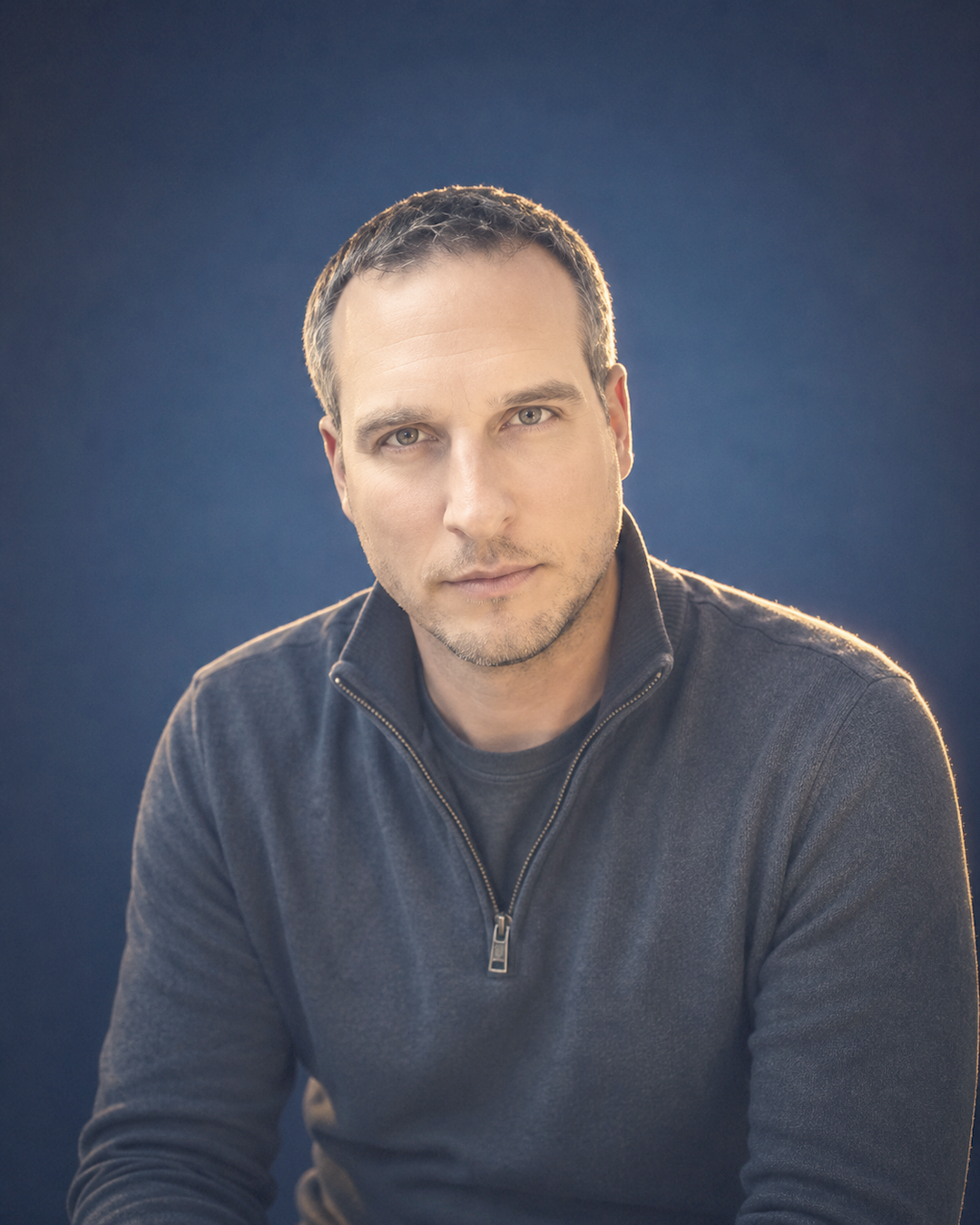
Matthew Simpson
Twenty-four years old, no criminal record, arrested in Dallas on a computer charge in September 2009. He has been in federal prison ever since. The co-defendant the government called the architect of the same scheme pleaded guilty and got ten fewer years — and the sentencing judge has put that arithmetic in writing three times. Meanwhile AT&T, the principal victim in his case, was sued by the same Justice Department for billing a federal fund for Nigerian fraud calls, and paid a fine.
- Case
- No. 3:09-cr-00249-D (N.D. Tex.) · defendant (6)
- Convictions
- Conspiracy to commit wire and mail fraud; fraud in connection with electronic mail; obstruction of justice — destruction of evidence
- Acquitted
- Second obstruction count
- Reversed
- False registration of a domain name — no evidence, 5th Cir. 2014
- Trial
- Ten weeks · verdict December 20, 2011
- Sentence
- 480 months — imposed May 29, 2012; reimposed August 15, 2014
- Count structure
- 240 months conspiracy plus 240 months obstruction, stacked consecutively · 36 months concurrent
- Restitution
- $17,674,704.35
- Forfeiture
- Money judgment in the same amount · precious-metal certificates ≈$3m · cash and equipment ≈$2m
- Judge
- Sidney A. Fitzwater (N.D. Tex.)
- Prior record
- None. Criminal History Category I
- Age at arrest
- 24
- In custody since
- September 9, 2009 — continuously, no day free
- Held before trial
- 25 months, over his written objection
- Time served
- 204 months — seventeen years
as of September 2026 - Discipline in prison
- None. Seventeen years, no infraction
- Age now
- 41
- Projected release
- 2043 — he will be 60
- Co-defendant (2)
- Michael Faulkner — pleaded guilty, 360 months, released 2035
- Clemency
- C309817 · petitioned under four administrations
Written and published by 250pardons.com, the 43 Americans project. Not written, reviewed, or approved by Matthew Simpson or his counsel. His legal positions are stated in his court filings, not here.
In December 2021, a federal judge in Dallas sat down to explain why a man named Michael Faulkner would not be getting out of prison early.
Faulkner was the one the government called the architect. He ran the scheme. He fled to Mexico when the FBI came and lived under a false name until they found him. He already had a federal felony conviction behind him and a supervised release violation on top of it. He was serving thirty years.
The judge went through the math. Under the guidelines Faulkner had faced forty years. He got thirty because he signed a plea agreement, and that agreement, in the judge's words, "capped his sentence at 360 months."
Then the judge wrote one more sentence.
In fact, a codefendant who went to trial — and who had a less extensive criminal record than does Faulkner — did receive a prison sentence of 480 months.Four hundred eighty months is forty years. The codefendant is Matthew Simpson. He was twenty-six at sentencing and had never been arrested before in his life.
The plea was worth ten years. Faulkner signed it. Simpson asked for a jury, and paid the ten years Faulkner didn't have to.
United States v. Faulkner, 2021 WL 5746529, at *5–6 (N.D. Tex. Dec. 2, 2021) (Fitzwater, J.) · affirmed, 5th Cir. Oct. 17, 2022 · reaffirmed word for word in the same court's order of August 6, 2026.
What he has already served
He has been in custody since September 9, 2009 and has not been free for a single day since. As of September 2026 that is 204 months.
Seventeen years in, he is not yet halfway through.
Put that next to what federal courts actually hand down. The U.S. Sentencing Commission publishes the numbers. The median federal sentence for fraud, theft and embezzlement is twelve months. The median federal murder sentence — a category covering first-degree murder, second-degree murder and conspiracy to commit it — is 240 months.
He has already served seventeen times the median federal fraud sentence, and eighty-five percent of the median federal murder sentence. And he has twenty-three years left.
U.S. Sentencing Commission, Quarterly Data Report, FY2024, Table 6 — Sentence Length by Type of Crime.
He was arrested for something else
Almost nobody knows this about the case.
On September 1, 2009 a grand jury handed up a sealed indictment. It charged nine people. Not nineteen. And it charged them with exactly one crime: conspiracy to gain unauthorized access to a protected computer, under 18 U.S.C. § 1030(b). A computer offense. The government put the loss at roughly twelve million dollars.
There was no wire fraud conspiracy in that indictment. No mail fraud conspiracy. The twenty-year charge that half of Matthew's forty years would eventually rest on did not exist in the case yet.
Eight days later he was ordered held without bond on those charges.
Then the case changed shape around him while he sat in a cell. Nine defendants became nineteen. The computer charge grew into a wire and mail fraud conspiracy carrying twenty years, with spam, obstruction and domain-name counts stacked alongside it. Twelve million dollars became a loss finding north of twenty million. It took four separate rewrites of the indictment to get there.
The Justice Department told the court this was coming. In the same September 2009 filing it said it
"foresees seeking a superseding indictment that, inter alia, expands the charges and perhaps adds defendants."
Recorded in Doc 77 at 4 · Memorandum Opinion and Order, October 19, 2009
It did that four times over the twenty-five months he waited.
The room where his detention stopped mattering
Almost as soon as he was locked up, the government asked the court to declare the case "complex." That is a formal designation. It stops the speedy-trial clock and lets a case take as long as it needs to take.
Matthew fought it. He filed a written objection. Two other defendants did the same.
The judge granted it anyway, on October 19, 2009. In the order he listed the arguments defendants had made, and described one of them this way:
"concerning one defendant, the fact that he is being detained pending trial"
Doc 77 at 4
That defendant was Matthew, five weeks into what would become more than two years in a cell. The court's answer was one line:
"Complexity is measured in terms of the case, not according to an individual defendant."
Doc 77 at 4
Fifteen months later the Fifth Circuit explained what that line had done.
Federal law says that if you are locked up solely because you are waiting for a trial, and ninety days pass without one, a judge has to review whether you should still be in there. It is automatic. It exists precisely for people in Matthew's position.
He invoked it. The appeals court held it did not apply to him — because the case had been declared complex, the clock had stopped, and the ninety days had never run.
He kept asking. The trial was postponed five times. When a co-defendant asked for a sixth delay in September 2011, Matthew opposed that too. The judge noted, in refusing it, that by the time trial began Matthew "will have been detained awaiting trial for over two years."
He wanted a trial at the start of the delay and he wanted one at the end of it. He got one after twenty-five months, and it cost him forty years.
Docs 60, 61, 65, 77 · United States v. Simpson, No. 10-11121 (5th Cir. Jan. 14, 2011) · Doc 1037 at 2, 6, 8.
Everyone else in the same courtroom
Most of the nineteen were sentenced by the same judge in the same building, most within an eight-week stretch in the spring of 2012. Read the disposition column, then read the sentence column.
| Defendant | Disposition | Sentence | Restitution |
|---|---|---|---|
| Michael Faulkner — the alleged architect | Pleaded guilty | 30 years | $18.2m |
| Matthew Simpson | Went to trial | 40 years | $17.6m |
| William Watts | Pleaded guilty | 10 years | $14.5m |
| Nathan Shafer | Went to trial | 9 years | $3.2m |
| Alicia Smallwood | Pleaded guilty | 5 years 3 months | $16.9m |
| Chasity Faulkner | Pleaded guilty | 5 years | $18.2m |
| Milos Vujanic | Pleaded guilty | 4 years | $17.3m |
| Brian Haney | Pleaded guilty | 3 years 5 months | $10.9m |
| Christopher Sigler | Pleaded guilty | 2 years 6 months | $6.6m |
| Ricky Keele | Pleaded guilty | 2 years | $3.6m |
| Arya Behgooy | Went to trial | Acquitted | |
| Casimir Wojciechowski | Went to trial | Acquitted | |
Look at Alicia Smallwood. The court held her responsible for nearly seventeen million dollars — within seven hundred thousand of Matthew's figure. She served five years and three months.
Look at Chasity Faulkner and Milos Vujanic. Each carried a restitution figure larger than Matthew's. Five years. Four years.
Every single person who pleaded guilty got less than eleven years. The two who asked for a jury and were convicted got nine years and forty.
Judgments at Docs 1483, 1529, 1530, 1531, 1541, 1542, 1572, 1573, 1574, 1588, 1613, 1638, 1867 · full docket on CourtListener.
The number
What 480 months actually is
| Federal benchmark | Sentence | Matthew is serving |
|---|---|---|
| Median federal sentence — fraud, theft, embezzlement | 12 months | 40× that |
| Mean federal sentence — fraud, theft, embezzlement | 22 months | 22× that |
| Average for fraud defendants in his own loss range the figure he cited on appeal; the court did not dispute it | 75 months | 6.4× that |
| Median federal sentence — robbery | 96 months | 5× that |
| Median federal sentence — kidnapping | 120 months | 4× that |
| Median federal sentence — sexual abuse | 188 months | 2.6× that |
| Median federal sentence — MURDER first degree, second degree, and conspiracy to commit it | 240 months | 2× that |
| Matthew Simpson — non-violent, no weapon, nobody hurt | 480 months | — |
He raised a version of this on appeal. The Fifth Circuit did not dispute his figure. It said only that he had not proven those other defendants were enough like him to matter, and it let the sentence stand — while adding, in its own words, that it recognized "the forty-year sentence imposed upon Simpson is a lengthy one."
There was no violence in this case. No weapon. Nobody was hurt. The harm was money owed to AT&T, to Verizon, to leasing companies, landlords and vendors — and the government's own figure for that harm was smaller than the figure it attached to two people who went home in four and five years.
For that, the Justice Department took a man who had never been convicted of anything and asked for the rest of his working life. Twice what federal courts give for killing someone.
Benchmarks: U.S. Sentencing Commission, FY2024 Quarterly Data Report, Table 6 · loss-range figure and the panel's remark: United States v. Simpson, 796 F.3d 548 (5th Cir. 2015), slip op. at 17–18.
AT&T
AT&T was the government's biggest victim in this case. AT&T handed over the numbers that built the loss figure. AT&T employees took the stand for the prosecution. And according to a filing by one of Matthew's co-defendants, AT&T's own fraud investigators worked side by side with the FBI agents running the case.
So in March 2011 a defendant asked the court to make the government turn over anything helpful that AT&T knew.
The Justice Department fought it.
The prosecution team consists of the Federal Bureau of Investigation, the North Texas Regional Computer Forensics Lab, and the United States Attorney's Office … "at no time were AT&T, Verizon, or their fraud investigators government agents."
Recorded in Doc 857 at 7 · Memorandum Opinion and Order, March 21, 2011
The court agreed. Whatever AT&T knew stayed with AT&T. The government had no duty to go and ask.
Nine months later, the same government sued AT&T
On March 22, 2012 — while Matthew was awaiting sentencing — the United States Department of Justice filed a False Claims Act lawsuit against AT&T Inc. in the Western District of Pennsylvania. It had been sealed since 2010.
Here is what the Justice Department alleged in it.
AT&T operated IP Relay, a federally funded service for deaf and speech-impaired Americans. A caller types; an operator reads the words aloud to the person on the other end. The service is free to the user, and the Federal Communications Commission reimbursed AT&T roughly $1.30 per minute out of the Telecommunications Relay Services Fund.
The government alleged that AT&T knew most of that traffic was not coming from disabled Americans. It was coming from Nigeria — from scammers using the service to place calls to American merchants with stolen credit card numbers, because IP Relay was free, available around the clock, and masked their accents.
And the government alleged that AT&T deliberately built loopholes into its own verification process so the calls would keep coming and the reimbursements would keep flowing.
"The United States alleges that AT&T violated the False Claims Act by facilitating and seeking federal payment for IP Relay calls by international callers who were ineligible for the service and sought to use it for fraudulent purposes."
Justice Department press release · United States v. AT&T Inc., No. 2:10-cv-01376 (W.D. Pa.)
The Department put the false reimbursements at as much as $16 million, and estimated that up to ninety-five percent of AT&T's IP Relay revenue came from fraudulent use by foreign criminals.
AT&T disputed the allegations, saying it had followed the FCC's rules, and it settled without admitting liability. It paid $18.25 million under a consent decree with the FCC in May 2013, and a further $3.5 million to resolve its remaining False Claims Act exposure. Justice Department announcement of the settlement.
Now put the two calendars side by side
That question has been litigated and Matthew lost it. This page does not claim a Brady violation. A court considered it and answered.
What is left is not an accusation. It is the arrangement, and the two outcomes.
AT&T
$21.75mAlleged by the Justice Department to have knowingly billed a federal fund for calls it knew were fraudulent, on a revenue line the government estimated was up to 95 percent fraud.
Civil suit. Settlement. No charges. No prison.
Matthew Simpson
480 mo.Convicted of a telecommunications fraud conspiracy in which AT&T was the government's principal victim and its employees were prosecution witnesses.
Ten-week trial. Forty years. $17.6 million restitution.
One of those cases produced a cheque. The other produced a man who will be sixty years old when he comes home.
Sources. Doc 857 at 7–9; Docs 1481 and Attachment 1, 1514, 1515, 1624 (N.D. Tex.) · United States v. Simpson, 741 F.3d 539, 554–55 (5th Cir. 2014) · DOJ, "United States Files Lawsuit Against AT&T in Telecommunications Relay Services Fraud Case" (Mar. 22, 2012) · DOJ, "AT&T Agrees to Settle Allegations Involving IP Relay Services" · contemporaneous reporting: NBC News, The Register.
How clemency has already reached these cases
The pardon power has already been used on longer sentences, larger restitution figures, and more serious conduct than this. Every entry below appears on the Justice Department's own published record of clemency grants, and every name links to the signed warrant.
| Recipient | Offense | Sentence | Restitution | Outcome |
|---|---|---|---|---|
| Lawrence S. Duran S.D. Fla. |
Health care fraud conspiracy; 11 counts health care fraud; kickback conspiracy; 18 counts money laundering; structuring | 50 years | $87,533,863 | Commuted May 28, 2025 |
| Jimmy Ray Barnett N.D. Tex. — same district |
Drug conspiracy; possession with intent to distribute methamphetamine; felon in possession of firearms | 480 months | — | Commuted Jan 15, 2026 |
| Marian I. Morgan M.D. Fla. |
Conspiracy to defraud the United States; 7 counts wire fraud; 5 counts transfer of funds taken by fraud; 6 counts money laundering; false tax returns | 405 months | $19,958,995 | Commuted May 28, 2025 |
| Jason Galanis S.D.N.Y. |
Two separate judgments — securities fraud conspiracy, securities fraud, investment adviser fraud | 135 months + 173 months, 60 consecutive | $84,817,513 | Commuted Mar 28, 2025 |
| Imaad Shah Zuberi C.D. Cal. |
FARA violations; tax evasion; illegal campaign contributions; obstruction of justice — witness tampering | 144 months | $15,705,080 | Commuted May 28, 2025 |
| Todd Chrisley N.D. Ga. |
Bank fraud conspiracy; 5 counts bank fraud; conspiracy to defraud the United States; tax evasion | 144 months | $17,270,741 | Pardoned May 28, 2025 |
| Julie Chrisley N.D. Ga. |
Bank fraud conspiracy; 5 counts bank fraud; wire fraud; tax evasion; obstruction of justice | 84 months | $4,740,645 | Pardoned May 28, 2025 |
| Carlos Roy Watson E.D.N.Y. |
Securities fraud conspiracy; wire fraud conspiracy; aggravated identity theft | 116 months | $36,769,153 | Commuted Mar 28, 2025 |
| Rod R. Blagojevich N.D. Ill. |
Eight counts wire fraud; attempted extortion under color of official right; bribery solicitation; false statements | 168 months | — | Pardoned Feb 10, 2025 |
| Adam R. Kidan S.D. Fla. |
Conspiracy to commit wire fraud and mail fraud; wire fraud | 70 months | $21,701,015 | Pardoned July 3, 2026 |
| David Gentile E.D.N.Y. |
Securities fraud conspiracy; wire fraud conspiracy; securities fraud; two counts wire fraud | 7 years — served 12 days | — | Commuted Nov 26, 2025 |
| Adriana Camberos S.D. Cal. |
Conspiracy to commit wire and mail fraud; seven counts wire fraud and aiding and abetting | 12 months and a day | $48,824,415 | Pardoned Jan 15, 2026 |
| Devon Archer S.D.N.Y. |
Conspiracy to commit securities fraud; securities fraud | 1 year and a day | $43,427,436 | Pardoned Mar 25, 2025 |
| Matthew Simpson N.D. Tex. · Case 41 of 43 |
Wire and mail fraud conspiracy; electronic mail fraud; obstruction — destruction of evidence | 480 months | $17,674,704 | Serving. Release 2043. |
This page takes no position on whether any of these grants was correct, and does not suggest any was undeserved. The point is the range the power has already reached. Every figure above is taken from the Justice Department's own published table.
Three rows deserve a second look
Jimmy Ray Barnett was sentenced in the Northern District of Texas to 480 months — the same district and the same number of months Matthew is serving. That sentence was commuted in January 2026.
Todd Chrisley was ordered to pay $17,270,741 in restitution. Matthew was ordered to pay $17,674,704. The two figures are within four hundred thousand dollars of each other. Chrisley received 144 months and a full pardon. Matthew received 480 months and is not yet halfway through.
Lawrence Duran received fifty years for a health care fraud conspiracy with $87.5 million in restitution, eighteen counts of money laundering, and a structuring conviction. His sentence was commuted.
He has served seventeen years and he has twenty-three left.
Weaponization analysis · Case 41 of 43
How justice was weaponized in this case
This block is not Matthew Simpson's story. It is our analysis of his record, written against the seven forms of weaponized justice documented across the 43 Americans case set. Four of the seven are present here, and each rests on a dated document rather than on an inference about anyone's state of mind. We do not assert what any individual intended. We state what the Justice Department did, and when.
Charges as bargaining chips, not descriptions
- 2 December 2021 — The sentencing judge writes that Michael Faulkner's plea agreement "capped his sentence at 360 months," that absent it he faced 480, and that "a codefendant who went to trial — and who had a less extensive criminal record than does Faulkner — did receive a prison sentence of 480 months." Affirmed by the Fifth Circuit in 2022 and repeated verbatim by the same court on 6 August 2026.
- Faulkner had a prior federal felony conviction and a supervised release violation. Matthew was Criminal History Category I with no convictions of any kind. The man with the record signed and got thirty years. The man without one asked for a jury and got forty.
- Twelve co-defendants pleaded guilty. Not one received more than ten years. Two who went to trial and were convicted received nine years and forty. Two who went to trial were acquitted outright.
- Three defendants carried restitution figures at or above Matthew's — $18.2m, $17.3m, $16.9m. They received five years, four years, and five years three months. Every one of them pleaded.
- Faulkner's release date is September 4, 2035. Matthew's is 2043. The government's lead defendant goes home eight years ahead of the first offender.
The sentencing judge has written down what the plea was worth. One hundred twenty months, and the man with the cleaner record paid it.
A private party aims the state at a rival
- AT&T supplied the loss figures that built the restitution number. AT&T employees testified for the prosecution. A co-defendant's filing states that the lead agents worked in conjunction with fraud investigators for the complainants.
- 21 March 2011 — Asked to extend disclosure obligations to those investigators, the Department told the court its prosecution team was the FBI, the North Texas Regional Computer Forensics Lab and the U.S. Attorney's Office, and that "at no time were AT&T, Verizon, or their fraud investigators government agents." The court agreed. Nothing AT&T knew had to be disclosed.
- 22 March 2012 — The same Justice Department sues AT&T under the False Claims Act, alleging it knowingly billed a federal fund for IP Relay calls placed by Nigerian scammers, and that up to 95 percent of that revenue line was fraudulent. AT&T pays $21.75 million and is never prosecuted.
- 24 May 2012 — Matthew's request to postpone sentencing until his motion about that suit is decided is denied the same day it is filed. Sentencing goes forward on 29 May. The motion is not ruled on until 10 July.
- The investigation was assisted by the FBI, the Federal Trade Commission, the Federal Communications Commission and various state public utility commissions — the same regulators before whom Core IP had contested billing with the carriers.
The company whose numbers built the case was placed outside the case, so that nothing it knew had to be handed over.
The cost arrives before any verdict, and no outcome returns it
- 9 September 2009 — Ordered detained. He remains in custody for twenty-five months before trial. He opposes the complexity designation in October 2009 and opposes a sixth continuance in September 2011. The delay was requested by the government and by co-defendants, not by him.
- 3 December 2010 — He moves for release of restrained assets to pay his attorneys. 20 January 2011 — denied in a seventeen-page order.
- The government represented that discovery involved computer data "said to exceed 200 terabytes" from more than 300 devices plus 10,000 pages of paper. That volume was a load-bearing part of the complexity finding that cost him his detention review. March 2011 — the amount actually produced is stated in open court as 1.5 terabytes.
- 1 June 2010 — The court appoints a single coordinating discovery attorney for the entire defense group, budgeted at $20,000 and 160 hours, shared across nineteen defendants.
- Judgment: $17,674,704.35 restitution, a forfeiture money judgment in the same amount, plus precious-metal certificates worth roughly $3 million and cash and equipment worth roughly $2 million.
- Seventeen years served. No disciplinary infraction. Twenty-three years remaining.
Two hundred terabytes going in. Twenty thousand dollars and one lawyer to read them.
The conviction is worth something. The acquittal is worth nothing.
- 1 September 2009 — The original indictment charges nine defendants with one offense: conspiracy to exceed authorized access to a protected computer. Loss stated at approximately $12 million. That is the case Matthew was arrested and held on.
- 29 September 2009 — In the same motion that produced the complexity finding, the Department states it "foresees seeking a superseding indictment that, inter alia, expands the charges and perhaps adds defendants." It does so four times. Nine defendants become nineteen. Twelve million dollars becomes a finding above twenty million.
- The Department told the court its case-in-chief would take approximately fifteen days. The trial ran ten weeks — a thirty-eighth day of trial is recorded on 21 December 2011.
- 15 July 2011 — Matthew wins two motions to dismiss; counts four and six of the third superseding indictment are dismissed as to him. Four days later the grand jury returns a fourth superseding indictment.
- 24 January 2012 — After the verdict the court finds he committed perjury and adds two levels. The Fifth Circuit affirms the finding and then notes that the two levels changed his guidelines range by nothing at all — his offense level was already past the ceiling. The finding altered no number in the case. It altered only how he could be described.
He was arrested on a nine-defendant computer charge and sentenced on a nineteen-defendant fraud conspiracy that did not exist when the cell door closed.
What this analysis does not claim. It does not claim that any individual acted corruptly, and it names no prosecutor. Every item above is a dated act by the Justice Department or a dated finding by a court, taken from filings and orders in the public docket, and every one is cited in the record below. Read together they describe a practice: an office that told the court in advance it intended to expand the charges and then did so four times while the defendant sat in a cell; that obtained a complexity finding the court expressly refused to measure against his imprisonment; that walled off from disclosure the company whose numbers built the case, while another arm of the same Department was suing that company for fraud; and that secured, against the only participant with no criminal record, the longest sentence in the case.
Why this needs a President
Every ruling in this case has been reviewed. The Fifth Circuit heard him three times. It reversed one conviction outright for lack of evidence. It affirmed everything else.
The courts have done what courts can do. What no court can do is look at the whole of it at once.
No judge can weigh, in a single decision, that the case he was arrested on had nine defendants and one computer charge; that the complexity finding which extended his detention was one he objected to in writing; that the man the government called the architect pleaded and got ten fewer years; that three people carrying larger restitution figures went home in four and five years; that the sentence is twice what federal courts give for murder; that AT&T was sued by the same Department for a fraud of its own and paid a fine; and that clemency has already reached a 480-month sentence in the same district.
Each of those is a separate proceeding, a separate standard, a separate record. Together they are a man's life. That is the pattern the 43 Americans project exists to document.
Why this power sits with one person
The criminal code of every country partakes so much of necessary severity, that without an easy access to exceptions in favor of unfortunate guilt, justice would wear a countenance too sanguinary and cruel.
Alexander Hamilton · The Federalist No. 74 (1788)
Hamilton was arguing that the pardon power belongs to a single person rather than a body — because one conscience can look at a whole case at once, and act.
This is a request for executive clemency for Matthew Simpson, Case 41 of the 43 Americans. It does not ask anyone to disturb a jury's verdict.
It rests on things that are checkable:
- The sentencing judge has written, three times, that the plea agreement capped Faulkner at 360 months and that the codefendant who went to trial — with the lesser criminal record — received 480.
- He objected in writing to the complexity designation that later erased his statutory right to have his pretrial detention reviewed, and he spent twenty-five months in a cell under it.
- 480 months is twice the median federal murder sentence and forty times the median federal fraud sentence, for conduct involving no violence, no weapon and no physical harm.
- AT&T, the principal victim in his case, was sued by the same Justice Department for knowingly billing a federal fund for Nigerian fraud calls. It paid $21.75 million. Nobody was charged.
- Clemency has already reached a 480-month sentence in the same federal district, a $17.3 million restitution figure within four hundred thousand dollars of his, and a fifty-year health care fraud sentence with $87 million in restitution.
The request is a commutation of sentence to time served. He has been in prison for seventeen years, since he was twenty-four years old, with no disciplinary infraction of any kind.
As of September 2026 he has served 204 months.
He has 276 months left.
He will be 60 years old when he is released.
The record
Published opinions
Direct appeal. Affirms three convictions, reverses the false-domain-name conviction for insufficient evidence, vacates the sentence and remands. Contains the perjury findings discussion at 555–56 and the AT&T new-trial ruling at 554–55.
Resentencing appeal. Confirms the statutory maximum is twenty years per count and that 480 months was produced by stacking two of them consecutively. Contains the panel's remark that it recognized "the forty-year sentence imposed upon Simpson is a lengthy one."
The detention appeal. Holds that the complexity designation excluded the delay, so the Speedy Trial Act's automatic ninety-day detention review did not apply.
The district court docket
The full docket, free on CourtListener. Documents cited on this page include Doc 77 (complexity), Doc 65 (his objection to it), Doc 791 (denial of assets for defense counsel), Doc 857 (prosecution team and AT&T), Doc 1037 (sixth continuance denied), Doc 1319 (perjury findings), Docs 1481 and 1624 (the AT&T new-trial motion and its denial), Doc 1529 (judgment), Doc 1831 (amended judgment), and the judgments of every co-defendant.
The AT&T False Claims Act case
The Justice Department's own statement of its allegations: that AT&T facilitated and sought federal payment for IP Relay calls by ineligible international callers using the service for fraud.
The resolution. $18.25 million under the FCC consent decree, plus $3.5 million to settle remaining False Claims Act liability. AT&T did not admit liability.
Contemporaneous reporting, March 2012, including the Department's estimate that as much as 95 percent of AT&T's IP Relay revenue came from fraudulent use.
Government sources
The official list with signed warrants. Every comparison in the clemency table above is drawn from it.
Table 6, Sentence Length by Type of Crime. Source for every national benchmark in the red table above.
The government's own account of the trial and the verdict, linked here so readers can compare it with the record.
Sets out the sentences imposed on Simpson, Shafer and both Faulkners, and confirms that Michael Faulkner pleaded guilty in October 2011.
The Department's own charging principles.
What you can do
This page has no budget behind it. The 43 Americans project was built by people who are themselves defendants in these cases, and it reaches people only when someone decides to pass it on.
If you are a lawyer
This is the most useful thing anyone reading can do. Not representation — an opinion. If you practice federal criminal law or sentencing and you are willing to read the opinions linked above and put your name to a written assessment, we will publish it in full, including the parts that cut against him. Get in touch.
If you know a reporter
Every document on this page is public. Three published Fifth Circuit opinions, a free CourtListener docket, two Justice Department press releases about AT&T, and the Department's own clemency table. A journalist can verify all of it in an afternoon. In seventeen years, no journalist has told this story. Reporters can reach us here.
If you found something wrong
Tell us. Every page on 250pardons.com carries the same promise: if any passage does not match the record, we will correct it. That promise is the only thing that makes the rest of it worth reading. Send us the correction.
If you can only do one thing
Post it. Send it to someone. Nothing on this site travels unless a person hands it to another person.
This page was written and published by 250pardons.com, the 43 Americans project. Matthew Simpson did not write it, did not review it before publication, and is not its author. His counsel did not write it, did not review it, and does not endorse it. Nothing on this page is a statement by Matthew Simpson or by his counsel.
The arguments, the characterizations and the conclusions belong to the people who built this page and to nobody else.
This page is not a legal filing and does not state his legal position. Where anything here differs from what his counsel has argued or will argue, his counsel's filings govern and this page does not.
Regarding AT&T. The allegations described in Part 4 are allegations made by the United States Department of Justice in a civil False Claims Act action. AT&T disputed them, stated that it had followed the FCC's rules, and resolved the matter by settlement without admitting liability. This page does not assert that those allegations were proven, and does not assert that AT&T bore any responsibility for the prosecution of Matthew Simpson.
Nothing here is legal advice, and nothing here should be read as a prediction of any outcome.
A note on quotation. Passages marked verbatim are exact text from a named order, opinion, filing or government press release, with the source identified. Figures drawn from the government's filings are allegations, not findings, except where a court has made a finding and the finding is identified as such. Everything else is a summary in our words. Document numbers refer to the docket in United States v. Faulkner et al., No. 3:09-cr-00249-D (N.D. Tex.).
If any passage on this page does not match the record, tell us and we will correct it.
Matthew Simpson is Case 41 of the 43 Americans. 250pardons.com.