
Brian Martinsen
Auto mechanic turned fund manager, Kings Park, New York. Married 25 years. Three daughters. No prior record. He was convicted at trial in a market where the same conduct, charged this month by the same office, produced a civil consent judgment.

- Case
- No. 23 Cr. 622 (JMF) (S.D.N.Y.)
- Charges
- Conspiracy to commit securities, wire and investment adviser fraud; securities fraud; wire fraud; investment adviser fraud; conspiracy to obstruct justice; obstruction of justice
- Trial
- Eleven days · verdict November 4, 2025
- Sentence
- 120 months, imposed May 20, 2026
- Count structure
- 60 months on Counts 1, 4, 5 · 120 months on Counts 2, 3, 6 · served at the same time, so ten years in total
- Forfeiture
- $25 million — real property, vehicles and personal property
- Restitution
- $115 million
- Judge
- Jesse M. Furman (S.D.N.Y.)
- Co-defendants
- Michael Castillero, 132 months · Francine Lanaia, 96 months
- Appeal
- Pending, Second Circuit
- Bail pending appeal
- Fully briefed July 22, 2026 · no ruling
- Surrender
- September 10, 2026
- Status
- At liberty on $1,000,000 bond since November 2023
Written and published by 250pardons.com. Not written, reviewed, or approved by Brian Martinsen or his counsel. His legal positions are stated in his court filings, not here.
That is what the court ordered Brian Martinsen to repay to his investors.
Now here is how the Justice Department itself described what those investors suffered. Not the defense. Its own prosecutors, in their own brief:
They made less money than they should have.Not that they lost their savings. Not that their accounts were emptied. That their profits were smaller than they should have been.
Read that again, next to the number.
Three hours and forty-five minutes
That is how long the jury deliberated before convicting three people on six felony counts. Here is what happened inside those three hours and forty-five minutes.
10:55 a.m. — note: "The laptop is not connecting to the TV"
12:41 p.m. — note: "We the jury are asking for any update on the laptop/TV display situation"
1:14 p.m. — "What exactly constitutes as 'advise' as it relates to being an investment adviser?"
1:44 p.m. — the court sends back the same instruction they already had
2:32 p.m. — guilty on all six counts
Court Exhibits 1–4 and the court's recitation of the notes, trial transcript 2309–2311. The judge afterwards apologized to the jury for "the technology issue this morning and the time it took for us to fix it."
For most of two hours, the jury could not view the exhibits. Then it asked what the central word in the case meant. Nobody could tell them. Forty-eight minutes later it was over.
Federal Rule of Evidence 606(b) closes those forty-eight minutes permanently. No juror may testify about what was said in that room, what any juror understood the word "advise" to mean, or whether anyone in there thought the instruction they got back answered the question they asked. The rule has narrow exceptions — outside information, outside pressure, a mistake filling in the verdict form — and none of them reaches a jury that did not understand the law it was given.
The Supreme Court has said plainly how far that bar runs.
The rule that closes the jury room
There is little doubt that postverdict investigation into juror misconduct would in some instances lead to the invalidation of verdicts reached after irresponsible or improper juror behavior. It is not at all clear, however, that the jury system could survive such efforts to perfect it.
Justice Lewis F. Powell, Jr., for the Court · Tanner v. United States, 483 U.S. 107, 120–21 (1987)
The jurors in that case were alleged to have drunk alcohol, used drugs and slept during the trial. The Court held that no court could receive their testimony about it. The conviction stood.
That rule is not a loophole and this page does not argue it should be repealed. It exists so that twelve people can argue freely and so that verdicts end. But it means one thing here that no court can work around. This jury put in writing that it did not understand the central term in the case. It was sent back the same words it had already read. Forty-eight minutes later it convicted three people on six counts, on a form built so that nobody could ever ask which theory it used.
Whether those forty-eight minutes were deliberation or exhaustion is now unanswerable by any judge in the United States, at any level, forever. The President is under no such restriction. He is the only official in the country permitted to look at that record and weigh what it means.
Kings Park
He was born in Smithtown and grew up in Kings Park, on Hileen Drive — a three-bedroom house with five people in it. His father was a steamfitter, union. His mother stayed home. He worked through high school at the grocery store in town and at McDonald's, and played travel hockey, baseball and soccer.

He went to automotive technical school — UTI, in Chicago, then Houston. He thought he was going to be a mechanic, and then he was one. He fixed trucks for the phone company.
He met Amanda in high school thirty-two years ago. They have been married twenty-five. Three daughters: Hailey, Emily, Brianna.
He got into the securities business through one of Amanda's relatives, studying for his Series 7 at a firm in Manhattan. He met Michael Castillero at another firm around 2012. In 2017 the three of them opened their own fund.

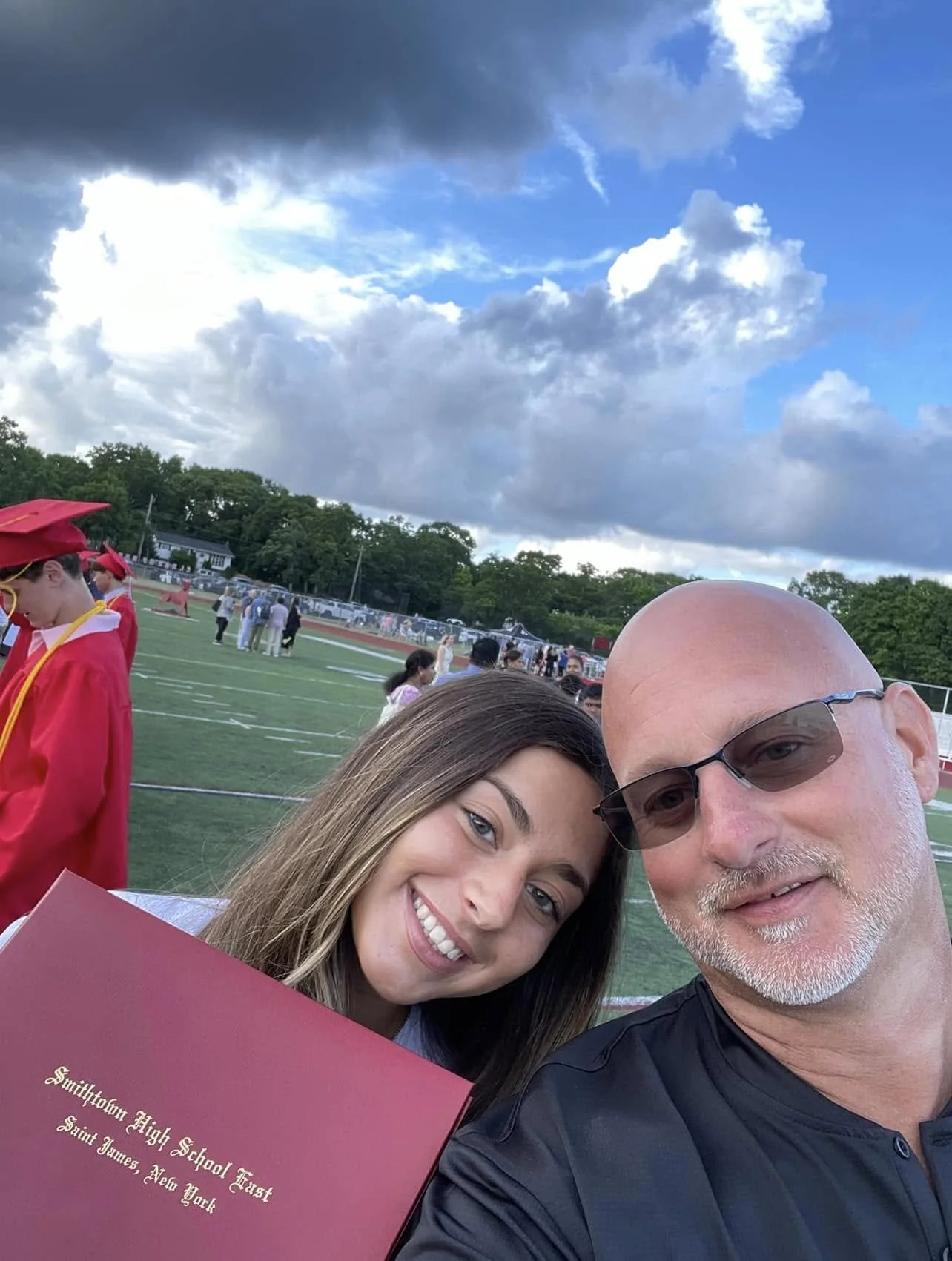
Twenty-one years between those two photographs.
His sentence is ten.
Four years of waiting
He was indicted in November 2023. He has been waiting ever since.
His father is ill. His brothers work long hours, so Brian is the one who is always around — the one who drives him, who shows up, who handles whatever needs handling. He has been doing that the whole time this case has been running.
Amanda has been on every call with the lawyers since the first day. Not in another room. On the call. He speaks to his parents every week about it and to his daughters every few days. He has never asked anyone to pretend it is not happening.
He still runs into investors sometimes. He says they thank him, and tell him they are praying for his family.
Ask him what an ordinary day looks like now and the answer is four words long: trying to be present. They used to go out — dinners, friends, parties. They still do a little of that. Mostly they stay home, the five of them, for as long as there are five of them in the house.
When the bond was set at a million dollars in November 2023, his mother, his father and his eldest daughter signed it. He surrendered his passport. For three years he has appeared at every court date and violated no condition. The Justice Department has never once argued he is a flight risk or a danger to anyone.
What happened to Brian Martinsen
Every fact below comes from a court document, a government filing, or a public government website. The source is named after each one. Nothing here is anonymous and nothing here asks to be taken on trust.
The business
StraightPath sold ordinary people small pieces of companies that had not gone public yet. SpaceX. Airbnb. Palantir. Rubrik. You could not buy those shares at a normal brokerage. StraightPath found them, bought them, and put them into funds people could buy into.
StraightPath bought at one price. The funds paid a higher one. StraightPath kept the difference.
That is called a markup. It is what a car dealer does. It is legal.
Part 2The booklet
Every investor got a booklet before they put in a dollar. They signed it.
The booklet mentions the markup six separate times. There is a heading in the table of contents that reads Mark-Ups.
Six disclosures of the markup, in the document every investor signed, before any of them wired a dollar
"StraightPath Affiliates may also, to the extent permissible by law, receive income generated from the sale of Interests with an underlying price per share of Portfolio Company security that is higher to the Fund than the price per share paid by the affiliate for such security."
SP Ventures Fund 6 LLC · Private Placement Memorandum · Conflicts of Interest
The booklet also tells investors it is not advice, and to go and get their own:
"Investors should not construe the contents of this Memorandum as investment, tax or legal advice… In making an investment decision, investors must rely on their own examination of the issuer and the terms of the offering… and should consult its own legal counsel and financial accounting, regulatory and tax advisors."
PPM · front matter
"Prospective Investors are encouraged to consult their own investment or tax advisers, accountants, legal counsel or other advisers to determine whether an investment in the Fund is appropriate."
PPM · Suitability
And every investor signed a page saying they had not relied on anything StraightPath told them:
"In considering its investment in the Fund, the Investor has not relied upon any representations made by, or other information (whether oral or written) furnished by or on behalf of, the Fund, the Manager, StraightPath Management LLC (the investment advisor to the Fund)… other than as expressly set forth in the Memorandum."
PPM · Subscription Agreement
Read that last one again. It contains six words that decide this entire case.
Who was the client
An adviser has to tell its client everything. Every fee. Every conflict. Everything it makes.
So the question is simple. Who was the client?
What the document says
The Fund is the client.
StraightPath Management is named as "the investment advisor to the Fund." The duty runs to the Fund. The Fund's own rules allowed the markup, and every member agreed to it in writing.
What the Justice Department argued
Each investor is the client.
Under this theory the Department did not have to prove Brian said anything false to anybody. It needed only a duty and a silence.
It needed that second version. Because across eleven days of trial, investor after investor said they had never met Brian Martinsen or spoken to him. One 89-year-old man was asked if he had ever talked to him. He said he thought so. Then he corrected himself:
"Well, maybe not him. It might have been a Mike."
Trial transcript
Two federal appeals courts have decided this question. In Goldstein v. SEC, the D.C. Circuit held that a person who invests in a fund does not receive advice from the manager — he hands over his money and the manager decides what to do with it — so he is not the manager's client. The Fifth Circuit said the same thing in 2024.
The appeals court that governs New York has never decided it. That is exactly what the trial judge pointed out — before he allowed it.
"…to the extent that the Second Circuit hasn't opined on the Goldstein/Lay issue, in that regard it's an open question in the Second Circuit, and I query whether the government wants to buy a potential appellate issue by allowing the jury to rely on viewing the investors themselves as clients for purposes of the investment adviser's fiduciary duties."
Hon. Jesse M. Furman · October 16, 2025 · Transcript at ECF 199, p. 78
Three times before trial, Brian's lawyers asked the court to keep that theory out. All three requests were denied. The Justice Department proceeded.
Their own expert agreed with the defense
The Justice Department hired an expert to explain investment advisers to the jury. On cross-examination, Brian's lawyer asked him who the client is in a fund like this one.
"So generally speaking, it is the case that the fund, as I've depicted here, is the client of the investment advisor. The fund's investors invest in the fund. That doesn't mean that it's never the case that a fund investor is also a client of the advisor. But generally speaking, the structure is as I set it forth here. The fund is the client. The fund investors invest in the fund."
Government expert, cross-examination · Trial transcript 1184
Then the lawyer asked the next question — so the investors are not clients?
The Justice Department objected. The judge sustained it.
The jury never heard the answer.
The judge asked for a verdict form that could be checked
There are two kinds of verdict form. A general form records only guilty or not guilty. A special form asks the jury to say which theory it used.
Nobody asked the judge to raise this. He raised it himself.
"…recognizing that the Second Circuit hasn't spoken to the Goldstein-Lay issue, and that there is some uncertainty in the law right now… query whether we should inquire and ask the jury to make specific findings so we know on what basis they are convicting… I wonder if the record should be fleshed out which path, if any, that the jury takes."
Hon. Jesse M. Furman · Trial transcript 1891–1892
He was saying: the law here is unsettled, the appeals court may see it differently, and if that happens we should know which road this jury took.
Thirteen days later, the Justice Department answered.
"The government's proposal would be to stick with the general verdict form. We're not seeking a special verdict form."
Trial transcript 1944
A special verdict form costs nothing. No extra witnesses, no extra days, no expense. It asks the jury one more question and writes the answer down.
There is an answer that reflects no discredit on anyone: general verdicts are the norm, and lawyers avoid extra questions that give a jury somewhere to disagree with itself.
There is another answer: a verdict that cannot be taken apart cannot be taken apart on appeal.
This page does not know which one it was. It knows the judge asked, the answer was no, and the reason has never been stated.
So nobody will ever know whether Brian Martinsen was convicted on a theory two federal appeals courts say is wrong. Not his lawyers. Not the appeals court. Not him.
Why a verdict form is not a formality
the proper rule to be applied is that which requires a verdict to be set aside in cases where the verdict is supportable on one ground, but not on another, and it is impossible to tell which ground the jury selected.
Justice John Marshall Harlan II, for the Court · Yates v. United States, 354 U.S. 298, 312 (1957)
The Court narrowed the rule in Griffin v. United States, 502 U.S. 46 (1991), holding that it applies where a theory is legally invalid rather than merely unproven. Who counts as the client of an investment adviser is a question of law.
Whether that rule reaches this case is for the Second Circuit, and this page does not predict what that court will do. What is not in dispute is that the trial judge saw the problem before the jury was charged, said so out loud, proposed the one document that would have answered it, and the Justice Department declined.
What the jury was not allowed to know
Before a trial, both sides ask the judge what the jury may hear. Here is what the Justice Department asked the judge to keep out of this one.
Government's motions in limine · ECF 121 · September 9, 2025
Why the judge said yes
None of it was excluded for being false.
Federal fraud law does not require the government to prove that anyone lost a dollar. The Supreme Court confirmed this in 2025 in Kousisis v. United States, holding that the wire fraud statute "is devoid of an economic-loss requirement."
If the jury does not have to decide whether anyone lost money, then evidence that people made money does not help them decide anything. Evidence that helps decide nothing is irrelevant. Irrelevant evidence is kept out.
The prosecutors were right. The judge was right. Nobody broke a rule.
The last thing the jury heard
A Ponzi scheme is a specific thing. Money from new investors pays earlier ones, there is nothing real underneath, and it collapses when the new money stops.
No count of this indictment alleged one. No expert traced one. The word carried no burden of proof — it did not have to be established, only said.
The Justice Department used it in its closing argument. Brian's co-counsel spent part of his own summation taking it apart:
"There is no Ponzi. It's stunning that that word even came out. A Ponzi scheme is nothing — this trial has nothing to do with a Ponzi scheme. A Ponzi scheme is about telling somebody, hey, can I have your money to do this, and then going to do that. That didn't happen here. All the shares were purchased."
Trial transcript 2184
He added: "It should tell you that maybe the government is trying to inflame your thinking before you go into the jury room."
The Justice Department objected to that. The court told counsel to focus on the evidence.
Then came rebuttal — the Justice Department's last word, after which the defense cannot reply.
"There was a lot of anger about our use of the word 'Ponzi scheme,' but that's what a Ponzi scheme looks like."
Trial transcript 2218
Objection. Objection again. Overruled.
Fifteen lines later, in the same speech, the same prosecutor told the jury what had actually happened to the investors who were paid:
"And even the ones who made money, they didn't make as much money as they should have."
Trial transcript 2219
Read those two sentences next to each other. They were spoken minutes apart, to the same twelve people, by the same lawyer.
Securities cases are hard. Fiduciary duty, prevailing market price, whose client is whose — these take days to explain, and a jury may still not have it. This one told the court in writing that it did not.
"Ponzi scheme" takes two seconds and explains everything at once: he took their money, there was nothing there, it's gone.
Lawyers are given wide latitude in closing argument, and that latitude exists for a reason: argument is not evidence, and juries are told so. This was legal too.
The standard, from the case that set it
It is as much his duty to refrain from improper methods calculated to produce a wrongful conviction as it is to use every legitimate means to bring about a just one.
He may prosecute with earnestness and vigor — indeed, he should do so. But, while he may strike hard blows, he is not at liberty to strike foul ones.
Justice George Sutherland, for the Court · Berger v. United States, 295 U.S. 78, 88 (1935)
Berger is the case every prosecutor's office quotes. It is also a case the Supreme Court reversed — because of what a federal prosecutor said to a jury.
This page does not claim that what happened in that rebuttal was a foul blow. It claims something narrower and checkable: the Justice Department used a word for a crime nobody was charged with, in the one speech to which no reply is possible, and it did so a second time after the objection. Whether that is vigor or something else is a judgment. The transcript pages are 2218 and 2219 and anyone can read them.
What the record does show
Some of it survived, because it came in on other subjects.
One of the Justice Department's own investor witnesses was asked about StraightPath buying Rubrik shares at $41 and selling at $52 — a spread of a little over 20 percent.
Q. About a little over 20 percent seem fair?
A. Yes.
[…] A. It's gonna be on the range of between 10 and 25 percent would be the spread I would look at in a case like that, no more than that.
Q. And in this instance on Rubrik, you're comfortable with that spread?
A. Yeah, that spread.
Trial transcript 379–380
Another government witness testified that he doubled his money on Airbnb, that he was paid out on the exact share count stated in his welcome letter, and that he then rolled his profits into further StraightPath investments.
The markup was measured against the wrong thing
The Justice Department's arithmetic was simple. StraightPath paid $41. The fund paid $52. Call the gap the markup.
We checked that method against three public sources on August 13, 2026. All three say the same thing.
Sale price minus the seller's own cost.
Sale price minus the prevailing market price. The seller's own cost is used only as a substitute, when there is no real market to measure against.
A markup is what a firm charges "at a price that is higher than the market price — the difference is called a markup."
investor.gov · Markups and Markdowns"The mark-up over the prevailing market price is the significant spread… In the absence of other bona fide evidence of the prevailing market, a member's own contemporaneous cost is the best indication of the prevailing market price."
finra.org · Rule 2121, Supp. Material .01(a)(3)A markup is "the amount of money above the 'inside' market that a broker dealer may charge to its customer."
seclaw.com · Mark J. Astarita, Esq.Sources consulted and captured August 13, 2026. Links go to the original pages so any reader can check them directly.
FINRA is more specific still. On selling from inventory, its rule says the seller's gain or loss from a share rising in value between the day it was bought and the day it was sold "would not ordinarily enter into the determination of the amount or fairness of the mark-up."
There was a market. Pre-IPO shares of Rubrik, Airbnb and SpaceX traded on secondary platforms. The Justice Department's own expert researched them before he testified, including a platform called Forge.
Nobody ever told the jury what those shares were worth on those dates.
The Justice Department asked a jury to find that a markup was too big without ever establishing the number it should have been measured against.
The emails
What the Justice Department says
On May 5, 2021 Brian texted his partner about eight referral agents' email accounts. The prosecutor read it aloud to the jury:
"Tell Scott and Gabe not to use the StraightPath email, and Frank and Guy. We are gonna claim they don't have emails, and we don't have archives. Just delete their emails. Fuck it."
Government summation · Trial transcript 2051
The accounts were deleted that day. Brian wrote to the SEC the same afternoon saying those agents did not have StraightPath email addresses and the firm kept no archived emails. He wrote again on May 21 saying the same.
That is their case. It is printed here without softening, and this page does not dispute that a jury accepted it.
Where the Justice Department got that text message
At trial, the prosecutor asked his own witness — the SEC attorney running the investigation — when she received those text messages, and who gave them to her.
Q. Did you receive these text messages during the course of your investigation?
A. Again, not until 2022.
Q. When you received them in 2022, who did you receive them from?
A. StraightPath's lawyers.
Trial transcript 1772
The message prosecutors read aloud as proof that Brian was hiding something reached them because his own lawyers handed it over.
Nothing else was ever destroyed
Eight accounts belonging to outside salesmen, on one day. In four years of investigation and eleven days of trial, the Justice Department has never alleged that Brian Martinsen destroyed anything else. Not a document. Not a file. Not a message.
Everything else was given to the government
Through their lawyers, StraightPath produced roughly 200,000 communications to the SEC, plus bank records and the purchase agreements — the documents showing what the firm paid and what the funds paid.
Those purchase agreements are the markup. The thing the fraud case was about.
"Everything that could make this case was provided to the SEC."
Trial transcript 1339–1340 · production cover letters admitted as Defense Exhibits 122–130, without objection; volume confirmed by the SEC's own attorney at Tr. 1799
StraightPath's lawyers also wrote to the SEC explaining what had happened with the email accounts. That letter is in evidence in this case.
What happened four days earlier
On May 1, 2021 — four days before anything was deleted — the partners learned that one of those referral agents was telling a customer he was a manager of a StraightPath office. He was not. He ran his own separate company.
"It's not end of the world, but why he's writing that he's a manager of a SP office when he's under his own corp puts us at risk. That to me is the biggest problem."
Government Exhibit 202-46 · Trial transcript 1772
His partner had already told that agent to stop using email — "I told him zero emails except for articles, nothing more multiple times" — and then: "I told him three times."
Nothing was deleted when the SEC's examiner arrived. Nothing was deleted when the enforcement investigation opened. It happened four days after they found out a salesman was lying about who he worked for.
Twenty-two days too late
The Constitution says you get tried where the crime happened. It sounds like paperwork. It decides which courthouse, which judge, and which twelve people hear your case.
The emails were deleted from an office in Florida. The trial was in Manhattan — because that is where the SEC's investigation was based.
"A defendant charged with violating §1519 must be tried in the district where the falsification occurred; he cannot be tried in a different district where the investigation was located because no 'conduct constituting the offense' happened there."
Abouammo v. United States, No. 25-5146 (June 11, 2026) · Read the opinion
That case was about a faked document rather than deleted emails. The Court closed the gap in its first footnote:
"In this opinion, we refer only to the falsification of a document, because that is what Abouammo did. But everything we say applies as well to a document's 'alter[ation], destr[uction], mutilat[ion]' and so forth."
Slip op. at 2, n.1
The Justice Department's answer is that Brian gave up the argument. Because his lawyers did not raise it during the trial, the law treats it as abandoned.
The trial ended on November 4, 2025. The decision came down on June 11, 2026.
Two days ago, in the same courthouse
On August 10, 2026 — two days before this page was written — the Securities and Exchange Commission charged another New York investment adviser and its chief executive in the Southern District of New York.
The allegation, in the SEC's own words: that they bought pre-IPO shares in companies including SpaceX, then caused client funds to buy those shares at a higher price, while misrepresenting what the shares had cost to acquire.
Buying at one price. Selling to the funds at a higher one. Misrepresenting the cost.
| Adit Ventures Management | Brian Martinsen | |
|---|---|---|
| Charged | August 10, 2026 | November 2023 |
| Court | S.D.N.Y. | S.D.N.Y. |
| Alleged conduct | Bought pre-IPO shares, caused client funds to buy them at a higher price, misrepresented the true cost; unauthorized acquisition fees; pledging client assets for a line of credit | Undisclosed markup on pre-IPO share sales; share shortfalls; commingling; obstruction |
| Type of case | Civil | Criminal |
| Brought by | Securities and Exchange Commission | United States Attorney |
| Trial | None — settled by consent | Eleven days, jury |
| Outcome | Consent judgment | 120 months in prison |
| Prison | None | Reports September 10, 2026 |
| Financial | To be determined by the court | $115m restitution · $25m forfeiture |
Adit Ventures and its chief executive consented to judgment without admitting the allegations, and he has publicly denied them; monetary terms remain to be determined by the court. This page takes no position on whether that resolution was correct and does not suggest it was too lenient. What the table shows is what the same courthouse did with the same category of conduct in the same month.
Sources: SEC press release, August 10, 2026 · SEC complaint, No. 1:26-cv-06800 (S.D.N.Y.)
The Justice Department's own charging principles say a prosecution should not be brought where an adequate non-criminal alternative exists. Two days before this page was written, in the same courthouse, that alternative was used.
The difference may be evidence this page has not seen. It may be the obstruction counts. It may be that the two cases are less alike than they look from the outside.
Or it may be that the Securities and Exchange Commission and the Justice Department looked at the same thing and made different calls.
Nobody has said.
Part 11The money
The court ordered Brian to repay $115 million.
Here is how prosecutors described what investors suffered — in their own brief:
"The upfront markups allowed Castillero, Lanaia, Martinsen, and their agents and employees to receive a guaranteed profit on each investment, while their clients had to wait for the IPO to receive any money, and even then, they received less gain than they would have otherwise."
Government's opposition to bail pending appeal · ECF 294 · July 17, 2026, p. 2
Less gain. Not lost savings. Not emptied accounts. Smaller profits than they might have had.
Ordered
$115mRestitution
Required to be proved
0Elements of the charged offenses that require proof of any economic loss at all
Restitution is meant to work differently from the criminal charge. It is supposed to be tied to specific victims and to money they actually lost, proven by the government, one victim at a time.
A question this page cannot answer
Every choice described above was available to the Justice Department. Not one of them was required.
Which raises a question worth asking out loud, and worth asking without pretending to know the answer.
What a prosecutor is supposed to be
The Supreme Court described the job in 1935, and the passage is still quoted in briefs today:
"The United States Attorney is the representative not of an ordinary party to a controversy, but of a sovereignty whose obligation to govern impartially is as compelling as its obligation to govern at all; and whose interest, therefore, in a criminal prosecution is not that it shall win a case, but that justice shall be done."
Berger v. United States, 295 U.S. 78, 88 (1935)
And what the Department once said about itself
The prosecutor has more control over life, liberty, and reputation than any other person in America. His discretion is tremendous.
With the law books filled with a great assortment of crimes, a prosecutor stands a fair chance of finding at least a technical violation of some act on the part of almost anyone.
Robert H. Jackson, Attorney General of the United States · "The Federal Prosecutor," address to the Second Annual Conference of United States Attorneys, Great Hall, Department of Justice, 1 April 1940
Jackson went on to the Supreme Court and then to Nuremberg as chief American prosecutor. He was speaking to a room full of United States Attorneys, in their own building, about the power they held.
Nothing in this record required anyone to abuse that discretion, and this page does not say anyone did. It says the discretion was total, the choices are documented, and the reasons for them have never been given. The Attorney General who described that power thought the danger in it was worth saying out loud to the people who held it.
The Justice Department's own Principles of Federal Prosecution say something narrower and, here, sharper. A federal prosecutor should not bring a criminal charge where there exists an adequate non-criminal alternative to prosecution.
Two days before this page was written, in the same courthouse, on the same category of conduct, the Securities and Exchange Commission used exactly that alternative.
Justice Manual, Title 9-27.000 — Principles of Federal Prosecution
So what drives the other choice?
When a federal judge says on the record that you may be buying yourself an appeal, what happens inside an office that decides to proceed anyway? Who is allowed to say stop?
Is a prosecutor's career measured by convictions won, or by outcomes that hold up? Do those two things ever point in different directions?
What is the internal reason to ask for a verdict form that cannot be checked, when the judge has offered you the kind that can?
Who in that building was responsible for asking whether ten years was the right answer for a man with no record who has never been accused of being a danger to anyone?
This page does not know the answers. It asks because the choices are documented and the reasons are not — and because the same conduct, in the same month, in the same courthouse, was resolved by consent instead.
If the answer is that nothing went wrong, that is worth saying out loud too. The record is linked at the bottom of this page. Anyone is free to check it.
How clemency has already been used for this offense
The pardon power has already reached securities fraud convictions carrying longer sentences and larger financial judgments than this one. Every entry below appears on the Justice Department's own published record of clemency grants, and each name links to the signed warrant or to the announcement.
| Recipient | Offenses | Sentence | Financial judgment | Outcome |
|---|---|---|---|---|
| Jason Galanis | Two separate securities fraud judgments | More than 25 years combined | $84.8 million restitution | Commuted March 28, 2025 |
| Carlos Watson | Fraud arising from the operation of a media company | 116 months | $36.8 million | Commuted March 28, 2025 |
| David Gentile · GPB Capital | Conspiracy to commit securities fraud; conspiracy to commit wire fraud; securities fraud; two counts of wire fraud | 7 years — served 12 days | $15.5 million restitution, relieved | Commuted December 2025 |
| Brian Martinsen | Conspiracy; securities fraud; wire fraud; investment adviser fraud; obstruction and conspiracy to obstruct | 120 months | $115 million restitution · $25 million forfeiture | Reports September 10, 2026 |
This page takes no position on whether any of these grants was correct, and does not suggest that any was undeserved. The point is the range of conduct and the range of sentences the power has already reached. In each case above the sentence was long, the financial judgment was large, and the recipient sat closer to the money than Brian Martinsen did.
Why the Gentile decision matters here
In explaining that commutation, a White House official said GPB had disclosed to investors in 2015 the possibility of using investor capital to pay distributions, and that the Ponzi characterization was "profoundly undercut by the fact that GPB had explicitly told investors what would happen." The official added that at trial the government had been unable to tie any supposedly fraudulent representations to Mr Gentile.
That characterization drew a formal objection from a United States Senator, who wrote to the President arguing it was inconsistent with a unanimous jury verdict after an eight-week trial. Both the reasoning and the objection to it are public. This page takes no position on that dispute. It notes only that the reasoning rested on three propositions, and asks that they be applied consistently.
| The stated reasoning in the Gentile decision | The corresponding fact in this record |
|---|---|
| The conduct had been disclosed to investors in writing | The markup appears six times in the offering document every StraightPath investor received and signed |
| The government characterized the conduct as a Ponzi scheme | Prosecutors used the phrase "Ponzi scheme" in summation, over objection, in a case where no Ponzi count was charged |
| The government could not tie the alleged misrepresentations to the defendant | Investor after investor testified they had never met or spoken to Brian Martinsen |
The standard has already been articulated at the highest level. Nothing here asks for a new one.
Weaponization analysis · Case 40
How justice was weaponized in this case
This block is not part of Brian Martinsen's story. It is our analysis of his record, written against the seven forms of weaponized justice documented elsewhere on this site. Four of the seven are present here, and each one rests on a dated document rather than on an inference about anyone's state of mind. We do not assert what any individual intended. We state what the Justice Department did, and when.
The conviction is worth something. The acquittal is worth nothing.
- 16 October 2025 — Before trial, the court states on the record that the Second Circuit has not decided who counts as the client of an adviser to a fund, and asks whether the Department wants to buy itself an appellate issue by trying the case on the investor theory. The Department proceeds on that theory. Three defense motions to exclude it are denied.
- Trial transcript 1184 — The Department's own expert testifies that the fund is the client of the investment adviser. Defense counsel asks the follow-up. The Department objects. The court sustains. The jury never hears the answer.
- Trial transcript 1891–1892 — The court, unprompted, proposes a special verdict form so the record will show which theory the jury used. Transcript 1944 — the Department declines it. A special verdict form costs nothing: no witnesses, no days, no expense.
- 9 September 2025 · ECF 121 — The Department moves to keep from the jury that investors profited, that refunds were paid, that investors received the shares they were promised, that other firms in the same market did the same thing, and that Brian Martinsen has a wife of twenty-five years, three daughters and a father he drives to medical appointments. To support the last one it cites a case in which the same was done to a man raising a son with cerebral palsy.
- Rebuttal summation · Transcript 2218 — The Department tells the jury this is what a Ponzi scheme looks like. No count of the indictment alleged one. Objection. Objection again. Overruled. Fifteen lines later, at 2219, the same prosecutor tells the jury the investors "didn't make as much money as they should have."
- 20 May 2026 — The Department obtains 120 months against a first offender it has never once argued is a flight risk or a danger to anyone, after three years of perfect compliance with a bond his mother, his father and his eldest daughter signed.
Every one of those decisions was available. Not one was required. Each removed something — an answer, a finding, a fact — that a reviewing court could later have used.
The theory forms first. The evidence is sorted afterward.
- 9 September 2019 — The Securities and Exchange Commission writes to Brian Martinsen that it has completed its voluntary informal inquiry and has no further requests at that time.
- Through counsel, StraightPath produces roughly 200,000 communications to the SEC, together with bank records and the purchase agreements — the documents that show what the firm paid and what the funds paid. Those agreements are the markup. They are the thing the fraud case was about. Transcript 1339–1340 · Defense Exhibits 122–130 · volume confirmed at 1799
- Transcript 1772 — The Department's own witness, the SEC attorney running the investigation, testifies that the text message read aloud in summation as proof of concealment reached the government in 2022 from StraightPath's lawyers. The evidence of hiding was handed over by the man accused of hiding.
- 1 May 2021 · Government Exhibit 202-46 — Four days before any account was deleted, Brian Martinsen writes that a referral agent who is representing himself as a manager of a StraightPath office "puts us at risk." The Department introduced that document itself. It supplies the sequence.
- The markup was measured against StraightPath's own purchase price. The SEC's own investor education page and FINRA Rule 2121 both define a markup against the prevailing market price, and treat a firm's own cost as a substitute only when no market evidence exists. Pre-IPO shares in these companies traded on secondary platforms, and the Department's own expert researched one of them before testifying. No market price for those shares on those dates was ever put in front of the jury.
- In four years of investigation and eleven days of trial, the Department has never alleged that Brian Martinsen destroyed anything other than eight outside salesmen's email accounts, on one day.
Two hundred thousand documents arrived, from his own lawyers. Not one of them changed the theory they were read against.
Conduct a regulator handles, charged as a federal felony
- A markup is a regulated subject with a written standard. FINRA Rule 2121 governs it. The SEC publishes a definition of it for the public. Neither is a criminal statute.
- The markup appears six times in the offering document every investor received and signed, under a heading in the table of contents. The subscription agreement names StraightPath Management as "the investment advisor to the Fund," and every investor signed a page saying they had relied on nothing outside that document.
- Two federal courts of appeals have held that the client of an adviser to a fund is the fund, not the individual investor. The Second Circuit has never decided it. The Department tried a criminal case, carrying decades of exposure, on the undecided side of that question — after the trial judge said so out loud.
- 10 August 2026 — In the same district, the SEC charges another investment adviser and its chief executive with buying pre-IPO shares, including SpaceX, causing client funds to buy them at a higher price, and misrepresenting what the shares had cost. Civil. Consent judgment. No trial and no prison. Two days before this page was written.
- The Department's own Justice Manual instructs that a federal prosecution should not be brought where an adequate non-criminal alternative to prosecution exists. In the same month, in the same courthouse, on the same category of conduct, that alternative was used.
The rule that governs a markup is a FINRA rule. The Department charged it at ten years, on a question of law its own circuit has never answered.
The cost arrives before any verdict, and no outcome returns it
- November 2023 — Indicted. Bond set at $1,000,000, signed by his mother, his father, and his eldest daughter. Passport surrendered. Nearly three years follow, every court date met, no condition broken, no allegation that he would run.
- The judgment orders $115,000,000 in restitution and $25,000,000 in forfeiture of real property, vehicles and personal property. The Department's own description of what the investors suffered, in its own brief, is that they received less gain than they would have otherwise. ECF 294 · 17 July 2026 · p. 2
- 11 June 2026 — The Supreme Court decides, 9 to 0, that a defendant charged under the obstruction statute must be tried where the falsification or destruction occurred, not where the investigation sat. That is twenty-two days after Brian Martinsen was sentenced. The Department's answer is that he waived it by failing to raise a decision that did not exist.
- 22 July 2026 — His motion to remain free during his appeal is fully briefed. There has been no ruling. He surrenders on 10 September 2026. Every day the motion sits, silence produces the same result as a denial, and no one has to write it down.
- The Department's Justice Manual requires a pre-conviction press release to note the presumption of innocence. It contains no provision at all for correcting or removing a release when a charge is dismissed, a conviction is reversed, or the numbers in it are superseded by a court.
Rules going in. Nothing coming out.
What this analysis does not claim. It does not claim that any individual acted corruptly, and it names no prosecutor. Every item above is a dated act by the Justice Department, taken from its own filings, exhibits, correspondence and releases, or from a court record, and every one of them is linked or cited in the record at the bottom of this page. Read together they describe a practice: an office that pursued a theory after being warned on the record, declined the one document that would have made its verdict checkable, removed from the courtroom every fact that cut the other way, and sought a decade against the one participant whose case was tried. That is not an accident of process. It is what the process was used to do.
What he said to the judge
On May 20, 2026 he was given the chance to speak before he was sentenced. He did not talk about the law.
He talked about Amanda. He talked about his parents. He talked about his three daughters. He said that he might miss their weddings. He said he might miss his grandchildren being born.
His account is that the court took what he said as an absence of remorse.
He was sentenced to ten years.
The train home
On the night of the verdict he took the train home from the courthouse in Manhattan out to Long Island. It is about an hour. He had just been convicted on six felony counts, and he made that trip sitting among commuters going home from work — holding it together in a carriage full of people who had no idea.
When he opened his front door, Amanda and his three daughters were already there, and they were crying. It went on most of the night.
All he could think to tell them was that it was not over.
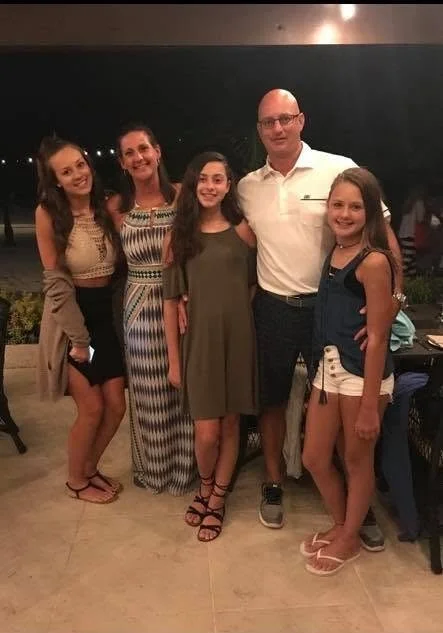
Two years before that night, when the court set his bond at a million dollars, three people signed their names to it. His mother. His father. And his eldest daughter, who was old enough by then to put her name on a piece of paper promising the United States government that her father would not run.
He has not run. In three years he has not missed a single court date or broken a single condition. The Justice Department has never once suggested that he would.
He has not packed
Ask him what he has done to get ready for September 10 and the answer is nothing.
He has made no arrangements. He has not sorted out who will take his father to his appointments. He has not worked out what happens to the house, or to the mornings, or to any of it.
His lawyers asked the court on July 6 to let him remain free while his appeal is heard. The briefing finished on July 22. It is the middle of August and there has been no ruling.
But that is not really why he hasn't packed.
He does not believe this can happen. Not because he thinks he is owed something, and not because he thinks the rules do not apply to him. Because he has read the same record you have just read, and he cannot make it come out to ten years.
He knows what the Justice Department showed the jury and what it did not. He knows nobody testified that he lied to them. He knows what the prosecutors wrote in their own brief about what happened to the investors. He has been through those transcripts the way a man goes through them when the rest of his life is in there.
And having done that, he believes a court is going to look at the whole of it and see what he sees.
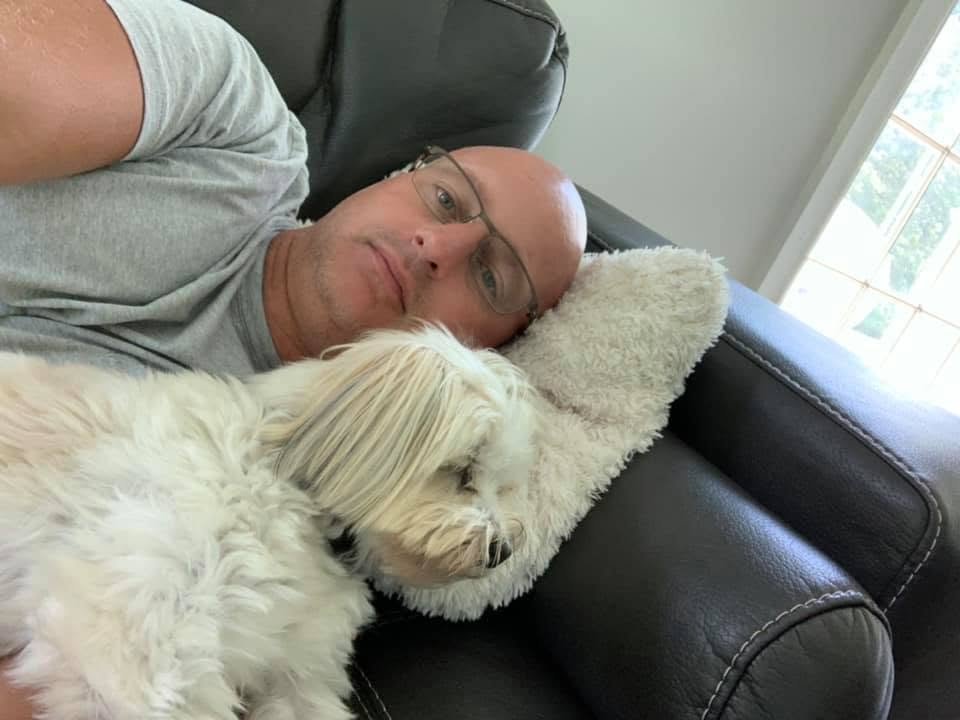
Somebody else will take his father to his appointments. Somebody else will be in the house on the first morning that he is not.
He was a kid on Hileen Drive who wanted to fix cars. He fixed trucks for the phone company. He met a girl in high school and married her and they had three daughters — and on September 10 he is going to say goodbye to all four of them and report to a federal prison, and the youngest of them will be twenty-nine years old before he is finished.
Why this is wrong
No rule was broken. That is what should frighten you.
Every rule in this case was built with an intention behind it.
The rule that kept out his daughters exists so that a jury decides the charge in front of it and not the person in front of it — the same rule that keeps a jury from hearing that a defendant has a prior conviction, or a drug problem, or an ugly divorce. The rule that kept out investor profits exists because Congress wrote a fraud statute that does not turn on whether anyone lost money. The latitude a lawyer gets in closing exists because argument is not evidence, and juries are told so.
But an intention cannot apply itself.
Every one of these rules is neutral until somebody picks it up. A rule written to keep a jury focused becomes, in the right hands, a rule that removes a man's children from the room. A rule written so that fraud can be punished without proving a loss becomes a rule that hides the fact that people made money. None of that is a flaw in the rule. It is what a rule is: a tool with a purpose, held by a person who decides what to do with it and when.
Every ruling in this case is defensible standing alone.
A person decided which way to point every single one.
The law did not require the Justice Department to argue that the client was each individual investor. It chose to, after a federal judge told it on the record that it was an open question. It chose it because it meant the Department would not have to prove Brian said anything false to anyone — and it knew no investor could say that he had.
The law did not require it to refuse the verdict form that would have shown which theory the jury used. The judge proposed it himself, for exactly the reason it later mattered. The Department said no.
The law did not require it to move to keep out that he has three daughters. It filed that motion. It found a case where it had been done to a father raising a son with cerebral palsy, and it cited it.
The law did not require anyone to say "Ponzi scheme" about a crime nobody was charged with — and then to say it again in rebuttal, where nobody could answer.
The law did not require it to seek ten years — for a man with no record, who has appeared at every court date for three years, who it has never once claimed would run.
The law did not require the answer it gave when the Supreme Court ruled twenty-two days after he was sentenced. That answer was: too late, he waived it. The Department could have said anything. It chose that.
And the Justice Department does not have to prosecute at all. Two days before this page was written, in the same courthouse, the Securities and Exchange Commission resolved the same conduct by consent. The Commission made that call. The Justice Department made a different one here.
You do not need to run a fund.
You need someone you will never meet to decide that your case is the one worth making an example of.
After that, the same rules are there. Your children stay out of the room. Your evidence that nobody was hurt does not bear on the charge. Your lawyer's silence is treated as your own choice. Your Supreme Court decision arrives three weeks late.
Every one of them is waiting in every federal courtroom in this country.
Here is what nobody can defend
Not one ruling. The sum.
Twelve people were asked to decide whether Brian Martinsen was a criminal. They were not permitted to know that investors made money, that refunds were paid, that people got exactly what they bought, that other firms did the same thing, or that a father of three was sitting in front of them. They spent two hours unable to see the evidence. They asked what the central word in the case meant. They were sent back the same instruction they already had. They convicted in forty-eight minutes, on a form built so that no one could ever ask them what they meant by it.
That is not a trial anyone would defend if it were their own.
It is only defensible one ruling at a time — which is exactly how it was built, and exactly why it cannot be undone one ruling at a time either.
That is what clemency is for. Not mercy. Not forgiveness. Somebody with the authority to look at the whole of it at once, instead of one piece at a time.
Why this power sits with one person
The criminal code of every country partakes so much of necessary severity, that without an easy access to exceptions in favor of unfortunate guilt, justice would wear a countenance too sanguinary and cruel.
Alexander Hamilton · The Federalist No. 74 (1788)
Hamilton was arguing that the pardon power belongs to a single person rather than a body — because one conscience can look at a whole case at once, and act.
That is the argument for this page. Not that a jury was wrong. Not that a judge broke a rule. That every ruling in this case is defensible one at a time, that the sum of them is what a man is serving ten years for, and that the Constitution left exactly one official able to look at the sum.
This is a request for executive clemency. It is not a request for mercy, and it does not ask anyone to disturb a jury's verdict.
It rests on things that are checkable:
- The trial judge warned the Justice Department on the record that the theory it was pursuing was an open question likely to generate appellate issues. It pursued it anyway.
- The jury asked what the central term meant and convicted forty-eight minutes later — with no special verdict sheet, at the Justice Department's request, to show which theory it used. Federal Rule of Evidence 606(b) makes what happened in those forty-eight minutes permanently unreviewable by any court.
- The Supreme Court narrowed venue for the obstruction statute twenty-two days after he was sentenced, and he is told he waived it.
- The same conduct, charged this month in the same district, produced a civil consent judgment.
The request is a pardon — and, in the alternative, a commutation of the sentence. Either would end a punishment that no other resolution of this conduct has produced.
Separately and immediately: his appeal is pending, and his motion for bail pending appeal has been fully briefed since July 22 with no ruling. He surrenders on September 10.
His motion to remain free during his appeal has been fully briefed since July 22. There has been no ruling.
The record
Filings in this case
United States v. Castillero, No. 23 Cr. 622 (JMF), Southern District of New York. Every quotation and figure above that concerns Brian Martinsen comes from one of these.
His lawyers' brief. Contains the transcript citation for the court's warning at ECF 199 p. 78, the jury note timings, and the venue argument.
The prosecution's answer, published here in full. Page 2 contains the description of the harm quoted above. This is also where the waiver argument on venue appears.
What the prosecution asked the judge to keep from the jury: that investors profited and were refunded, that others in the industry did the same thing, and the defendants' families, health and personal circumstances.
The document investors received and signed before investing. "Mark-Ups" appears in the table of contents; the disclosure that affiliates buy at one price and sell higher appears six times; the subscription agreement names StraightPath Management as the investment advisor to the Fund.
Headed "Voluntary Informal Inquiry." The staff wrote that it had completed its inquiry and had no further requests at that time, while reserving the Commission's right to act later.
The jury notes and their timings; the court's caution before trial; the government expert's cross-examination; the investor cross-examinations; the SEC attorney's testimony about where the text messages came from.
Government sources cited on this page
These are public government and regulatory sources. Every one is linked so a reader can check it rather than take it on trust.
The venue decision, decided 9–0. Footnote 1 confirms the holding applies to destruction of documents, not only falsification.
The scope of the bar on juror testimony about deliberations, now codified at Federal Rule of Evidence 606(b). Cited above for the proposition that what happened inside the jury room is unreviewable.
The rule governing a general verdict that may rest on more than one theory. Narrowed by Griffin v. United States, 502 U.S. 46 (1991), to theories that are legally invalid.
The standard for a federal prosecutor, quoted twice on this page. The conviction in that case was reversed because of what the prosecutor said to the jury.
The SEC's own investor education definition: a markup is the amount charged above the market price. Consulted August 13, 2026.
The industry rule. Supplementary Material .01(a)(3): the markup over the prevailing market price is the significant spread, and a firm's own cost is the indicator only in the absence of other bona fide evidence of the market. Consulted August 13, 2026.
A practicing securities lawyer's published explainer, reaching the same definition. Consulted August 13, 2026.
The Department's own charging principles, including that a prosecution should not be brought where an adequate non-criminal alternative exists.
The official list, with signed warrants available to download. The Galanis and Watson commutations appear on it.
Other cases, for comparison
These documents are not from Brian Martinsen's case and do not concern him. They are the sources for the comparisons above — what has happened to other people, in other proceedings, for conduct the government has described in similar terms.
A different case. The SEC charging a New York investment adviser in the same district with buying pre-IPO shares and causing client funds to buy them at a higher price while misrepresenting the true cost. Settled by consent. No criminal charge.
A different case. The allegations set out in full, linked so the comparison above can be checked rather than taken on trust.
A different case. Convicted by a jury of securities and wire fraud, sentenced to seven years, reported to prison November 14, 2025, released November 26. The White House explanation is quoted in the report.
Government websites change. Rules are amended, press releases are moved, pages are taken down. Every external page cited on this page was captured and preserved on August 13, 2026, so that what it said on the day we read it can still be produced if the live page later changes or disappears. If you find that a link no longer shows what this page says it showed, tell us and we will publish the capture.
What you can do
This page has no budget behind it. There is no firm, no consultant and no press operation. It was built by people who are themselves defendants in these cases, and it reaches people only when someone decides to pass it on.
If you are a lawyer
This is the most useful thing anyone reading can do. Not representation — an opinion. If you practice in federal criminal law, securities law, or sentencing, and you are willing to read the filings linked above and put your name to a written assessment of what happened here, we will publish it in full, including the parts that cut against him. We are not asking anyone to agree. We are asking someone qualified and disinterested to look at the record and say what they see. Get in touch.
If you know a reporter
Every document on this page is public and every claim is cited. A journalist can verify all of it from the docket in an afternoon. What exists publicly about this case is largely the Justice Department's own account of it — accurate as far as it goes, and missing the record set out above: the trial judge's warning, the jury's question, where the text messages came from, and what the same office did to the same conduct this month. Nobody has told the whole of it yet. Reporters can reach us here.
If you found something wrong
Tell us. Every page on this site carries the same promise and this one is no exception: if any passage here does not match the record, we will correct it. That promise is the only thing that makes the rest of it worth reading. Send us the correction.
If you can only do one thing
Post it. Send it to someone. Bring it up at dinner. Nothing on this site travels unless a person decides to hand it to another person.
from the public docket in an afternoon.
Send it to one.
This page was written and published by 250pardons.com. Brian Martinsen did not write it, did not review it before publication, and is not its author. His lawyers did not write it, did not review it, and do not endorse it. Nothing on this page is a statement by Brian Martinsen or by his counsel, and nothing here should be attributed to either.
Where Brian is quoted, the passage is marked and attributed to written answers he provided to this site. Everything else — the arguments, the characterizations, the questions and the conclusions — belongs to the people who built this page and to nobody else.
This page is not a legal filing and does not state his legal position. His appeal is pending in the United States Court of Appeals for the Second Circuit, and the arguments made there are made by his lawyers, in their own words, in documents filed with that court. Where anything on this page differs from what his counsel has argued or will argue, his counsel's filings govern and this page does not.
Nothing here is legal advice, and nothing here should be read as a prediction of any outcome.
A note on quotation. Passages marked verbatim are exact text from a named transcript, opinion, filing or government website, with the source identified. Passages set in the authority blocks are exact text from a published Supreme Court opinion, a published address, or a founding document, with the citation given. Figures drawn from the government's filings are allegations, not findings. Everything else attributed to a court, to counsel, to a witness or to his family is a summary in our words. Transcript page numbers refer to the trial transcript in United States v. Castillero, No. 23 Cr. 622 (JMF).
If any passage on this page does not match the record, tell us and we will correct it.