
43 Americans · Case 24 of 43
Douglas William VanceThe letter they never went to get
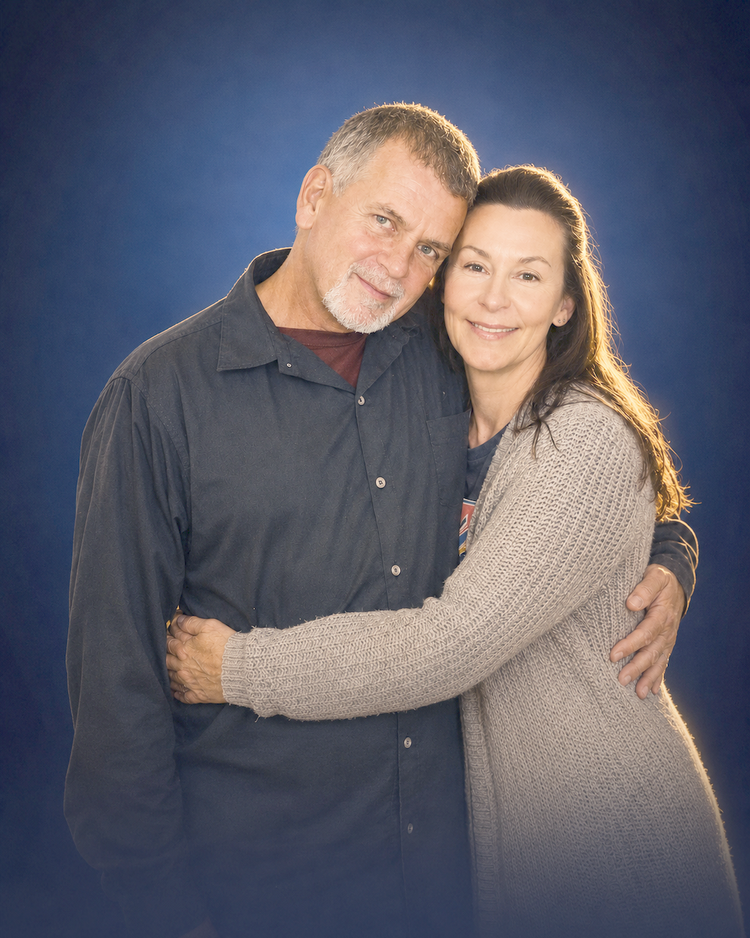
Douglas Vance left school at seventeen to nurse his dying father. He built his first machine in his own backyard out of a paint can and a camp stove. In December 2018, with no lawyer beside him and the FBI's tape running, he told the agent investigating him exactly where to find the document that cleared him — and the agent said he would send the prosecutor for it. Nobody went. Eighteen months later they charged him. He is serving fourteen and a half years, and the twelve people who decided he was guilty were never allowed to read a word of it.
- Case
- No. 5:20-cr-00063 (E.D. Ky.) · No. 23-5766 (6th Cir.)
- Charges
- Conspiracy to commit wire fraud (18 U.S.C. § 1349); wire fraud, four counts (§ 1343); conspiracy to commit money laundering (§ 1956(h))
- Plea offered
- No written offer has ever been produced. He recalls one of five to seven years. He refused it.
- Trial
- October 4–13, 2022 · guilty on all counts · he testified
- Sentence
- 174 months — fourteen and a half years, imposed August 21, 2023
- Co-defendant
- Molly McKinnon, who admitted falsifying the records — 156 months
- Offense level
- 33 for both of them. The gap is his criminal history category
- Restitution
- $2,247,424.39, joint and several · to eight payees
- Forfeiture
- A further $2,736,136.58 money judgment
- National average
- 23 months for this offense category
- Judge
- Chief Judge Danny C. Reeves
- Appeal
- Affirmed November 22, 2024 — not recommended for publication
- Now pending
- His own handwritten motion to vacate, filed from prison February 19, 2026. No lawyer. No hearing.
- Held at
- FCI Beckley Satellite Camp, West Virginia · Reg. No. 23266-032
- Release date
- February 21, 2034 — Bureau of Prisons projection
- Clemency
- Pardon Case No. P339491 · pending
- Status
- In custody since the hour the verdict was read
His co-defendant wrote it down. She falsified the bank statements. She used his email password to send them. She opened the messages on his end so he would never know. She wrote that nineteen months before anybody was charged — and told the lawyer she sent it to that she was putting it in writing now, in case something happened to her.
He called the FBI himself and told them the letter existed. The agent said on tape he would have the prosecutor go and get it. Nobody ever did. The judge kept it from the jury and was asked whether he wanted to read it. He said no.
Then the jury was instructed that it could treat what this man had said to the FBI about that letter as proof of a guilty mind. It convicted him in an afternoon and a morning. He is serving fourteen and a half years, and in January he had a stroke in a federal prison.
Douglas Vance is one of the 43 Americans. This is 43 Americans, a record of forty-three federal criminal cases in which the public court file does not match the account the Justice Department gave the country. Every case here is documented from filings rather than from a summary written by a supporter, and every page prints the facts that cut against its subject. Read the other forty-two.
Written and published by 250pardons.com. Not written, reviewed or approved by Douglas Vance or by any lawyer. Every fact below is sourced to a court record, a government document, or a letter written to a federal judge. If any sentence here does not match the record, tell us and we will correct it.

Nancy Vance cleaned at Clinch Valley Medical Center in Richlands, Virginia. She is in her seventies. She is still doing it.
Her husband, Doug Sr., was a logger. They raised three boys in the far southwest corner of Virginia, in a county where the work is underground or it is in the trees.
Dougie, Jessie, Bradley.
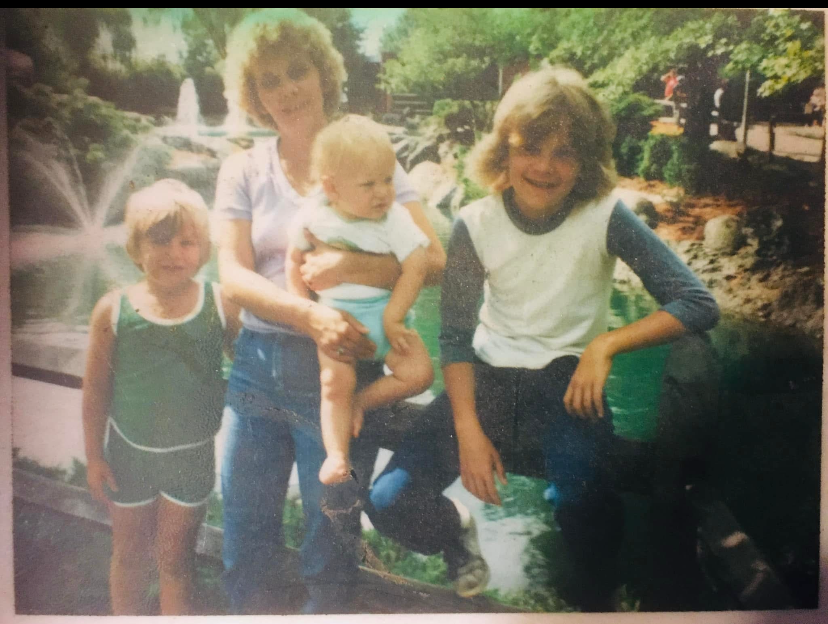
In 1996 Doug Sr. was diagnosed with cancer. Dougie was a teenager. He left school and took care of his father until his father died.
He never went back to school. He went to work. Twenty-six years later, when a federal judge was about to sentence him, people who had known him his whole life wrote to that judge separately and described the same thing in almost the same words.
One of those letters is about a winter, and then about a funeral.
Hold on to that man. In a federal courtroom in Lexington, Kentucky, he was described as the operator of a sophisticated financial scheme.
Part oneA paint can and a camp stove
He hauled coal. He mined. Then he logged, the way his father had, and built a company out of it — by his own account, Georgia Pacific's top contractor in Virginia. In 2008 the housing market collapsed and took the logging business with it. He lost nearly everything.
Here is what he did about it.
It worked. He scaled it into a real machine — a calciner, a rotating kiln that heats coal or wood waste in a low-oxygen chamber so that it does not burn, and turns it into a denser, cleaner fuel. A man with no high school diploma designed and welded an industrial furnace in a yard in Tazewell County.
The Sixth Circuit affirmed his conviction and had no reason to be generous to him. Its opinion opens by conceding the first fact of his life: “Douglas Vance, a former coal miner, constructed a calciner.”
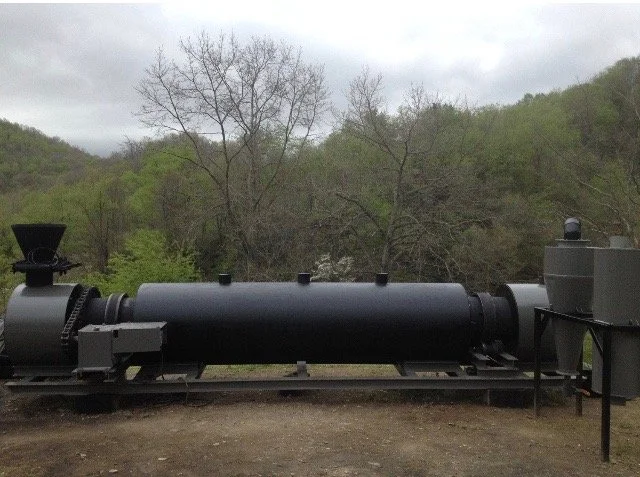
He kept working the ground the whole time he was building it. The logging paid the bills while the machine was still an experiment.

The government's case, without a word taken out of it
He needed money to build at scale. Three groups gave it to him: a private investor named Allan Deware, a charitable foundation called Shumard, and Koch. Each formed its own new company to hold the deal and put its own people in charge of the accounts. In the largest of them, NexGen Energy Partners, the Shumard group held 51 percent, Vance's own company held 48, and Vance personally held one. On the account where the money actually moved, he was not a signatory at all — a fact the partnership's own accountant conceded on cross-examination.
The company failed. Bank statements sent to the investors had been falsified. That much is not in dispute and this page does not dispute it.
A federal jury convicted Douglas Vance on all six counts. The Sixth Circuit affirmed every part of it. That court found the company “did little business,” that it operated “in a Ponzi-like fashion,” that employee paychecks bounced, that he signed the agreements creating the entities — and that he admitted on cross-examination that he took money invested in Nex-Gen to pay a personal debt. He also has a prior state fraud conviction out of Tazewell County and was on probation for part of this period.
That is the worst of it, all of it, in one paragraph, and you have it from us rather than from someone hostile. Nothing that follows asks you to disbelieve a word of it. It asks you to look at one document that twelve people were never allowed to see.
Six pages, written before there was a case
Molly McKinnon was Nex-Gen's chief financial officer. She handled the money and she sent the documents. Douglas Vance did not meet her until 2016, a year after he started his own company.
On November 14, 2018 she sat down and wrote six pages and signed them. Not to a newspaper. Not to a judge. She addressed them to a lawyer, and she said at the top why she was writing now rather than later — in the event that unforeseen circumstances prevent me from relaying this information at a future date.
Six pages in, having laid out the whole business relationship in an accountant's detail, she wrote this.
“Until I told Vance about Chamblee's bogus sales and ‘blackmail’, he had no knowledge of what Chamblee had told me to do and had no involvement in it whatsoever.”
Court Exhibit 1 · DE 262-1, PageID#2525–30, at 6
And then she explained how the government's own evidence had got into his inbox.
“So I did it. The bad part is that Vance made it easy and didn't have a clue. He had given me his email password early on and never changed it. I sent him the emails and then opened them on his end to make it appear he had already read them.”
Court Exhibit 1 · DE 262-1, at 6
Read that twice. It is the whole case.
Much of what the jury was shown as proof that Douglas Vance knew was incriminating email sitting in his account, marked as read. The woman who put it there wrote down that she put it there, and that she marked it read herself so he would not find out.
She knew exactly what the letter would cost her.
“I plan to retain an attorney as soon as possible. I'm sure he would not approve of me writing this but I can't with good conscience let Vance take responsibility for what I did. So, while I know this letter implicates me, I want you to know that… I wrote it of my own free will and with the knowledge that there will most likely be serious ramifications for my actions.”
Court Exhibit 1 · DE 262-1, at 6. Ellipsis marks intervening words; the quoted text is exact.
Read the reason she gives for writing it down
“If something happens to me in the interim, I'm hoping this letter will at least give you enough detail to provide the investigators with sufficient information to pursue the correct parties.”
Molly McKinnon · 14 November 2018She opens the letter with the same thought — she is writing it now “in the event that unforeseen circumstances prevent me from relaying this information at a future date.” No charge had been filed against anyone.
She was not helping a friend at trial. There was no trial. There was no indictment, no grand jury, no charge, and nothing for either of them to gain. Whatever else that letter is, it is not a strategy, because in November 2018 there was nothing yet to have a strategy about.
PDF Six pagesCourt record The document itself · Court Exhibit 1 The six-page letter, 14 November 2018 Read it yourself. The passage about the email password is on page six. The passage about what she expected might happen to her is in the closing paragraphs. Filed on the docket at DE 262-1. Open the document
Seven years later, from a prison cell, she signed it again
“Suspiciously timed” is a fair thing to wonder about a letter that surfaces in the middle of a trial. So test it against what she did once the trial was over and there was nothing left in it for her.
In November 2025 — convicted, sentenced to thirteen years, her appeal spent — Molly McKinnon appeared before a notary public in Texas and signed a statement addressed to the Office of the Pardon Attorney, confirming that she wrote the letters of her own free will. She has already taken the enhancement for false testimony. She has already been denied credit for accepting responsibility. There is no deal on the table and no sentence left to shave. She went and found a notary anyway, and told the Pardon Attorney to go and read her own file if they wanted the fuller version.
People who are lying to help a friend do not usually invite the government to check their homework.
And three weeks ago, she swore to all of it under penalty of perjury
On 25 August 2026 Molly McKinnon filed her own motion to vacate her conviction, from a federal prison camp in Kentucky. It runs to more than six hundred pages with its exhibits, it is signed under penalty of perjury, and it is on the public docket at entry 308.
Her first ground is prosecutorial misconduct. Her filing describes the letter she wrote in 2018 as a contemporaneous, pre-indictment record of her own limited role and of what she was told and by whom — and it makes a further allegation about the recording of the December 2018 call that no court has yet ruled on.
From her motion, filed 25 August 2026
The Government selectively presented Gov't Ex. 401, omitting four independently significant passages from the DOJ/FBI transcript — including Hubbuch's December 2018 characterization of the letter as potentially exculpatory, his personal commitment to involve the prosecuting AUSA in obtaining it, and the letter's specific location with Vance's attorney.
Motion to vacate under 28 U.S.C. § 2255 · DE 308 · E.D. Ky. · 25 August 2026This is her sworn allegation and nothing more. No court has ruled on it, the government has not yet answered it, and this page does not present it as a finding. We publish it because it is now on the public record and because it is checkable against the same transcript the jury heard part of.
Read it slowly. Her claim is not that the recording was hidden. The recording was a government exhibit; the jury heard it. Her claim is about which parts of it the jury heard — and that among the parts left out was the case agent, in December 2018, calling the letter potentially exculpatory in his own voice.
Whether that is right or wrong is for a court. What is not in doubt is that the woman the government convicted alongside Douglas Vance has now spent eight years, three lawyers, a trial, an appeal and a prison term saying the same thing she said in 2018, and has just sworn to it again in a document she can be prosecuted for lying in.
One of the six counts, checked against the bank records
Count 2 rested on $5,600 the government presented as money Gary Chamblee had personally put in. On cross-examination at trial, after being taken to the bank records, Chamblee agreed the $5,600 appeared instead to be a transfer from one company account to another.
The same cross-examination covered the loans. A $150,000 line of credit that predated the FBI's involvement was unsecured and unsigned by either defendant. After the investigation began, it was replaced with a secured instrument carrying a stated balance of $684,845.05, and two further secured notes totalling $260,593.42 were created — all of it signed by Chamblee alone, sent to Douglas Vance by email only after it had already been executed. A second manager testified that the vote the company's own operating agreement required for loans was never taken and that Vance was given no notice.
None of that made the government's summary exhibit. Its financial spreadsheet left out all three of the partnership's accounts — the accounts underlying three of the charged counts — while two witnesses certified it to the jury as complete.
PDFSeven pagesCourt record The document itself Trial transcript — two managers cross-examined, DE 175 and DE 176 Chamblee conceding the $5,600 looks like an internal transfer, the loans created after the FBI arrived and signed by him alone, and the vote that was never taken. Open the document PDF Two pages
Redacted The document itself Notarized statement to the Office of the Pardon Attorney, November 2025 A notary attests to who signed, not to whether anything in a document is true. Read it knowing that. Her sister’s telephone number and email address are blacked out by us. Open the document
He called the FBI back and told them where it was
A month later, on December 19, 2018, Douglas Vance returned a call to the FBI case agent investigating him. He had no lawyer with him. He had not been charged with anything. The agent recorded the call and the Bureau transcribed it, and the government made the recording its own exhibit at trial.
DV: Any — if anybody would've ever asked me for the bank statements, Chris… they would've got the real bank statements. I mean, I — I don't know any other way to put it.
CH: Then it sounds like we need to have a conversation sooner than later. So it sounds like what you're telling me is you have more to talk about Molly.
DV: Well, my attorney has a letter from Molly that it states everything that you need to know and really everything that you're looking for.
CH: Okay.
DV: And, uh, and Molly has said herself, I mean, feel free to call her.
Government Exhibit 401 · FBI transcript of recorded telephone call, December 19, 2018
The agent pushed him to say it in his own words instead of pointing at the letter. Vance answered:
DV: I understand you're asking me and I understand also why you're asking me. I mean, you're already telling me that I've lied to you several times which — tells me that I've got a possible conviction even if I'm not guilty of doing anything.
CH: Oh, yeah, so [laugh] lying is not — is not, uh, an indicator of guilt, I guess, is what you're saying. When it comes to millions of dollars. So —
DV: Well, I mean, no — I'm not guilty of what you think I'm guilty of. I'll be the first to tell you that.
Government Exhibit 401
And here is how the call ended.
CH: And in the meantime, I will ask the prosecutor, the A.U.S.A. to reach out to your attorney for this letter.
DV: Okay.
CH: Okay?
DV: That — that's fair enough.
Government Exhibit 401. The agent then states the time as 2:58 p.m. and ends the recording.
Court record The document itself · Government Exhibit 401 The FBI transcript of the recorded call, 19 December 2018 The government made this its own trial exhibit. Four pages. The agent ends the recording at 2:58 p.m. Open the document
What happened to the letter after that is disputed. The defence says it was handed over. The case agent testified he never received it. The prosecutor said the same.
In eight years, nobody has produced a record of anyone going to get it.
“No, I don't need to see it.”
The trial ran in October 2022. On the sixth day, the court struck Molly McKinnon's defence that she had been coerced — a ruling this page does not argue was wrong, and which had nothing to do with Douglas Vance. Her lawyer then told the court she would not testify.
In that window, Vance's court-appointed lawyer asked for leave to reopen his case so that the letter could go in. McKinnon's own lawyer told the court: “We do not object.”
The Justice Department objected on three grounds. That he should have offered it earlier. That it had not been turned over under the reciprocal discovery rule. And that it was hearsay — in the government's words, a statement of a non-testifying party. The court sustained all three. Then this happened, on the record.
THE COURT: It will be filed in the record as a Court exhibit. It will not be allowed to go back to the jury and counsel may not make reference to the letter or the contents of the letter in the closing arguments to be made in the case…
THE COURT: All right. You can bring that up to the clerk. That is not to go to the jury.
THE CLERK: Would you like to see it?
THE COURT: No, I don't need to see it.
Trial transcript, Day 6 · DE 179, PageID#1779–1780. The jury was brought back in at 9:57 a.m.
Court record The document itself Trial transcript, DE 179, pages 19 and 20 The ruling, the order that no lawyer could mention the letter in closing, and the exchange with the clerk. Two pages, and the whole of it is on the second one. Open the document
Later that same day, Molly McKinnon took the witness stand.
She testified. The government cross-examined her, and under that cross-examination she admitted that she knew she was falsifying the bank statements she was sending. The objection that had buried the letter at ten in the morning — that its author was a person not testifying in the case — was no longer true by the afternoon.
Nobody went back to the judge.
So the jury heard the woman who handled the money admit she knowingly falsified the records. What it never received was the document she had written nineteen months before anyone was charged, saying the same thing and adding the part that mattered: that Douglas Vance did not know, and that the emails in his inbox were hers.
And then the jury was instructed to hold the letter against him
The jury was given Instruction No. 25. This is its text.
“You have heard testimony that after the crimes were supposed to have been committed, Defendant Vance provided false exculpatory statements to FBI Special Agent Christopher Hubbuch.
If you believe that Defendant Vance provided false exculpatory statements to Special Agent Hubbuch, then you may consider this conduct, along with all the other evidence, in deciding whether the government has proved beyond a reasonable doubt that he committed the crimes charged. This conduct may indicate that he thought he was guilty and was trying to avoid punishment.”
Jury instructions filed October 13, 2022, No. 5:20-cr-00063 (E.D. Ky.), at 36. His lawyer did not object.
The statements that instruction was pointed at were the things Douglas Vance said to the FBI about a letter the jury was forbidden to read.
PDF One pageCourt record The document itself Jury Instruction No. 25 One page. This is what the twelve people were handed. Open the document
The room nobody can open
The jury retired to deliberate at 3:41 in the afternoon on October 12. The verdict came the following day. What passed between those two moments is not in any document we have been able to obtain. The docket records jury notes; we have not yet got them, and when we do they will be published here whatever they say.
Nothing else about that room will ever be known by anyone. Federal Rule of Evidence 606(b) forbids any juror from testifying about what was said, what anyone understood the instructions to mean, or whether anybody in there asked why the man kept talking about a letter they had never been shown. The Supreme Court has held that bar applies even to jurors alleged to have been drinking and sleeping through the trial.
No judge in the United States, at any level, may ever look inside those hours. One man in this country can. The President is under no such restriction.
The victims who say they are not victims
The government's own report named twelve victims. The judgment pays eight. Five people the Justice Department put on a list of Douglas Vance's victims were struck from it and awarded nothing at all.
Here is why they came off — and what happened to two who did not.
| Named in the report | Listed loss | What that person actually said | Ordered |
|---|---|---|---|
| Kentucky River PropertiesStruck from the victim list | $170,000 | Its president and chief executive wrote to the sentencing judge that the company's dealings with Douglas Vance were investments, with the normal speculation and risk, and that it did not consider itself the victim of anything. That letter is one of the twenty-six filed on Vance's behalf before he was sentenced. | $0 |
| Alan RolfesStruck from the victim list | $17,500 | An FBI interview report records that he does not consider himself a victim. | $0 |
| Keith ShpakoffStruck from the victim list | $98,000 | Struck. The judgment does not order restitution to him. | $0 |
| Richard PhillipsStruck from the victim list | $10,400 | Struck. The judgment does not order restitution to him. | $0 |
| Joan FaybikKept in the loss calculation | $42,500 | Filed five letters and victim impact statements with the court, over eleven months, each saying she was not a victim. Never called to testify at trial or at the sentencing hearing. Her loss was found at $495,900 — roughly twelve times the figure the government could trace — on the case agent's estimate. | $0 |
| Shannon WellsKept, and paid | $50,000 | Told the FBI in April 2019 that the arrangement collapsed because he could not get an air permit for his own dock, that he never pursued Vance for the money, and that he treated it as a write-off. His own attorney told the FBI the same thing two months earlier. | $50,000 |
Sources: presentence report objections and supplemental objections; the judgment (DE 200); letters filed at sentencing (DE 155); FBI Forms FD-302 produced in discovery at Bates USA-000181 and USA-00012811; and the sworn declaration of Joan Faybik, executed 11 February 2026 in Westmoreland County, Pennsylvania.
The one who wrote a letter for him
Read the first row again. The Justice Department put a company on a list of Douglas Vance's victims. The man who runs that company wrote to the federal judge who was about to sentence him — not to describe a loss, but to say there had not been a crime, only a business investment that did not work.
From the sworn declaration of the woman whose loss built the enhancement
“I did not receive, and therefore, did not rely on any company bank statements, company financial statements, or any documents pertaining to company sales from Doug Vance or Molly McKinnon before I decided to invest funds with Doug Vance.”
Joan Faybik · paragraph 15 · sworn 11 February 2026Falsified financial records inducing investment is the offense of conviction.
Court record The document itself Declaration of Joan Faybik, 11 February 2026 Twenty-one paragraphs, sworn before a notary in Westmoreland County, Pennsylvania. Paragraph 11 lists the five letters and their dates. Paragraph 15 is quoted above. Open the document
Shannon Wells, in the FBI's own words
Shannon Wells wanted to put two of Vance's dryers on his coal dock on the Big Sandy River. He sent $50,000. Then he found out he could not get the permit. The case agent wrote down what Wells told him in April 2019, more than a year before anyone was charged, and the Department produced the report in discovery and stamped it.
“After sending VANCE a total of $50,000 in two (2) installment transfers, WELLS realized his air permit would not allow the proposed operation on his dock. The cost and time involved in getting the permits was too great. VANCE still owes WELLS the $50,000, but WELLS considers it a write-off, because he was not able to uphold his end of the deal.”
Produced in discovery at Bates USA-000181. Date of birth and telephone number redacted by us.
Two months earlier the same agent interviewed Wells's own attorney and wrote down the same account: the deal fell through on Wells's end, his engineer had told him the kiln could not be safely placed on the dock, and “WELLS never pursued VANCE to return his money, because WELLS felt he was unable to follow through on his end of the deal.”
Douglas Vance was ordered to repay him $50,000.
PDF Two pagesRedacted The document itself Two FBI Forms FD-302 — Shannon Wells, and his attorney Both drafted by the case agent, in February and April 2019. Produced by the government in discovery and stamped USA-000181 and USA-00012811. Date of birth, telephone numbers and the attorney’s street address blacked out by us. Open the document PDF Seven pages
Court record The document itself The judgment, DE 200 Page six is the one to read. It names all eight restitution payees and the amount each was awarded, and it records the court’s finding that Douglas Vance does not have the ability to pay interest. Open the document
Why the count mattered more than the money
Federal sentences are built out of points, and one of the enhancements the Department sought can be earned two ways: ten or more victims, or substantial financial hardship to at least one. The court found fewer than ten. That closed the first route entirely.
One further name on the list of eight belongs here, stated flatly and with nothing inferred from it. The man Molly McKinnon's letter names as having directed her to alter the financial statements appears on the judgment as a restitution payee for $53,938.11, and a company of his appears separately for $207,939.80. He testified for the government at trial. He has never been charged with anything in this case, and nothing on this page should be read as a finding that he did what that letter says. What is on the judgment is on the judgment.
What it cost him to make them prove it
Molly McKinnon, who admitted in writing and on the stand that she falsified the records, received 156 months. Douglas Vance, who denied knowing, received 174.
People assume the difference is that she pleaded and he did not. She did not plead. She went to trial beside him, testified, and was found to have testified falsely. The court calculated both of them at the identical offense level: 33. Every month of daylight between their guideline ranges comes from one thing — his criminal history category, which exists because of a state case about an excavator in which he served roughly thirty days, on weekends.
Two of his thirty-three levels are an obstruction enhancement, added because he took the stand in his own defence and the jury convicted him. Here is the court explaining, in full, what conduct that enhancement was based on.
“There's a two-level increase because the defendant willfully obstructed or impeded the administration of justice by testifying falsely during the trial in the case. The defendant has not raised an objection to that enhancement, so it's not necessary for the Court to make further specific findings about the nature of the false testimony presented during the case.”
Sentencing transcript · DE 220, PageID#2227
No court has ever identified a single sentence of that false testimony, because no court was ever asked to. His lawyer did not object. Three further levels are the ones he did not get: the reduction for accepting responsibility, which is unavailable to anyone who makes the government prove its case. Both rulings were ordinary and, on the law, correct. This page does not say otherwise.
It only runs the arithmetic. Same man, same conduct, same courtroom — the only variable is whether he stood up and said no.
If he had pleaded guilty
87–108months. Offense level 28: no obstruction enhancement, three levels off for acceptance of responsibility.
What he received for going to trial
174months. Offense level 33, above the middle of the range.
The United States Sentencing Commission publishes what actually happens to people convicted in this category. The national average sentence is 23 months. Douglas Vance received seven and a half times that, and no downward variance of any kind, in a category where forty-two percent of defendants get one.
Roughly doubling a man's sentence because he asked for the trial the Constitution promised him is not a scandal in the federal system. It is the system working as designed. That is the part to be angry about.
Weaponization analysis · Case 24
How justice was weaponized in this case
This block is not part of Douglas Vance's story. It is our analysis of his record, written against the seven forms of weaponized justice documented elsewhere on this site. Three of the seven are present here, and each rests on a dated document or on sworn testimony by the government's own witnesses rather than on an inference about anyone's state of mind. We do not assert what any individual intended. We state what the Justice Department did, and when. Four of the seven we considered and rejected, and we say so at the bottom.
The theory forms first; the evidence is sorted afterward
- 19 December 2018 — Eighteen months before any charge, Vance returns the case agent's call without a lawyer, on a recorded line, and tells him: “my attorney has a letter from Molly that it states everything that you need to know and really everything that you're looking for… feel free to call her.” The agent answers on the same tape: “I will ask the prosecutor, the A.U.S.A. to reach out to your attorney for this letter.” No record has ever been produced of anyone doing so. At trial the agent testified he never received it.
- At trial — The case agent who built the loss figure testifies: “there were a lot of things that I could have done and strings that I could have pulled to get a more complete financial picture. But I believe that I had sufficient information.” He did not subpoena the records of any investor. He did not know a second bank account had been opened.
- Asked why he never examined those accounts, he gives the reason in one sentence: “It's not typical to look into the bank records of victims initially.” The category was assigned before the records were read, and the records that might have moved someone out of the category are the records nobody pulled.
- At sentencing — The same agent concedes under oath that the equipment was physically on site, that it was still there after Vance left, that “I believe multiple machines were made,” that no investor ever filed a public lien on it, and that Vance was entitled to be paid for the services he provided.
- A woman the Department listed as a victim filed five letters and victim impact statements with the court saying she was not defrauded. The court's answer was that Vance must still be manipulating her, and that conclusion became a two-level enhancement. No evidence of any contact between them was produced, he had been under a no-contact order since May 2022 and in custody since October 2022, and the last of her five letters is dated 24 September 2023 — thirty-four days after he was sentenced. She was never called to testify. She was awarded no restitution at all.
- 11 February 2026 — The same woman swears a declaration before a notary: she invested voluntarily as a personal friend, she received partial returns, she never met or spoke with the co-defendant, and she did not receive and did not rely on any company bank statements or financial statements before investing. Falsified financial records inducing investment is the offense of conviction.
- A second listed victim told the case agent in April 2019 that the arrangement collapsed because he could not get an air permit for his own dock, that he never pursued Vance for the money, and that he treated it as a write-off. His attorney had told the same agent the same thing two months earlier. Both reports were produced in discovery and Bates-stamped. He was ordered $50,000 in restitution.
- The jury is given the false exculpatory statement instruction, inviting it to infer guilt from what Vance told the FBI about a letter it was forbidden to read.
Nothing was hidden. He handed them the exculpatory document himself, two years early, on tape. By the time it mattered, the reading was already settled.
Charges as bargaining instruments rather than descriptions of conduct
- Total offense level 33, Criminal History Category II, range 151–188 months. Sentence imposed: 174 — above the middle.
- +2 for obstruction of justice, for “testifying falsely during the trial.” No court has ever identified a single sentence of that testimony, because none was ever asked to: “The defendant has not raised an objection to that enhancement, so it's not necessary for the Court to make further specific findings about the nature of the false testimony.” Counsel did not object. Nearly three years of a man's life turn on a finding nobody was required to explain.
- −3 for acceptance of responsibility, forgone. The court's reason was ordinary and correct on the law: he “has contested and continues to contest his criminal liability.” In practice the reduction is almost never available to anyone who makes the government prove its case.
- Those five levels are the difference between 87–108 months and 151–188 on the Department's own Sentencing Table. Same man, same conduct, same courtroom.
- The co-defendant who admitted in writing, before any charge, that she falsified the documents received 156 months. She was calculated at the identical offense level. The man who built the machine and denied knowing received 174.
The price of a jury trial in this case was measured, on the Department's own table, at roughly double.
The cost arrives before any verdict, and no outcome returns it
- 25 May 2022 — Five months before trial, the court declines to revoke his bond but imposes home detention, a ban on visitors, a ban on telephone and computer contact outside a listed set, and an order barring any contact, direct or indirect, with anyone “that in any way involves the subject matter of this case.”
- 13 October 2022 — The verdict is read and his release is revoked the same hour. He had been summoned rather than arrested; the Department had never sought his detention; he had met every condition for twenty-seven months. Release pending sentencing was then denied twice, and release pending appeal denied again.
- The judgment orders $2,247,424.39 in restitution and, on top of it, a $2,736,136.58 forfeiture money judgment — $4,984,160.97 in total, due immediately, with no instalment plan. The fine was waived on the same page, because the court found he “does not have the ability to pay interest.” He pays $100 a month out of prison camp wages.
- 10 April 2024 — The court certifies that his appeal “is not taken in good faith” and denies him leave to proceed without paying.
- 26 June 2026 — Having already been denied a lawyer and a hearing on the only post-conviction motion he will ever get, he writes his filings by hand from a prison camp. The United States moves to strike them.
- The Department's own Justice Manual requires a pre-conviction press release to note the presumption of innocence. It contains no provision at all for correcting or removing a release once a court supersedes what is in it.
Rules going in. Nothing coming out.
What this analysis does not claim, and why the list stops at three. It does not claim that any individual acted corruptly, and it accuses no prosecutor, agent, judge or private party of a crime. Every item above is a dated act by the Justice Department, or sworn testimony by its own witnesses, taken from the court record. We considered and rejected four of the seven forms. There is no political weaponization here — nothing connects this prosecution to any affiliation or public role, and we will not manufacture one. There is no regulatory weaponization: no licensing body handled this first. We make no career claim, because we cannot document one. And we specifically considered proxy weaponization and decided against it — this investigation began when a company employee noticed money leaving the accounts and told an investor, and that investor went to the FBI. That is a whistleblower doing the ordinary thing, and calling it anything else would discredit the three forms above it.
What the sentence is actually made of
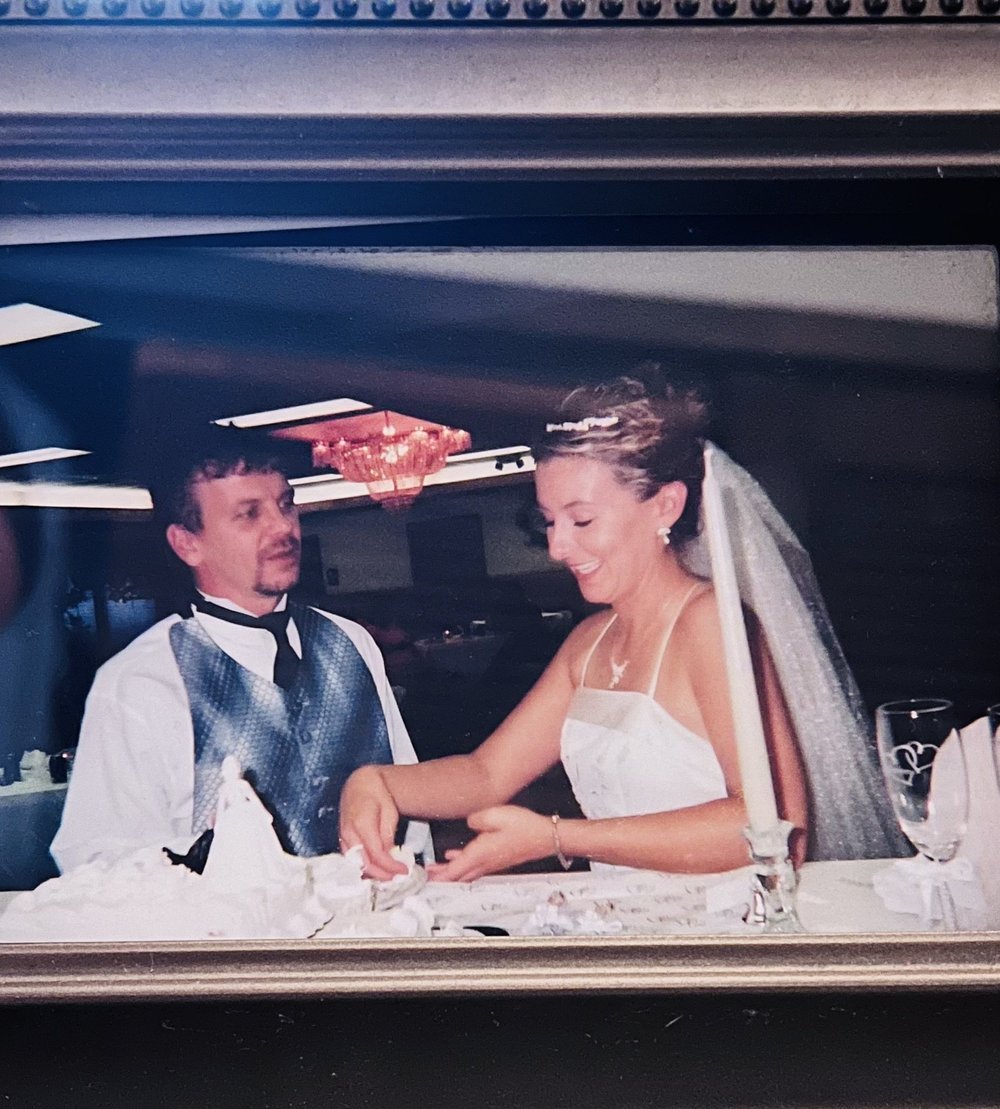
He drove himself to Lexington on the last morning of the trial, in the only car he and Heather owned. He had been on bond for twenty-seven months and had not missed a court date. The Justice Department had never once argued that he was a danger to anyone or a risk to run.
He is “Dougie” to anyone who has known him more than a week, and “Uncle Dougie” to the children of friends he is not related to. He is papaw to six grandchildren, and their parents spell it two different ways.
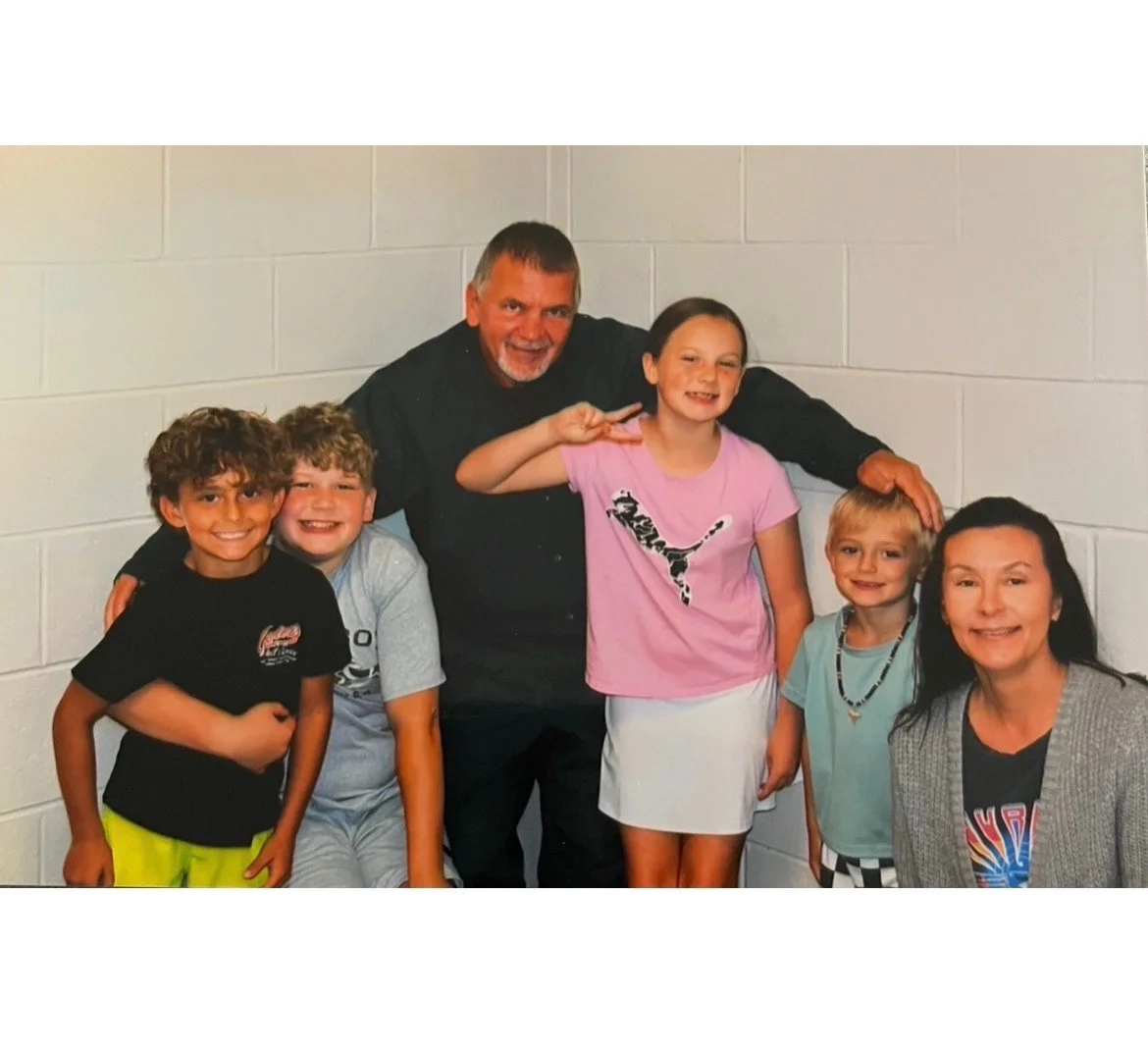
He is due out on February 21, 2034. Every child in that photograph will be an adult.
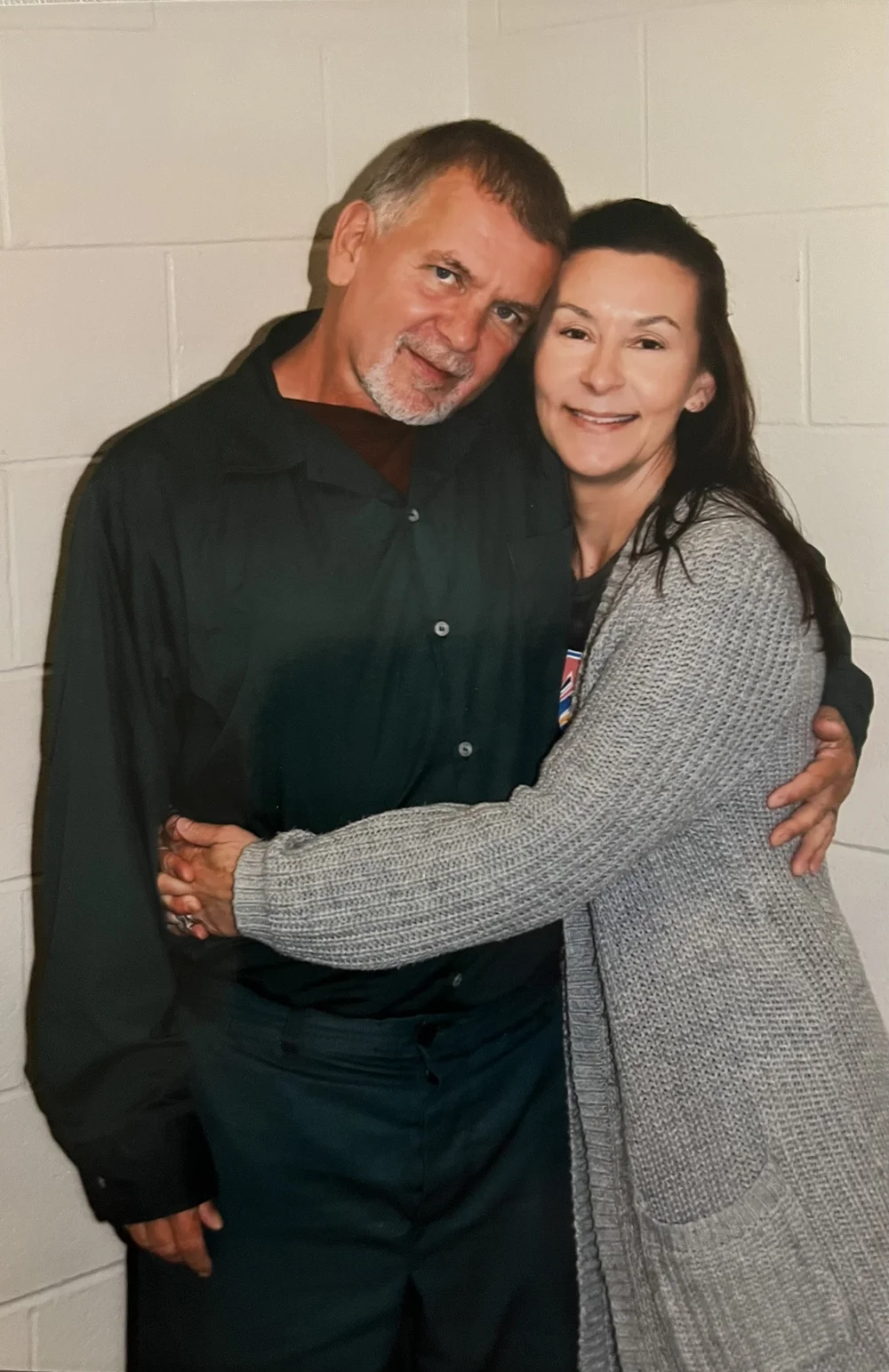
He has no lawyer. He asked for one and was refused. He reads his own file, writes his own motions in longhand, and mails them from a prison camp in West Virginia to a federal court, where the United States Attorney's office answers them. In the motion he filed in February 2026, among the things he asked a federal judge for, was this:
He was asking not to be moved further away from his family.
January 22, 2026
He had a stroke.
Four years into a fourteen-and-a-half-year sentence for paperwork, five hours from his wife, in a federal prison camp. What happened after it is described by the man who runs the religious services there, in a letter written in July.
From the inmate preacher at FCI Beckley camp
“I cant quantify how loved and cared about Doug Vance was when we heard he had a medical emergency in January here at Beckley. Doug was not afforded an opportunity for physical or speech therapy.”
“Watching this Man on the recreation yard doing self-rehab exemplifies his can-do, never give up attitude.”
Howard · inmate religious preacher, FCI Beckley · 26 July 2026Reproduced as written. This is one man's account of what he saw, and we have not been able to obtain the medical records. Douglas Vance's own motion asked the court for those records and has not been ruled on. If the Bureau of Prisons says otherwise, we will publish that here.
Letter The letter itself Letter from the inmate religious preacher, FCI Beckley, 26 July 2026 One page, as written. The medical emergency in January, the therapy he says was not provided, and the self-rehabilitation on the yard. Open the document
He taught himself to walk it off on a prison recreation yard, because there was nobody to teach him. The preacher adds one more thing: with the exception of the stroke, Douglas Vance has never missed a day of work in that camp, and he was back at it sooner than anyone expected.
What his days look like now
Another man at the camp — a former excavation contractor from the Kentucky coalfields, serving time for unpaid payroll taxes — wrote five pages by hand in August about working beside him. He is not related to Douglas Vance, he was not asked by the family, and he gains nothing by writing.
They rebuilt the camp greenhouse together, replacing the roof panels off a man lift.
Seven months after a stroke he says he was given no therapy for, on his knees on perforated steel until it took the skin off his arms, fixing a greenhouse for the institution holding him.
The letter ends on an image rather than an argument, which is the right way to end it.
Letter The letter itself John Quintrell — five handwritten pages, 5 August 2026 Written by a man serving his own sentence at the same camp, who is not related to Douglas Vance and was not asked by the family. The greenhouse, the phone bank, and the gloves. Open the document
From that camp, denied counsel, serving fourteen and a half years, he wrote to the President of the United States. The letter is not mainly about himself.
“Having spent time inside, I have personally met hundreds—and am certain there are thousands across the country—who desperately need your help.
Not everyone in custody is deserving of clemency. However, there are specific groups of men and women for whom presidential clemency represents the only remaining path to justice… Keeping aging grandfathers and grandmothers incarcerated at immense taxpayer expense serves no rehabilitative or punitive purpose, especially when they could spend their remaining years reunited with their families.”
Reg. No. 23266-032 · Pardon Case No. P339491 · reproduced unaltered
A man denied a lawyer, writing to argue that not everyone in prison deserves mercy — and asking for it for the old and the over-sentenced before he asks for anything for himself.
He also wrote to the rest of us
On 16 August 2026 his wife published a letter he had written from custody. It is short. It is printed here in full and unaltered.
In his own words
Douglas VanceWritten in federal custody · published 16 August 2026
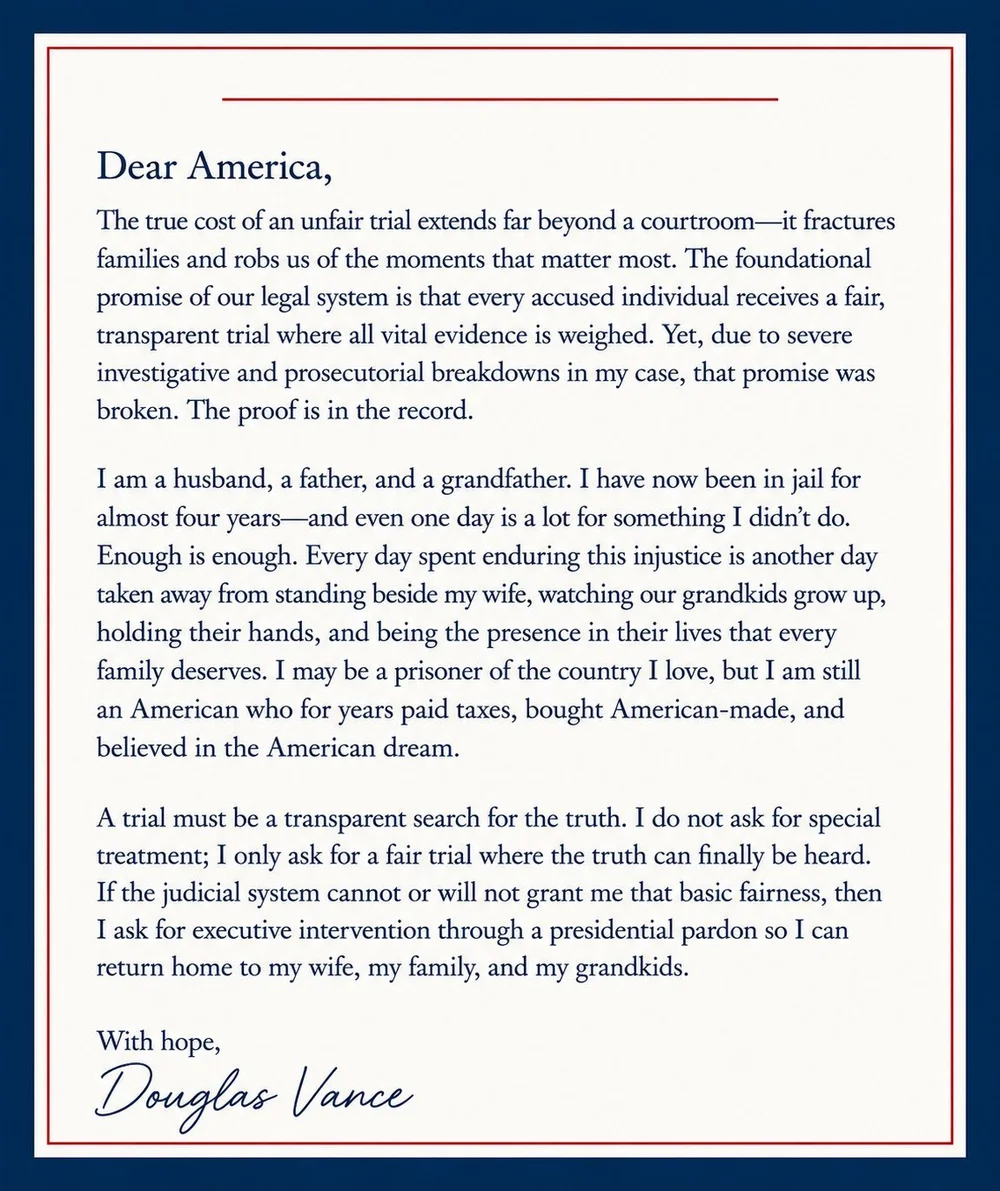
Dear America,
The true cost of an unfair trial extends far beyond a courtroom — it fractures families and robs us of the moments that matter most. The foundational promise of our legal system is that every accused individual receives a fair, transparent trial where all vital evidence is weighed. Yet, due to severe investigative and prosecutorial breakdowns in my case, that promise was broken. The proof is in the record.
I am a husband, a father, and a grandfather. I have now been in jail for almost four years — and even one day is a lot for something I didn't do. Enough is enough. Every day spent enduring this injustice is another day taken away from standing beside my wife, watching our grandkids grow up, holding their hands, and being the presence in their lives that every family deserves. I may be a prisoner of the country I love, but I am still an American who for years paid taxes, bought American-made, and believed in the American dream.
A trial must be a transparent search for the truth. I do not ask for special treatment; I only ask for a fair trial where the truth can finally be heard. If the judicial system cannot or will not grant me that basic fairness, then I ask for executive intervention through a presidential pardon so I can return home to my wife, my family, and my grandkids.
With hope,
Douglas Vance
Reproduced in full and unaltered
Written by Douglas Vance in federal custody · published by his wife, 16 August 2026
Court record The document itself Motion to vacate — Molly McKinnon, DE 308, filed 25 August 2026 Filed from a federal prison camp under penalty of perjury. Ground One is prosecutorial misconduct. The passage quoted above is in the memorandum in support. No court has ruled on any of it. Open the document
Read what he is asking for, because it is not what people expect on a clemency page. He asks for a trial. The pardon is his second choice, and only if the courts will not give him the first. A man trying to avoid scrutiny does not ask to be scrutinised properly.
And his wife wrote to the President
Heather Vance has worked, raised the family, carried the bills, gathered the records and read the transcripts for four years. On 24 August 2026 she sat down with a pen and a sheet of lined paper. These are her words, excerpted from a longer letter.
A letter to the President of the United States
From Heather VanceWife of Douglas W. Vance · 24 August 2026
My name is Heather Vance, and I am the wife of Douglas Vance. For nearly 2 decades, Douglas has been my husband, my partner, my best friend and the person I believed I would grow old beside.
There is an emptiness in our family that never goes away. Douglas is missing birthdays, holidays, family dinners, ordinary conversations, and all of the little moments most people never realize are precious until someone they love is no longer there to share them. Our children have had to live without their dad physically present in their lives, and our grandchildren are growing up with their popaw behind prison walls. One of our youngest grandchildren has never even had the opportunity to meet him in person.
The hardest part is knowing the man I love, knowing his heart and his character and knowing how firmly he has maintained his innocence from the very beginning and still not being heard. I have watched him lose years of his life while continuing to stand by the truth of what really happened and as his wife that has been incredibly painful to carry alongside him.
Then, on January 22, 2026 Douglas suffered a stroke while incarcerated. That moment brought a different kind of fear into our lives. It reminded me in the most painful way that time is something none of us are promised. Every year that passes is another year we can not get back.
I don't want our grandchildren's memories of their Popaw to be telephone calls and stories about the man waiting to come home. I want them to know him. I want them to sit beside him, laugh with him, learn from him and make memories with him. I want our children to have their father back. And after all these years, I want the simple privilege of having my husband beside me again.
President Trump, I am asking you personally, as Douglas's wife to please grant him a presidential pardon. You have the constitutional authority to correct an injustice when the courts have not.
We cannot recover the years that have already been lost. But you have the power to change what happens with the years we still have ahead of us.
Please bring my husband home.
Heather Vance · 24 August 2026
Handwritten. Reproduced as written, excerpted from a longer letter. Douglas William Vance
· Reg. No. 23266-032 · Pardon Case No. P339491
Letter The letter itself Heather Vance to the President — handwritten, 24 August 2026 Five pages in her own hand, reproduced above in excerpt. Read the whole of it. Open the document
She wrote a second letter the same month, to the Office of the Pardon Attorney and White House Counsel. It is a very different document — no appeal to sympathy anywhere in it. It lists the witnesses whose testimony should be compared against the bank records, names the exhibits, and asks that the recording, the letter and the co-defendant's new sworn filing be read together. It contains this instruction:
That is the whole argument of this page, written by his wife, in two sentences.
PDFThree pagesLetter The letter itself Heather Vance to the Office of the Pardon Attorney and White House Counsel The sober one. It names the witnesses whose testimony should be checked against the bank records, names the exhibits, and asks that the recording, the letter and the co-defendant’s new filing be read together. Open the document
Discretion is not the problem
Almost every choice made in this case was legal. That is not an accident and it is not a defect in the system. The system is built to give people choices. A prosecutor decides what to charge and whether to charge at all. An agent decides how far to trace the money. A judge decides what a jury may be shown. It has to work that way — no rulebook could anticipate every case, and a system that removed judgment would be worse than one that permits it.
But discretion is not handed out unattached. It comes with a duty, and the duty is not our formulation. The Supreme Court wrote it down in 1935, and prosecutors' offices have been quoting it ever since.
The duty that comes with the discretion
The United States Attorney is the representative not of an ordinary party to a controversy, but of a sovereignty whose obligation to govern impartially is as compelling as its obligation to govern at all; and whose interest, therefore, in a criminal prosecution is not that it shall win a case, but that justice shall be done.
Justice George Sutherland, for the Court · Berger v. United States, 295 U.S. 78, 88 (1935)
The same opinion: a prosecutor “may strike hard blows, [but] is not at liberty to strike foul ones.”
That is the standard, and it is the government's own. The question to ask of a prosecution is not whether anybody broke a rule. It is what the prosecution was for. Seeking the truth and doing justice is not one motive among several that a prosecutor may weigh against winning. It is the only one the office is given.
Every one of these was a choice, and every one of them was available
Nobody required the Justice Department to leave the letter uncollected after its own agent said on tape that he would ask the prosecutor to go and get it. Nobody required it to build a fourteen-and-a-half-year sentence on a financial picture its own agent testified he could have completed and chose not to. Nobody required it to count as a victim a woman who told the court five separate times, in writing, that she was not one. Nobody required it to obtain restitution from a man whose own attorney had told the FBI the deal collapsed on his client's side. Nobody required it to seek a forfeiture judgment of $2,736,136.58 against a man the same judgment found could not afford to pay the interest. Nobody required it to move to strike the handwritten filings of a prisoner it had already succeeded in denying a lawyer.
A person decided which way to point every single one of them.
The rules those choices ran through are good rules. Reciprocal discovery exists so that nobody is ambushed at trial. The hearsay rule exists because a person who cannot be cross-examined should not decide a case. The obstruction enhancement exists because lying under oath should cost something. Every one of them was written for a reason, and every one of them sits neutral until somebody picks it up and decides which way to aim it.
A rule written to prevent ambush became the reason a jury never read a confession written by the woman sitting at the next table. A rule written to protect cross-examination kept out the only document in this case that pointed away from Douglas Vance, and stayed in force after its author took the stand and was cross-examined in front of that same jury. A doctrine written to keep appeals orderly is the reason no court has ever decided whether any of it was right.
Legal is not the same as right
A lawful act and a just one are not the same thing, and the distance between them is where this case sits. Each ruling here is defensible standing alone. Read together they describe an office that had a duty to find out what happened and used its discretion to stop finding out.
An agent who testifies that he could have completed the financial picture and chose not to has told you what that choice was for. A jury invited to draw guilt from a man's statements about a document it was forbidden to read has been aimed rather than informed. A woman who says five times that she is not a victim, is counted as one anyway, is never called to be asked, and is then awarded nothing, was a number and not a person.
None of that was unlawful. That is exactly the point. Legality is the floor. It is not the standard. The standard is the one the Supreme Court set and the Department repeats to itself: not to win, but to see that justice is done. Measured against the floor, this case is fine. Measured against the duty it is not, and no amount of correct procedure closes the distance between the two.
Some things a prosecutor may lawfully do still cannot be defended. That is where the line has to be drawn, and it is the only place it can be drawn.
Our position, stated plainly
Everything above this box is sourced to a document, and the government's account is printed on this page beside ours, including the facts that hurt Douglas Vance. What follows is not a fact. It is our judgment, formed after reading the case file, and we put our name to it.
Every action the Justice Department took in this case was permitted by law. We do not believe that settles anything.
A thing can be lawful and still be wrong. Legality is what the law allows. Ethics is what the office is for.
So let us be exact about whose conduct we are describing, because it is not Douglas Vance's. We are describing what the Justice Department did to him.
We do not find the Justice Department's actions in this case defensible, and we do not believe they served the interests of justice.
Not one of those actions on its own, and not the sum of them together. Leaving the letter uncollected after its own agent said he would send the prosecutor for it. Building a fourteen-and-a-half-year sentence on a financial picture that same agent testified he could have completed and chose not to. Counting as a victim a woman who told the court five times she was not one, then awarding her nothing. Taking $50,000 in restitution from a man whose own attorney had told the FBI the deal collapsed on his client's side. Asking twelve people to read guilt into a man's words about a document they were forbidden to see.
The law permitted every one of those steps. We do not accept that the law permitting a thing makes it right, and we do not think anyone who reads this record will either.
Every federal prosecutor and every federal agent swears the same oath on the day they take the job: to support and defend the Constitution of the United States, and to faithfully discharge the duties of the office. That oath is not sworn to a conviction, to a case, or to an office's record. It is sworn to Americans.
We believe the Justice Department betrayed that oath in this case, and that Douglas Vance is the man paying for it.
To say it once more so there is no mistaking it: this is our judgment about the conduct of the Justice Department, not about the conduct of Douglas Vance. It is an opinion about an institution, held after reading the record. It names no individual prosecutor, agent or judge, and it accuses nobody of a crime. It rests on the documents published on this page, which anyone can open and read for themselves. If the record shows we are wrong, tell us and we will say so here.
The sum of it
Twelve people were asked to decide one question: whether Douglas Vance knew that the records going to investors had been falsified. They were not shown the six pages in which the woman who falsified them wrote that she had done it without his knowledge, using his email password, opening the messages on his end so he would not find out. They were not told the pages existed. They were then instructed that they could infer his guilt from what he had said to the FBI about those pages. They convicted him in an afternoon and a morning, and he was taken into custody in the courtroom.
That is not a trial anyone would defend if it were their own.
It is only defensible one ruling at a time — which is exactly how it was built, and exactly why it cannot be taken apart one ruling at a time either. Every court that could look at a piece of it has looked and moved on. One office in the United States is permitted to look at the whole of it at once, and to ask the question no court is built to ask: not whether this was lawful, but whether it was right.
Douglas Vance maintains his innocence and is asking the President of the United States for a full pardon. That is his position, it is his case, and this page will not soften it on his behalf.
But nothing here requires anyone to disturb a jury's verdict to act. It rests on things a reporter could check in an afternoon:
- A letter written nineteen months before anyone was charged, in which the co-defendant takes responsibility and says he did not know, was kept from the jury — and no court has ever ruled on whether it should have been.
- The jury was then instructed it could infer guilt from what he had told the FBI about that letter.
- The case agent testified he could have completed the financial picture and did not.
- The Department's own Sentencing Table prices the trial at roughly double. 87–108 months if he had pleaded. 174 because he did not.
- The national average sentence for this offense category is 23 months.
The request is a full pardon — and, in the alternative, a commutation of sentence. A commutation asks nobody to relitigate guilt. It asks one question: does the conduct a jury found explain fourteen and a half years?
Separately and immediately: he has been denied counsel and denied a hearing on the only post-conviction motion he will ever get, and he is litigating it in longhand against the United States Attorney's office. Whatever anyone thinks of the verdict, that is not a fair fight, and it costs nothing to say so.
Pardon Case No. P339491
Douglas William Vance · Reg. No. 23266-032
FCI Beckley Satellite Camp · Beaver, West Virginia
The letter is six pages long. It has been in the court file since May 1, 2024, at docket entry 262-1. Anyone with a PACER account can read every word of it this afternoon.
The Justice Department objected three times until the only twelve people in America who needed to read it could not.
What you can do
There is no budget behind this page. No firm, no consultant, no press operation. It was built by people who are themselves defendants in these cases, and it reaches anyone at all only because somebody decides to pass it on.
If you are a lawyer
This is the most useful thing anyone reading can do, and it is not representation — it is an opinion. If you practise federal criminal law, sentencing, or post-conviction work, read the documents above and put your name to a written assessment of what happened here. We will publish it in full, including the parts that cut against him. We are not asking anyone to agree with us. We are asking someone qualified and disinterested to look at this record and say what they see. Get in touch.
If you know a reporter
Every document on this page is public and every claim is cited. A journalist can verify the whole of it from the docket in an afternoon. What exists publicly about this case right now is the Justice Department's press release and nothing else. Nobody has told the rest of it. Reporters can reach us here.
If you can help us get four documents
The jury notes at DE 132 and the Day 7 transcript at DE 180, which would tell us what happened in that room. DE 235, the certified transcript of the co-defendant's allocution. The Bureau of Prisons medical records from January 2026. And the second McKinnon letter, which her own notarized statement refers to and which nobody has. If you have any of them, or a PACER account and an hour, send them here.
If you found something wrong
Tell us. Every page on this site carries the same promise and this one is no exception: if any passage here does not match the record, we will correct it. That promise is the only thing that makes the rest of it worth reading. Send us the correction.
If you can only do one thing
Post it. Send it to one person. Bring it up at dinner. Nothing on this site travels unless a person decides to hand it to another person.
from the public docket in an afternoon.
Douglas Vance is due out on 21 February 2034.
He is one of 43 Americans, and there are forty-two more.
The record
Every document on this page, in one place
Sixteen files. Each one is the pages that matter and nothing else, so you can open one thing and see one thing. Everything quoted on this page comes out of these, and nothing on this page asks to be taken on trust.
This page was written and published by 250pardons.com. Douglas Vance did not write it, did not review it before publication, and is not its author. He has no lawyer. No lawyer wrote this page, reviewed it, or endorses it. Nothing here is a statement by Douglas Vance or by anyone representing him, and nothing here should be attributed to either.
Where Douglas Vance is quoted, the passage is marked and attributed either to a written account he provided to this site or to a letter he has published. Where his family or others are quoted, the passage is attributed to the letter it comes from. Everything else — the arguments, the characterizations, the questions and the conclusions — belongs to the people who built this page and to nobody else.
This page is not a legal filing and does not state his legal position. His motion to vacate under 28 U.S.C. § 2255 is pending in the Eastern District of Kentucky. Where anything on this page differs from what he has argued or will argue in that court, his filings govern and this page does not. Nothing here is legal advice and nothing here is a prediction of any outcome.
On the people named on this page who are not Douglas Vance. Molly McKinnon's 2018 letter, her notarized statement and her pending motion to vacate are her own accounts, not findings of fact, and this page asserts nothing about any person she names in them. Joan Faybik's declaration is her sworn account and has not been adjudicated. No person named on this page other than Douglas Vance and Molly McKinnon has been charged with any offence arising from these events, and nothing here should be read as alleging that anyone committed a crime. Any person named here may write to us and we will publish their response alongside.
On the Justice Department. The section headed “Our position” is clearly marked as opinion. It is our judgment about an institution, formed after reading the record published on this page. It names no individual prosecutor, agent or judge as having acted corruptly or unlawfully, and it accuses nobody of a crime. Where a federal agent, prosecutor or judge is named anywhere on this page, the name appears because it appears in a public court document that is linked here.
A note on quotation. Passages marked verbatim are exact text from a named transcript, exhibit, jury instruction or filing, with the source identified. Passages attributed to Douglas Vance are from a written account he provided to this site and from letters he has published. Passages attributed to his family are from letters filed with the sentencing court at docket entry 155; addresses and telephone numbers are withheld at the family's request. Quotations from Court Exhibit 1 are Molly McKinnon's account, not findings of fact, and this page asserts nothing about any person she names in it. No individual named in that letter has been charged with anything arising from it, and any person named on this page may reply to us and we will publish the reply alongside.
If any passage here does not match the record, tell us and we will correct it.