
Billy Joe Taylor
Clinical laboratory owner, Lavaca, Arkansas. Father of four. Sued Blue Cross Blue Shield and thirty-odd affiliated insurers in 2019; was searched, arrested and jailed by the federal government in the twenty months that followed. Charged with seventeen counts totaling $43,454.75. All seventeen were dismissed. He is serving fifteen years, and no jury ever heard the case.
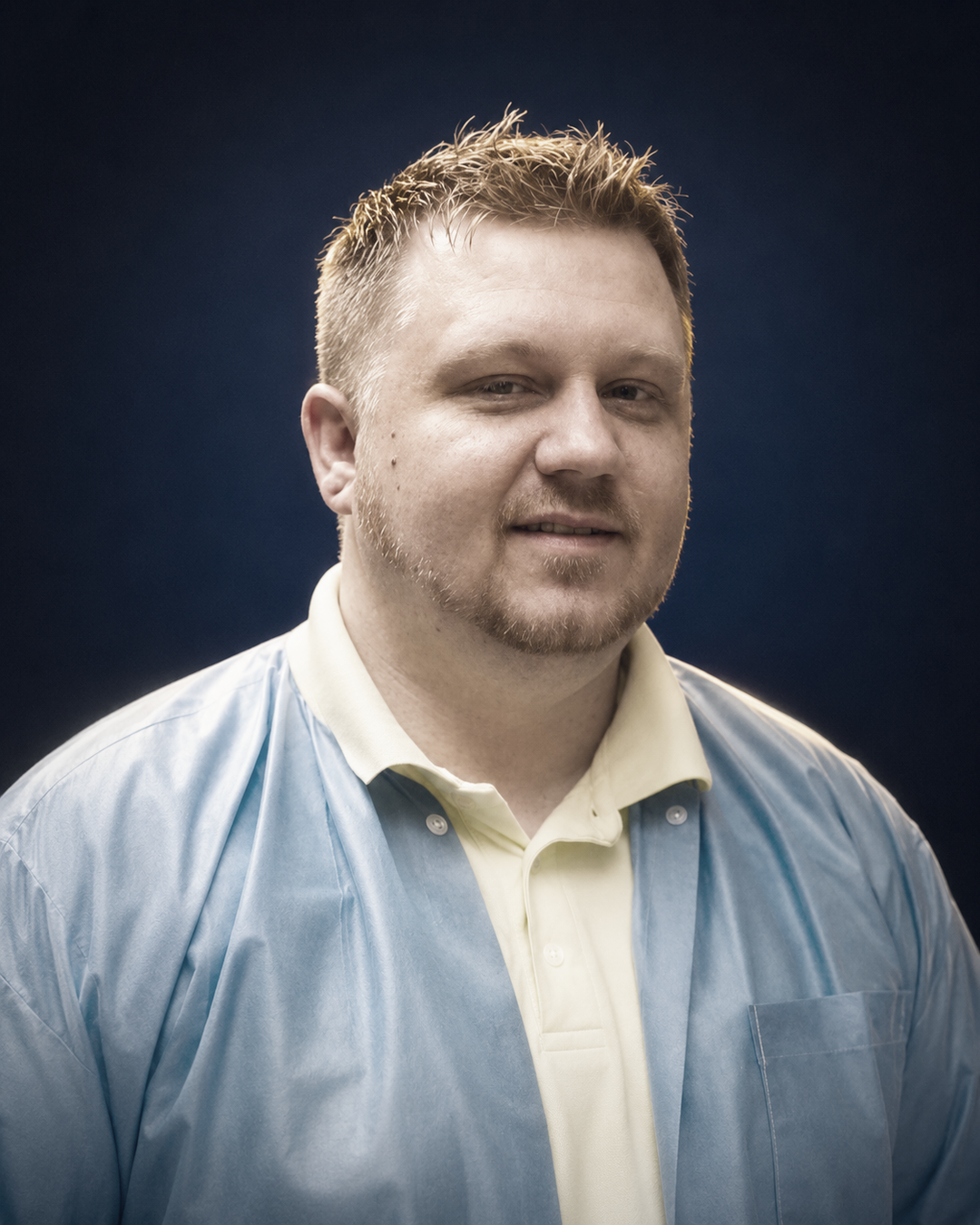
Written and published by 250pardons.com. Not written, reviewed, or approved by Billy Joe Taylor. He is litigating without a lawyer, and his legal positions are stated in his own court filings, not here.
In May 2021 federal agents searched Billy Joe Taylor’s home and his adult son’s businesses and carried out the family’s property, vehicles and computers. Local television filmed it.
Eleven months later he signed a sworn statement that he had no income and no assets. A court used that statement to declare him too poor to hire anyone and assigned him a lawyer he did not want.
When his family hired three lawyers of their own — ready, and unopposed by the prosecutor — the court refused to let them in. The reason given was that Taylor had failed to show “justifiable dissatisfaction” with the lawyer he never chose.
The government created the poverty. The court then used the poverty to take away his choice of counsel.
May 25, 2021 · Sebastian County, Arkansas
They searched the guitar room and left the billing office alone
Why it matters: the paperwork that answered the government’s central allegation sat behind a door nobody opened.
Agents arrived in the morning. They searched his home in Lavaca. They searched his adult son’s guitar store and his recording studio. Local television filmed them carrying equipment out. KHBS/KHOG 40/29 News covered it that night.
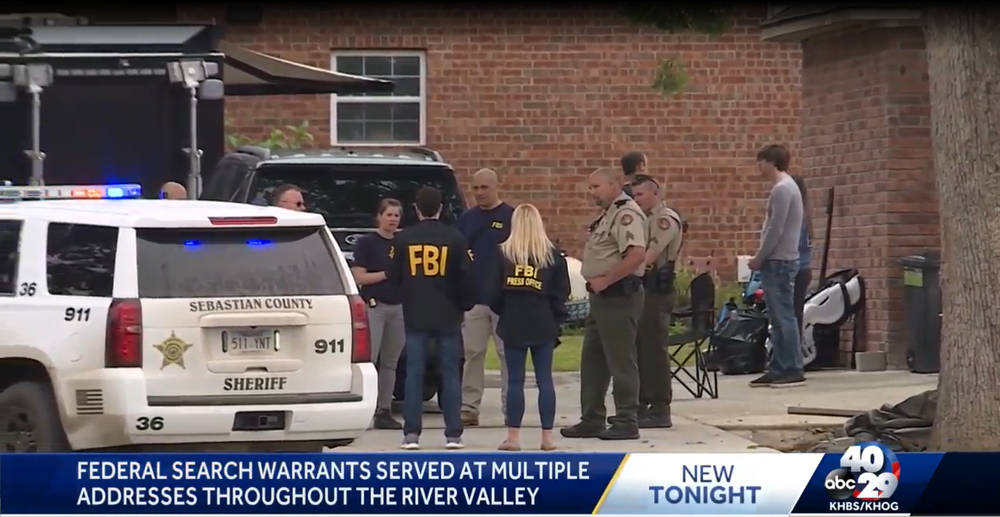
May 25, 2021. Agents at the Taylor home. The station’s caption read: federal search warrants served at multiple addresses throughout the River Valley. Source: KHBS/KHOG 40/29 News.
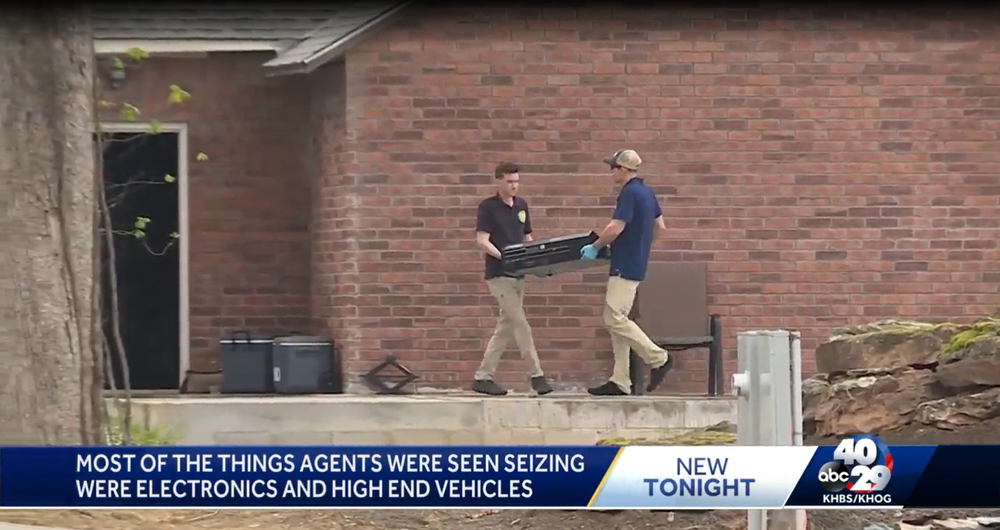
The station reported that most of what agents were seen seizing was electronics and high end vehicles. Source: KHBS/KHOG 40/29 News.
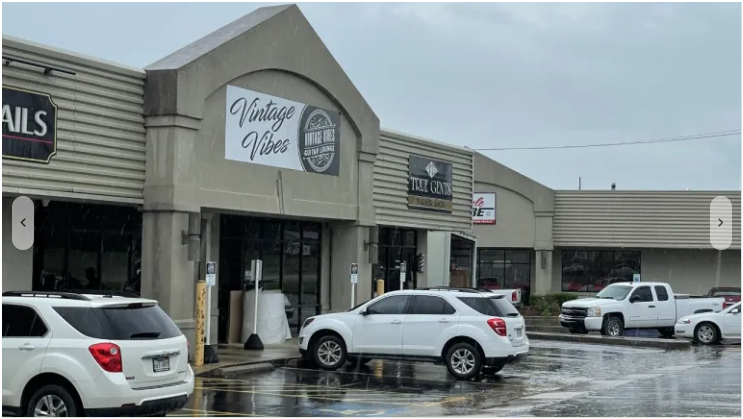
His son’s guitar business, also searched. The son has never been charged with anything.
Taylor says there was a small office building with two exterior doors side by side. Behind one: his billing company, holding every claim record the government said proved a fraud. Behind the other: his son’s guitar inventory. He says agents went through the guitar door and never opened the other one. This is his account, and it should be checked against the government’s own warrant inventory.
What is not in dispute is what was never searched. Nothing in the record of this case shows a search warrant executed at any of the five laboratories. The businesses accused of billing fraud were not entered. Homes were.
Before any of it
A laboratory owner from a town of two thousand
Why it matters: a sentence is served by a person, and this one was recovering from open-heart surgery when it began.
Billy Joe Taylor is from Lavaca, Arkansas, a town of about two thousand in the Ozark foothills. He is a husband and the father of four.
He spent close to twenty years in clinical laboratories and built five of them across Arkansas, Oklahoma, North Carolina and California. At their peak, he says, they processed five to ten thousand patient samples a month. A laboratory never sees a patient. It receives a sample in a box, runs it, and sends back a result.
Shortly before this began he had quadruple bypass surgery — open-heart surgery replacing four blocked arteries. He was still in recovery, still driving four hours round trip to Oklahoma City for follow-ups, when the case started.
He is serving fifteen years at FCI Beaumont Low in Texas, register number 47202-509, with zero criminal history points. He has been in federal custody since December 20, 2021.
No jury has ever heard this case.
The unfavorable facts, first
What the record says that does not help him
Why it matters: a page you cannot trust on the bad facts cannot be trusted on the good ones.
Start with what cuts against him. It is all real, and it is all in the record.
On October 27, 2022 he pleaded guilty, waived his right to a grand jury, consented to a two-count charging document, and admitted in open court that the government’s facts could be proven. Asked under oath whether he was satisfied with his lawyer and whether anyone had forced him, he answered yes and no.
In December 2021 a magistrate judge revoked his bond and a district judge affirmed. The findings were detailed and they were bad.
- The court found probable cause to believe that, while free on bond, he took $192,500 from a buyer of used laboratory equipment across four transactions without delivering what was paid for.
- It found no evidence supporting the explanation he had given that buyer, and found he withdrew $102,400 of the money in cash.
- It found he was in near-daily contact with former employees who were witnesses in the investigation.
- It found multiple unauthorized overnight stays at a Tulsa casino between June and October 2021.
- And it declined to credit his heart condition, writing that he “may not use his health conditions as a shield.”
Two things about that list. A bond hearing is not a trial — the standard is probable cause, the lowest in criminal law, with no jury and no verdict. And he was never charged with any of it. No GenTech count appears in the indictment or the judgment.
One more, because it is the government’s best answer to everything below: by mid-2022 Taylor had retained and parted with three sets of lawyers, and the court described a revolving carousel of counsel.
But a guilty plea is not a verdict. A verdict is what a jury returns after both sides put on evidence and every witness is questioned by someone whose job is to doubt them. A plea is something else entirely. It is a decision — made by one person, at one moment, under whatever conditions he happened to be in when he made it.
Billy Joe Taylor made his in a county jail, recovering from open-heart surgery, represented by a lawyer he had twice told the court he did not want, with the records that answered the charge sitting uncollected in another state, and with a federal forfeiture claim standing against his wife’s house and his children’s vehicles in the hands of the office sitting across the table. The gap between signing and losing at trial was measured in decades.
Roughly nine of every ten federal cases end this way, and fewer than three in a hundred ever reach a jury. Plea rates that high do not measure how many people are guilty. They measure how few can afford to find out.
None of this means he did nothing. It means the one process built to answer that question never ran.
Count Two
Five years of his sentence rest on one purchase at a jewelry counter
Why it matters: most people would not recognize the second half of this sentence as a crime at all.
He was sentenced on two counts. The first, conspiracy to commit health care fraud, carries a maximum of ten years. He received ten. The second count is where the remaining five years come from.
When the United States first charged him, in the criminal complaint filed May 21, 2021, there was no money laundering count at all. It appears for the first time in the indictment returned that November, and it rests on a single transaction: a debit card used at Newton’s Jewelers in Fort Smith, Arkansas, on or about February 11, 2021, in the amount of $20,742.75. The judgment entered on June 9, 2023 carries the same offense date for the money laundering count of conviction.
Section 1957 makes it a federal crime to make a transaction of more than $10,000 using money derived from certain offenses. It requires no concealment. No shell company, no structuring, no disguising where the money came from. Spending it is the offense. The other federal money laundering statute, section 1956, does require an intent to conceal. He was charged under the one that does not.The effect is arithmetic. Once the underlying fraud is established, any single purchase above $10,000 drawn on an account holding the proceeds becomes a separate offense carrying ten years. The threshold written into the statute is $10,000. The purchase was $20,742.75.
He pleaded guilty to that count and it belongs to him. What follows from it is the part worth reading twice. The fraud count carried ten years and he received all ten. The remaining five years of a fifteen-year federal sentence rest on one afternoon at a jewelry counter. The district judge, summarizing the charge in a written order, described it as an attempt.
The indictment also alleged that Defendant committed money laundering by attempting to make a $20,742.75 purchase at a jeweler using funds derived from the alleged healthcare fraud.
Nothing about this is unique to him. Section 1957 is charged routinely in federal fraud cases across the country, and prosecutors are entitled to charge it. That is the point. A statute that turns spending into a second decade of exposure, with no proof of concealment required, is not a quirk of one prosecution in Arkansas. It is ordinary practice, and this is what ordinary practice produced.
Ten years for the money. Five more for spending it.
It also did something else here. A conviction under section 1957 opens a forfeiture provision that reaches not only the proceeds of an offense but any property involved in it. That is the provision the government used to reach the house.
November 2, 2021 to June 8, 2023
$134 million announced. $43,454.75 actually charged. Every count dismissed.
Why it matters: the figure the public remembers was never tested by a judge, a jury, or a single cross-examination.
The Justice Department announced this case three times. The headline numbers were $88 million, then $100 million, then $134 million.
Now open the indictment. It charges sixteen specific counts of health care fraud, each naming a patient by initials, a date, a claim number and an exact amount billed.
$493 · $2,007 · $2,779 · $2,007 · $2,779 · $2,007 · $2,007 · $499
Those sixteen counts total $22,712. The seventeenth is the jewelry counter described above: $20,742.75.
Every specific act the government actually charged, itemized, comes to $43,454.75.
The government’s answer to that arithmetic is a fair one and it belongs here: the indictment alleged a scheme far larger than the counts it chose to charge, and those sixteen were offered as examples rather than as the whole of it. Prosecutors are not required to charge every claim. What the itemized counts show is not the size of the allegation. It is what the office was prepared to put its name to, patient by patient, date by date.
On the day he was sentenced, all seventeen counts were dismissed on the government’s own motion. Not one was ever proven. He was sentenced on a two-count document he consented to, with no trial and no witnesses.
An Information is a charging document written by the prosecutor. Unlike an indictment, no grand jury reviews it. A defendant must waive his right to a grand jury for the government to use one.And consider the arithmetic of fighting. Convicted on everything, he faced up to 160 years. By pleading, his maximum dropped to 20. A man in a jail cell recovering from heart surgery was asked to bet 140 years on a trial he had no lawyer of his choosing to fight.
2018 to 2022
He sued the insurers. Then he went to jail and lost that case without appearing.
Why it matters: while he sat in a cell, a federal grand jury subpoenaed the insurer’s file out of the very lawsuit he had brought against it.
This is a sequence, in order, with dates. What it means is left to the reader.
2018. Highmark West Virginia Inc., a Blue Cross Blue Shield company, sues Taylor’s laboratory business in Wood County, West Virginia, claiming the labs used the wrong two-digit billing code and demanding more than $6 million back.
His lawyers answer with the insurer’s own documents. The provider manual, they show, does not require the use of any particular place of service code, and the federal code list tells providers to check with individual payers. Their filing also notes what the insurer never alleged — that the testing was not performed, not performed properly, or that value was not provided.
His side pleads something sharper still: that Highmark told the company by telephone in early 2017 to use the very code it later sued over, because claims were being denied under the other one, and that Highmark’s own claims representatives “actually filled out claims for MedTest and filed them for MedTest to ensure that they were submitted properly.”
September 13, 2019. He counterattacks, naming Highmark and essentially every Blue Cross Blue Shield plan in the United States. He says he then refused their settlement offers in mediation and pushed for a trial date.
May 21, 2021. A federal criminal complaint is filed. It is unsealed May 25. The searches happen that day. He surrenders and is released on bond May 26.
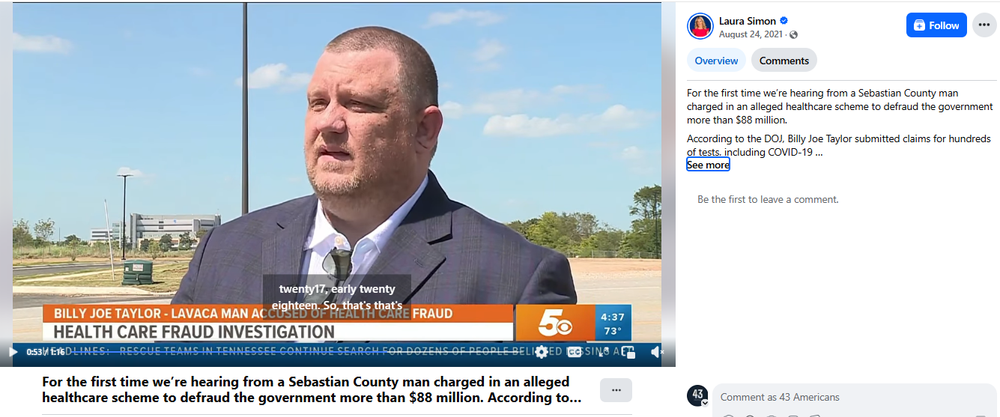
Days after the search, Taylor told local television he believed what was happening to him followed his lawsuit against Blue Cross Blue Shield. Watch the 2021 interview.
He said it on camera in 2021, months before he was indicted, and he has said the same thing ever since. That is not proof of anything. It is proof he did not invent the theory after he lost.
December 20, 2021. He is in jail.
2022. While Taylor sits in a county cell, a federal grand jury in Arkansas subpoenas Highmark West Virginia, commanding it to produce all exhibits filed in support of Highmark’s summary judgment motion and the evidentiary hearing transcripts from the civil case Taylor had brought against it. Taylor asks the court to widen the subpoena to capture the evidence that would help him. The court rules he has no standing to ask.
That is not from a defense brief. It is written in a federal judge’s order.
And then his case against the insurers ends. Taylor says he asked his appointed lawyer to file a motion so he could attend his own trial in West Virginia, that the lawyer refused, and that he lost by default.
A default judgment is what a court enters when one side simply does not appear. The case is lost without the merits ever being heard.The man suing thirty-odd insurance companies could not reach the courthouse, because the federal government was holding him.
This page does not claim the insurers caused the prosecution. It claims what the documents show: he sued them, a federal grand jury pulled their file, and he lost his case from a cell. Verification of the default judgment is pending on the Wood County docket.
April 15 to July 26, 2022
Made poor by seizure, then told he was too poor to choose
Why it matters: this is the constitutional error at the center of the case, and no court has ever reached it.
The Sixth Amendment gives a defendant who can pay the right to be defended by the lawyer of his own choosing. In United States v. Gonzalez-Lopez, the Supreme Court held that wrongly denying that right is structural error.
Structural error is a defect so basic that the conviction falls automatically. There is no need to prove it changed the outcome, because nobody can ever measure what a different lawyer would have done.April 15, 2022. His retained lawyers withdraw over an irreconcilable conflict and complete breakdown in the attorney-client relationship. He asks the court to release seized money so he can hire replacements. The court refuses, finding he had not identified any specific assets or funds he asserts were wrongfully seized. It then finds him too poor to hire anyone and appoints Kenneth Osborne, a lawyer he never asked for.
The affidavit that made him indigent was signed eleven months after agents emptied his home. He says he telephoned Osborne from jail that day, told him he did not want him, and asked him to file something preserving the objection. He says Osborne refused.
June 17, 2022. His family does what he could not. They hire a trial team: Jim Shaw of Arkansas, Joshua Schiffer of Atlanta, and Franz Borghardt of Baton Rouge. Shaw files a motion to substitute.
They were ready, and they have sworn to it under penalty of perjury.
“I was ready willing and able to enter an appearance on behalf of Mr. Taylor after being retained as a substitution of counsel. Prior to the hearing on the motion to substitute counsel, I had already begun reviewing information/discovery related to the case and was prepared to enter an appearance and become fully involved should the substitution be approved.”
— Joshua G. Schiffer, sworn declaration, June 8, 2026
Shaw swore the team had already begun reviewing information related to the case and had adjusted calendars in anticipation that trial would proceed as scheduled. He also swore that he spoke with the prosecutor beforehand and that at the hearing the prosecutor told the court he did not oppose the substitution.
June 23, 2022. Denied. The court found Taylor was manipulating his right to counsel for the purpose of delaying or disrupting the proceedings, and that he made no showing of any dissatisfaction at all with Osborne — “much less of the justifiable dissatisfaction required for substitution of appointed counsel.”
That is the wrong test, and it is not a close question. Justifiable dissatisfaction is what a defendant must show to trade one court-appointed lawyer for another court-appointed lawyer. It is not what he must show to bring in a lawyer his own family has paid for. Two different rights, two different rules. The government’s own 2026 filing cites Gonzalez-Lopez, the counsel-of-choice case, while defending the ruling.
The government’s answer, which belongs here, is that the court had other reasons: Taylor had already run through several lawyers, an eight-month continuance had been granted, another substitution would have required a further delay, and Schiffer and Borghardt never filed anything with the court before the hearing.
And the reason for excluding Shaw came to nothing. The court leaned partly on a show cause order issued against Shaw eight days earlier in an unrelated case.
A show cause order is a judge’s demand that a lawyer appear and explain himself. It is not a finding of misconduct.Shaw has now sworn what it actually was: he fell suddenly ill, was on prescribed pain medication, missed an appearance and was unreachable when the court called. He explained. And then, in his words, “the show-cause proceeding was resolved, and no disciplinary sanction, admonition, or other disciplinary action was imposed against me.” He stayed on that case, and it ended with a favorable outcome for his client.
A man lost the lawyers his family hired because another lawyer had been sick.
The government does not deny how the judge learned of it. Taylor says Osborne telephoned the judge privately that morning to raise the show cause order, telling neither Taylor nor the prosecutor. Here is the United States answering that in its own brief:
United States Response to Motion Under 28 U.S.C. Section 2255, February 2, 2026
The record does not indicate how Judge Holmes obtained that knowledge, but even assuming Taylor is correct that Osborne informed the court of the pending contempt motion, Taylor fails to establish that doing so was an error.
Taylor is not the victim of an ex parte communication, as the assumed communication was made by his own counsel.
The government does not say it did not happen. It says it would not matter.
July 26, 2022. Given the choice between the lawyer he did not want and no lawyer at all, Billy Joe Taylor began representing himself from a jail cell against roughly three terabytes of discovery, with Osborne as standby counsel. Three months later he pleaded guilty.
April to October 2022
The evidence that answered the charge sat in a storage unit in Atlanta
Why it matters: the government said the tests were never ordered and never performed. The orders and the results existed the entire time.
Joshua Sabert Lowther, a federal defense lawyer in Atlanta with no stake in the outcome, swore this on June 7, 2026:
He obtained “thousands of physician laboratory requisitions/orders and the corresponding test results/reports that the laboratories generated for the Medicare claims at issue in the indictment.”
“No attorney obtained the aforementioned records from me after my firm’s withdrawal, and at no time did I refuse or delay the transfer of those records to any attorney.”
“Mr. Taylor consistently told me that he intended to proceed to trial rather than plead guilty.”
— Joshua Sabert Lowther, sworn declaration, June 7, 2026
Taylor says the records fill an eight-by-eight storage unit with banker’s boxes, that he asked from jail again and again for someone to collect them, and that they are still there.
The boxes were in Atlanta. Nobody drove to Atlanta.
November 3, 2021 and September 12, 2022
The lavish lifestyle the government published was a list of his children’s things
Why it matters: the seized property became the leverage, and he says it is why he signed.
Announcing the indictment, the Justice Department told the public Taylor had funded a lavish lifestyle: automobiles, real estate, jewelry, guitars, clothing.
Eleven months later, from a county jail, Taylor wrote out what he wanted in exchange for a plea. The United States filed that email in court as its own exhibit, against him. In his own spelling:
Billy Joe Taylor, September 12, 2022 · Filed by the United States as Exhibit 1
wife keep her house and one of her cars she paid alot on this prior to our marriage and this is where my son works out of. son gets 25 guitars and 5 amps and 10 various other musical pieces of his choosing they took over 700 items from him many he has had for years and years. daughter kaylee gets car back. daughter abrie gets car back. alissa gets car back.
i must be out by halloween to spend time with my kids on this holiday season.
Read the two lists together. The possessions published to show a man of appetites were, item for item, things taken from his wife, his children and his employees. Seven hundred from a son who was never charged with anything.
The house
Seven weeks of mortgage payments, and the government claimed the whole house
Why it matters: the sole owner of that house has never been accused of anything.
In 2021 the United States filed a civil forfeiture action against the family residence in Lavaca. By the government’s own complaint, the sole record owner of that house was Jennifer Taylor. She has never been charged with any offense. Neither have the children. The government’s filings acknowledge that the house was home to her and her minor children.
The stated basis is a declaration signed under penalty of perjury by an FBI special agent. It alleges that $165,898.65 in fraud proceeds paid the mortgage on the house between June 18 and August 10, 2020, and that those payments violated section 1957. On that basis the United States claimed the property. Not the $165,898.65. The house.
The house was not seized, and this page will not say it was. No pretrial restraining order was ever entered against it. What the government recorded was a lis pendens — a public notice of a pending claim — and it argues in its 2026 filing that under Arkansas law a lis pendens is not a seizure, does not restrain the owner, and does not prevent a sale.
At a hearing in April 2022 Taylor told the court that he and his wife bought the house in 2016 with a $200,000 down payment, before the period the indictment charges. The government’s answer is that he never supported the claim with affidavits or documents, and that he had no ownership interest in it in any event. On that ownership question, one government filing makes both of the following arguments, two pages apart.
- The house is not his. He cannot rely on it to argue he was denied the funds to hire counsel of his choice, because the record owner is his wife, and a defendant has no Sixth Amendment right to spend another person’s money on a lawyer.
- The house is forfeitable in its entirety. Because fraud proceeds paid part of the mortgage, the whole of the property was involved in money laundering and subject to forfeiture.
Then the plea agreement resolved it. Taylor says the house stayed with his wife and that his children were allowed to buy some of their own belongings back at reduced prices. The plea colloquy records that the United States agreed to dismiss certain civil forfeiture actions, and that Taylor consented to the forfeiture of the seized property he claimed an interest in, excepting the Lavaca house and a 2015 Toyota 4Runner. Whether the action against the house was among those dismissed cannot be confirmed without the plea agreement itself, and this page will not state it until that document is in hand.
“To me as a father I could please and protect my wife and kids.”
— Billy Joe Taylor, on why he signed
That is the transaction. A man in a cell, recovering from open-heart surgery, holding a lawyer he had twice told the court he did not want, with a federal claim standing against his wife’s house and his children’s cars in the hands of the office prosecuting him, signed a document that returned some of it.
October 2022 to June 2023
Fifteen years was built on a number, not on conduct
Why it matters: the loss figure driving the sentence included millions he was never paid, and the government’s own arithmetic moved by $8.5 million before sentencing.
Federal sentences are built on a numbered scale. Taylor says the starting number here — the base offense level — was 7, which on its own is measured in months. Everything above came from add-ons driven by one figure: loss. He says the indictment’s figure was around $13 million and that his appointed lawyer had him agree instead to $38 million in actual loss and $140 million in intended loss, promising to fight it at sentencing and then not doing so.
Intended loss is not money anyone lost. Laboratories bill Medicare at a multiple of what Medicare pays, because federal rules require one posted price for every payer while each payer reimburses at its own rate. Billing $500 and expecting $120 is not a scheme. It is how every laboratory in America invoices.Two things the record does confirm.
He received an enhancement for being an organizer or leader — written into a court order, and the sole reason he was later disqualified from a sentence reduction he would otherwise have received, despite zero criminal history points.
And the government’s own number was wrong by eight and a half million dollars. The plea fixed loss at $38,340,728.48. Seven months later the judgment came in at $29,835,825.99. Taylor says the gap was roughly nine million dollars Medicare had withheld and never paid his labs at all — charged against him anyway, and not caught until the eve of sentencing.
He pleaded guilty to a number that included millions of dollars he never received.
Throughout
A conspiracy with exactly one member
Why it matters: he was charged as someone who helped others, sentenced as the person who ran it, and nobody else was ever prosecuted.
Every announcement describes the conduct in the plural: Taylor and his co-conspirators. Five laboratories, four states. The indictment charges him with aiding and abetting others known and unknown to the grand jury.
The docket carries one name. The judgment lists no co-defendant and no shared liability. No one else was ever charged.
Taylor says he was one of five owners and did not control the bank accounts; that the billing at the center of the case was done by three employees working from home during the pandemic with almost no supervision, who found they could resubmit unpaid claims under changed dates of service instead of refiling them properly, on accounts where patients had often genuinely been seen; that the government seized his family’s phones and found no message in which he told anyone to bill that way; and that those employees’ devices were never seized at all.
He said in his proffer that he did not direct the billing, and he has said it ever since.
A proffer is a formal interview in which a defendant tells prosecutors what he knows, usually under an agreement limiting how his statements can be used.And the government never had to prove otherwise, because there was no trial.
Public record
The judge who denied him his lawyers once ran the office prosecuting him
Why it matters: a reader deciding whether a process was fair is entitled to know who ran it.
The motion was denied by United States District Judge P.K. Holmes III, nominated by President Barack Obama on April 28, 2010 and confirmed February 7, 2011. From 1993 to 2001, Holmes served as the United States Attorney for the Western District of Arkansas — the same office that prosecuted Billy Joe Taylor.
Both facts are public record. Neither is offered as an accusation. Federal judges are frequently drawn from the prosecutor’s office of the district they later sit in, and prior service is not a ground for recusal.
What others received
Larger cases, shorter sentences
Why it matters: fifteen years is not what this conduct ordinarily draws, on the government’s own numbers.
Every figure in the table below comes from a Justice Department announcement about that defendant’s own case, and every name links to it. All four are laboratory or testing cases resolved in the same period.
| Defendant | Billed, per the government | Ordered to repay | How it was resolved | Prior record | Sentence |
|---|---|---|---|---|---|
| Lourdes Navarro Health Care Providers Laboratory, California |
About $369 million, with Shams | $46,735,400 | Guilty plea | Not stated in the release | 9 years |
| Imran Shams same laboratory |
About $234 million | Not stated in the release | Guilty plea | Excluded from Medicare for decades, and concealed it | 10 years, plus 5 in a separate New York case, 3 of them consecutive |
| Mark Schena Arrayit Corporation, California |
More than $77 million in claims | $24 million | Jury trial. Convicted on nine counts | Not stated in the release | 8 years |
| Zishan Alvi Chicago laboratory |
Federal programs paid more than $14 million | $14,199,217 | Guilty plea, one count | Not stated in the release | 7 years |
| Billy Joe Taylor | $134 million announced | $29,835,825.99 | Guilty plea. No trial | Zero criminal history points | 15 years |
Alvi’s laboratory released negative COVID-19 results for specimens that had not been tested, or whose results were inconclusive because the tests had been diluted. No patient harm of that kind is alleged anywhere in Taylor’s case.
The United States Sentencing Commission puts the average sentence for health care fraud at thirty months in fiscal year 2020 and twenty-seven months in fiscal year 2024.
Sentences far longer than his exist, and this page will not hide them. Minal Patel of LabSolutions received twenty-seven years — but his case is not a comparison, it is a different order of magnitude. He was charged with billing more than $463 million, of which Medicare paid over $187 million, roughly six times what Taylor was ordered to repay, and he took more than $21 million personally. A Houston clinic owner received thirty years after trial on a scheme of roughly $21 million, which shows that dollar totals are not what drives a sentence in either direction.
The comparison that holds is the narrow one. Defendants who billed more, collected more, had already been thrown out of Medicare, or fought and lost in front of a jury are serving less time than a first-time offender who pleaded guilty.
Where it stands
Four people swore they would testify. The government says nobody needs to hear them.
Why it matters: every door has closed, and none of them closed because he was wrong.
He has fought this alone the whole way. His own appeal. His own petition for rehearing. His own petition to the Supreme Court of the United States, filed from a federal prison. His own motion under 28 U.S.C. section 2255, filed September 24, 2025 on eight grounds.
Section 2255 is the law that lets a federal prisoner challenge a conviction after appeals run out. It is the last door in the courthouse.The Eighth Circuit dismissed his appeal on July 31, 2024, holding that pleading guilty waived the claim. Rehearing was denied November 14, 2024. The Supreme Court declined the case on March 10, 2025.
On February 2, 2026 the government asked the court to decide the rest without a hearing — without testimony from Shaw, Schiffer, Lowther or Taylor.
Why this reaches past him
Nothing that happened here required him to own a laboratory
Why it matters: every mechanism in this case is ordinary, and each one is sitting in every federal district in the country.
Take the laboratory out of it. What is left is machinery. Read it and ask which parts of it could not reach you.
- Your money is taken before anything is proven. Seizure runs on probable cause, at the beginning, years before a trial that may never happen. Whatever you had set aside for a defense is gone in the first week.
- Then the poverty chooses your lawyer. You file the financial affidavit because you have to. The court reads it and appoints someone. When your family raises money for a lawyer of your own, the answer is that a defendant has no right to spend another person’s money on an attorney.
- Spending your own money becomes a second felony. One transaction over $10,000 from an account holding proceeds is a separate ten-year offense, with no concealment required. A truck. A roof. A semester of tuition. A ring.
- The number that sets your sentence is what you billed, not what you were paid. Every clinic, laboratory, contractor and supplier in America invoices above what it expects to collect. Federal sentencing can count the invoice.
- What the people who worked for you did is what you did. A biller who takes a shortcut at home during a pandemic can produce a leadership enhancement on your sentence, whether or not anyone finds a message from you.
- Your family becomes leverage. A house titled to a spouse who is never charged. A son’s inventory. Children’s cars. All of it held while you decide whether to sign.
- And then the arithmetic. Fight and face a century. Sign and face twenty. That choice is made in a cell, with the lawyer you did not pick standing next to you.
None of that is specific to clinical laboratories. It is specific to being charged.
A nurse practitioner signing orders she did not read closely. A billing clerk who resubmits a denied claim the way she was trained to. A coder following a payer’s telephone instruction that the payer later disowns — which is what the insurer’s own representatives are alleged to have done here. A home health owner, a pharmacist, a medical equipment supplier, a physician who signed a management agreement someone else drafted. An investor in a business that turns out to have a problem in it. Anyone who runs a payroll.
This page is not saying an innocent person is picked at random. Something went wrong in the billing at Billy Joe Taylor’s laboratories. He has never disputed that, and he pleaded guilty. The claim is narrower and harder: not one item on that list turns on how serious the conduct was, or on whether it was ever proven. Every one of them attaches the moment the government decides to charge you, and they keep working whether the case against you is strong, weak, or never tested at all.
He is one man in Arkansas. The machinery that produced fifteen years for him is federal, and it is everywhere.
The line this page will not cross
What we do not claim
Why it matters: credibility is the only asset a page like this has.
We do not claim the insurers caused this prosecution. We claim he sued them, a grand jury took their file, and he lost that case from a cell.
We do not assert that he is innocent. We say his guilty plea does not settle the question, because in this case nothing was ever put to a test.
We do not claim his bond revocation was unjust. A court found what it found, and we have printed all of it above.
We do not claim the government seized his wife’s house. It filed a claim against the house and recorded notice of that claim. An earlier version of this page said otherwise and was wrong.
We claim one thing: the government seized what he had, a court used the resulting poverty to deny him the lawyers his family hired, it applied the wrong legal test to do so, and no court has ever reached the question.
Precedent
This President has already commuted a longer sentence for the same two crimes
Why it matters: nothing here asks for a new standard. It asks for one that has already been applied.
Clemency is not rare and it is not partisan. President Biden commuted roughly four thousand sentences between 2021 and 2025. President Trump has granted well over a hundred pardons and commutations since January 2025. Both records are published by the Justice Department, and both are linked here. Nothing on this page asks for an exception. It asks for the ordinary exercise of an ordinary power.
The Justice Department’s published records: clemency grants by President Trump, 2025 to present · commutations granted by President Biden, 2021 to 2025 · pardons granted by President Biden, 2021 to 2025
The table below is drawn entirely from the Justice Department’s own published record of clemency grants. Each name links to the signed warrant.
| Recipient | Offense as listed on the warrant | Sentence | Financial judgment | Outcome |
|---|---|---|---|---|
| Lawrence S. Duran Southern District of Florida |
Conspiracy to commit health care fraud; health care fraud, 11 counts; kickback conspiracy; conspiracy to commit money laundering; money laundering, 18 counts; structuring, 6 counts | 50 years | $87,533,863.46 restitution | Commuted May 28, 2025 |
| Marian I. Morgan Middle District of Florida |
Conspiracy to defraud the United States; wire fraud, 7 counts; transfer of funds taken by fraud; money laundering, 6 counts; false statements on tax returns | 405 months | $19,958,995 restitution | Commuted May 28, 2025 |
| Jason Galanis Southern District of New York |
Two separate judgments: conspiracy to commit securities fraud; securities fraud; investment adviser fraud | 135 months, and 173 months with 60 consecutive | $37,032,337.43 and $47,785,176 restitution | Commuted March 28, 2025 |
| Carlos Roy Watson Eastern District of New York |
Conspiracy to commit securities fraud; conspiracy to commit wire fraud; aggravated identity theft | 116 months | $36,769,153.97 restitution | Commuted March 28, 2025 |
| Todd Chrisley Northern District of Georgia |
Conspiracy to commit bank fraud; bank fraud, 5 counts; conspiracy to defraud the United States; tax evasion | 144 months | $17,270,741.57 restitution | Pardoned May 28, 2025 |
| Robert Henry Harshbarger, Jr. District of Kansas |
Introducing misbranded drugs into interstate commerce; health care fraud | 48 months | $848,504.34 restitution | Pardoned November 7, 2025 |
| Billy Joe Taylor Western District of Arkansas |
Conspiracy to commit health care fraud; money laundering | 180 months | $29,835,825.99 restitution | Serving |
This page takes no position on whether any of these grants was correct, and does not suggest that any was undeserved. What the table shows is the range of conduct and sentence the power has already reached.
Read the first row again. Lawrence Duran was convicted of conspiracy to commit health care fraud and of money laundering — the same two crimes Billy Joe Taylor pleaded guilty to. He was ordered to repay three times what Taylor owes. He was sentenced to fifty years. That sentence was commuted on May 28, 2025.
The precedent for this exact offense combination, at a far larger scale, already exists and is published by the Justice Department.
The argument
Why this case fits the power, and what it would cost
Why it matters: clemency is not sympathy. It is the constitutional remedy for the case a court cannot fix.
- Only clemency can reach this error. The Supreme Court has said that wrongly denying a defendant his chosen counsel is structural — the conviction falls without any showing of harm. No court has ruled on whether that happened here, and no court will. The Eighth Circuit held the guilty plea barred the question. The Supreme Court declined it. The one remaining motion is opposed on the ground that no hearing is needed. The claim has never been rejected on its merits. It has only ever been declared unreachable. That is precisely the gap the pardon power exists to close.
- A commutation costs the public nothing. It leaves the conviction standing. It leaves $29,835,825.99 owed to Medicare. It returns no forfeited property. It forgives nothing and admits nothing. It changes one thing: where he continues the fight.
- The risk is measurable and it is low. Zero criminal history points, stated by the court itself. A non-violent offense. No allegation anywhere in this record that any patient was harmed — unlike laboratory cases that drew shorter sentences. A wife of many years, four children, and a father who has been in prison since December 2021.
- Every problem in this case is one the administration has named. A federal court applying the wrong constitutional test to keep out privately retained lawyers. Civil forfeiture aimed at a wife and children who were never charged. A sentence built on an intended-loss figure representing money nobody received — a theory two federal circuits have now rejected. Seventeen counts announced and dismissed without one being proven. These are not sympathy points. They are the specific failures this administration has said it intends to correct.
- And the disparity is documented, not asserted. Defendants who billed more, collected more, had already been barred from Medicare, or fought and lost in front of a jury are serving less time. The government’s own press releases establish it, and they are linked above.
A fifty-year sentence for health care fraud and money laundering has already been commuted by this President. This is the same two crimes, a third of the money, no trial, and a constitutional question no court will answer.
The ask
Not mercy. Correction.
A federal court told a man with paid, ready, willing counsel that he had to prove justifiable dissatisfaction with a lawyer he never chose. That is the rule for swapping one appointed lawyer for another. It is not the rule for a lawyer your family hired. The Supreme Court calls that error structural, meaning a conviction cannot stand no matter how strong the evidence, because nobody can ever know what the right lawyer would have done.
Nobody will ever know. The records sat in Atlanta. The witnesses were never called. Seventeen counts were dismissed without one being tested.
Then the doors closed one after another — appeal, rehearing, Supreme Court — each declining not because he was wrong, but because he had pleaded guilty on the advice of the very lawyer he was complaining about. It is a closed circle, and only one office in the country can open it.
Fifteen years. Five laboratories no one searched. Three employees no one charged. One name on the docket. Seven hundred items taken from a son who was never accused of anything. A federal claim against a house until a father signed.
Billy Joe Taylor is asking for executive clemency.
Read the record yourself
- Order Denying Substitution of Counsel, June 23, 2022 — the ruling at the center of this case. Read which legal test the court applied.
- Exhibit 1: Taylor’s plea terms, September 12, 2022 — filed by the prosecution against him. His asks were his family’s cars and his son’s guitars.
- Judgment, June 9, 2023 — 180 months, restitution of $29,835,825.99, and all seventeen original counts dismissed on the government’s own motion.
- United States response to the motion under 28 U.S.C. section 2255, February 2, 2026 — the prosecution’s own answer, published here in full, including its position on the private call to the judge and on the house.
- Wood County Civil Action No. 18-C-271 — the insurance litigation, in which his side pleads that the insurer instructed the billing code it later sued over.
Two documents quoted above are not published here. Joshua Sabert Lowther and James Shaw each signed a declaration under penalty of perjury in June 2026. Both were provided to this site and both are withheld from publication at the declarants’ request. Shaw’s declaration states that he is willing to give truthful testimony about the matters he describes in it. Readers should weigh those passages knowing the underlying pages cannot be checked here.
What you can do
This page exists because almost nobody hears about cases like this one. The announcement travels. The record does not.
- Read it and pass it on. Send it to one person who would find it hard to believe.
- If you know a reporter, tell them. Every document on this page is public and checkable. It is a story that can be verified in an afternoon.
- If you are a lawyer, we want to hear from you — including if you think we have something wrong. Corrections make this stronger.
- If you worked in this industry, or knew the labs, or know what is in the storage unit in Atlanta, contact us.
Billy Joe Taylor has been in federal custody since December 2021.
Share this page
Reporters, lawyers, and anyone with information
Follow 43 Americans on Facebook for the other forty-two cases.
Who wrote this, and who did not
This page was written and published by 250pardons.com. Billy Joe Taylor did not write it, did not review it before publication, and is not its author.
He is proceeding without counsel. No lawyer wrote this page, reviewed it, or endorsed it, and nothing here should be attributed to any attorney who has represented him at any stage of this case.
Where he is quoted, and wherever this page says he says something, the passage is drawn from written answers he provided to this site, from a recorded call, or from a document filed in his case. Everything else — the arguments, the characterizations and the conclusions — belongs to the people who built this page and to nobody else.
This page is not a legal filing and does not state his legal position. His motion under 28 U.S.C. section 2255 is pending in the United States District Court for the Western District of Arkansas, and the arguments made there are made in documents filed with that court, in his own words. Where anything here differs from what he has argued or will argue, his filings govern and this page does not.
Billy Joe Taylor is also the author of two books written in federal custody. They are his own published argument about how Medicare is billed and administered. They are not evidence about this case, and this page does not adopt them.
Nothing here is legal advice, and nothing here should be read as a prediction of any outcome.
A note on quotation and proof. Passages presented as quotations are exact text from a named transcript, opinion, filing, sworn declaration or government website, with the source identified. Figures drawn from Justice Department press releases and filings are allegations and projections, not findings. There was no trial in this case, so no jury has found any fact in it. Statements introduced with he says are his account and have not been tested by cross-examination. Document numbers refer to the docket in United States v. Taylor, No. 2:21-cr-20030 (W.D. Ark.), unless another case is named. Two sworn declarations quoted on this page are not published, at the declarants’ request; the reason is stated above.
If any passage on this page does not match the record, tell us and we will correct it. That promise is the only thing that makes the rest of it worth reading, and this page already carries one correction made under it.
Sources: United States v. Taylor, No. 2:21-cr-20030-PKH (W.D. Ark.), Hon. P.K. Holmes III — criminal complaint (Dkt. 1), indictment (Dkt. 25), order revoking pretrial release (Dkt. 46), opinion and order on detention (Dkt. 57), order on withdrawal and appointment of counsel (Dkt. 65), motion to substitute counsel (Dkt. 66), order denying substitution (Dkt. 69), order on pro se motions (Dkt. 92), Information (Dkt. 100), report and recommendation on guilty plea (Dkt. 104), forfeiture money judgment (Dkt. 122), judgment (Dkt. 125), opinion and order on sentence reduction (Dkt. 149), motion under 28 U.S.C. section 2255 (Dkt. 157), United States response and Exhibit 1 (Dkt. 167 and 167-1), and docket. United States v. Real Property Located at Lavaca, Arkansas, No. 2:21-cv-02099 (W.D. Ark.). United States v. Taylor, 8th Cir., 2024 WL 3593830 (July 31, 2024); certiorari denied, No. 24-6495 (March 10, 2025). Sworn declarations of Joshua Sabert Lowther (June 7, 2026), Joshua G. Schiffer (June 8, 2026), and James Shaw (June 22, 2026), provided to this site and not published. Highmark West Virginia Inc. v. MedTest Laboratories, LLC, Civil Action No. 18-C-271 (Cir. Ct. Wood County, W.Va., Business Court Division) — memorandum in support of motion to dismiss (November 26, 2018) and first amended counterclaims and third-party complaint (September 13, 2019). U.S. Department of Justice, U.S. Attorney’s Office, W.D. Ark., press releases of May 2021, November 3, 2021, and June 8, 2023. U.S. Sentencing Commission, Quick Facts on Health Care Fraud. Department of Justice press releases in United States v. Navarro and Shams (C.D. Cal.), United States v. Schena (N.D. Cal.), United States v. Alvi (N.D. Ill.), and United States v. Patel (N.D. Ga.). KHBS/KHOG 40/29 News, May 2021. Arkansas Business, May 26, 2021. Written answers of Billy Joe Taylor, August 2026. United States v. Gonzalez-Lopez, 548 U.S. 140 (2006).